Undergraduate

BA (Hons) Marketing Communications

A student working at a laptop, with colourful products and graphics on the screen.
Photography: Babett Kürschner.
College
London College of Communication
Start date
September 2027
Course length
3 years

Join BA (Hons) Marketing Communications to combine creative and strategic skills, emerging as an innovator in the fast-moving world of marketing and brand communication.

Course summary

Applications closed 2026/2027

Applications are now closed for 2026/27 entry. Applications for 2027/28 entry will open in autumn 2026.

Important course update: Our new building

You will be one of the first students to join us in our cutting-edge new building for London College of Communication, just across the road from our current site in Elephant and Castle.

Validation

This course is undergoing validation. This is the process by which we ensure the course provides a high-quality academic experience. During validation, there may be some changes to the course content displayed on this page. Please contact us if you have any questions about the course.

Why choose this course at London College of Communication

  • Be the creative force behind ideas: Develop an understanding of creative -led innovation, exploring storytelling in branding, advertising and digital communications contexts.
  • Study in the heart of the creative industries: Based in London, you’ll be surrounded by global agencies, media organisations and leading cultural institutions.
  • Professional recognition: The course is aligned with industry bodies including the Chartered Institute of Marketing (CIM) and the Data and Marketing Association (DMA), supporting your career readiness.
  • Strong subject reputation: UAL is ranked 5th in the UK for Marketing and Public Relations (Guardian University Guide 2026).
  • Career-focused outcomes: Graduate prepared for roles in marketing, advertising, PR and digital communications in the creative industries and beyond on this fully AI-integrated course.

Open Days

The next Open Day for this course will be announced soon.

Course overview

BA (Hons) Marketing Communications covers every stage of the marketing communications journey — from the creative ideas that power campaigns, to the media and digital platforms that bring them to life, to the data used to evaluate them.

This course is suitable if you are a creative student seeking to develop the broader business knowledge and strategic skills needed to demonstrate employability within the highly competitive marketing communications industry. You will combine ideas with strategic and commercial insight, and your learning will be practice-based and studio-led. You will develop creativity as a way of thinking, producing and evaluating brand storytelling through copywriting, design and professional creative assets for traditional and emerging media. At the same time, you’ll develop an understanding of business contexts, audiences, strategic planning and evaluation.

You will build foundations in marketing, consumer behaviour and storytelling before progressing to campaign planning, brand management and research methods. Employability is embedded through live industry briefs, skills audits for Professional Industry Practice and career planning for Creative Futures.

You will graduate with a deep understanding of  marketing communications, media and brand strategy, coupled with skills in content creation, teamworking and business understanding, preparing you for developing and growing brands in the dynamic communications and media industries.

What to expect

  • Industry-aligned and accredited degree focused on contemporary marketing communications practice.
  • Delivered within a creative university in the heart of London’s creative industries, offering strong industry connections.
  • Learning-by-doing approach with practical, real-world marketing and communications projects, including creating brand strategies and assets.
  • Emphasis on data-driven marketing, AI, AdTech and CreaTech, preparing you for contemporary digital and analytics-led roles, including the integration of AI and automated content
  • Strong focus on cultural insight, helping you understand audiences, trends and global contexts.
  • Commitment to ethical and sustainable practice in marketing and communications aligned to an understanding of regulatory compliance.
  • Prepares graduates for advanced roles across brands, NGOs and the wider creative economy.

Industry experience and opportunities 

Our industry and accreditation partners will give you regular opportunities to engage with the latest insights and future trends through networking events and industry workshops.

By working on real-world projects set by external partners, you’ll gain first-hand experience of current challenges for marketing communications, collaborating with professionals to develop practical, strategic solutions.

This means when you graduate, you will be prepared for careers across brands, agencies, media and marketing in the wider creative industries. You can also broaden your professional and global experience through opportunities such as work placements and study abroad options.

Mode of study 

BA (Hons) Marketing Communications runs for 93 weeks in full-time mode. It is divided into 3 stages over 3 academic years. Each stage lasts 31 weeks.

Contact us

Register your interest to receive information and updates about studying at UAL.

Contact us to make an enquiry.

Course units

UAL is committed to ensuring that its students’ knowledge and skills are set within a contemporary personal and professional ethical framework so that they may make a positive impact in practice, particularly in relation to UAL’s Principles for Climate, Racial and Social Justice. The UAL Principles help inform the course’s approach to ethical awareness and application within the curriculum, leading to advocacy, mitigation, and urgency in developed practice. Ethical behaviours and values are embedded in course aims and are assessed throughout. Aligned with this is our expectation that students will be ready to apply these to their careers and to respond and adapt to societal change and emerging technologies, including AI.

In common with all courses at University of the Arts London, this course is credit rated. The course is 3 years, levels 4-6. Each year requires you to achieve 120 credits. To be awarded the BA (Hons) Marketing Communications qualification, you need to accumulate a total of 360 credits.

Year 1

Your first year will build the foundations for your degree and future career by exploring the marketing and related communications industries and their practices.

Introduction to Marketing Communications (20 credits)

This unit acts as an introduction to the course and to your subject specialism. Topics covered include effective learning and studentship at undergraduate level as well as introducing basic technical skills.

Content for Creative Communication (20 credits)

Through a series of creative and technical workshops, this unit will provide a foundation for understanding and engaging with the creative process, from the early stages of creative thinking and skills development to realising and finalising creative outputs.

Applied Marketing and Campaign Planning (20 credits)

The unit equips you with the skills to design, implement, and evaluate integrated campaigns across multiple channels, drawing on insights into audience behaviour, brand positioning, and market dynamics. You will focus on the practical development and execution of effective marketing strategies in real-world contexts. Through hands-on project work, you will learn how to set clear objectives, develop compelling messaging, select appropriate media, and measure campaign performance. The unit develops collaboration, creativity, and agility, preparing you to respond to changing market conditions while delivering coherent and impactful marketing communications.

Data Insight and Consumer Behaviour (20 credits)

This unit explores how data can be used to understand, predict, and influence the ways people make decisions as consumers. It introduces you to key concepts in behavioural science, marketing analytics, and data interpretation, equipping you to uncover patterns in consumer attitudes and actions in digital and physical environments. You’ll learn how to collect, analyse, and translate data into meaningful insights that inform strategy, enhance customer experience, and support ethical decision-making, regulatory compliance and the responsible use of data.

Marketing, Advertising and PR (20 credits)

This unit will introduce you to the concepts used in the marketing, advertising and PR industries and how these can be applied to deliver effective results. You’ll explore ways of thinking about the industries, their practices and the current debates that surround them.

Platforms and Social Media (20 credits)

Providing an important foundation for understanding different platforms and social media from a range of socio-cultural perspectives, this unit applies project-based learning to not only examine their complexity, but also to consider how they can be used for promotional and creative communication. The unit considers the rapid deployment of AI across platforms and social media.

Year 2

Your second year builds out to support you in developing an enterprising mindset to consider both the global nature of marketing and media and your place within these industries. You will develop your employability skills and choose areas of interest for further exploration. You will start to apply a research-driven mindset to support your studies in year three and beyond.

Building Brands (20 credits)

You will learn how to build a brand through three stages. Firstly, through understanding key concepts such as identity, image and reputation, then through a familiarisation with the process of building a brand and the brand management process, and finally by developing specific skills to build an online brand persona.

Professional Industry Practice (20 credits)

Supporting you to prepare for a career in advertising and creative communications, within the creative media industries, this unit will introduce different modes of working in the professional landscape. You'll be encouraged to reflect on your own interests and skills in relation to employability, and to explore industry-based experiences such as placements, internships, live briefs, and freelance working.

Global Media Businesses, Practices and Cultures (20 credits)

You’ll examine the changing ways in which global communications are organised, the connections between business and cultural aspects of the media and creative communications industries, and their relationship to wider processes of economic, political, social and cultural change. You’ll also consider different work practices in the creative and cultural industries, and identify the competencies and behaviours required to work successfully within them.

Digital Strategy (20 credits)

In this unit, you’ll explore integrated approaches to social media, multimedia and interactive media by planning, executing and evaluating a complete digital campaign. You’ll also have the option to study for an additional industry-accredited qualification with the Institute of Data and Marketing (IDM).

Researching Marketing and Communications (20 credits)

You’ll be introduced to the research process by learning methods for data gathering and data analysis. With a focus on research outcomes, you’ll be supported to then apply these techniques to your written work as well as your creative practice, and to propose a research project in your final year.

Level 5 Option Unit (20 credits)

This unit will enable you to choose an option that supports the further development of your creative production and professional skills. Recent units offered have included:

  • Content Creation: Digital and Web
  • Content Creation: Film and Video
  • Content Creation: Podcasting and Audio
  • Professional Skills: Data and Social Media Analysis
  • Professional Skills: Influencer Marketing Communications

Year 3

This is the year where it all comes together, and you work on realising both your research interests by working on an industry research project and the skills you have developed that can be applied to a marketing communications portfolio. There is time to study another specialist area of interest, and we will also support your transition from undergraduate study as you launch into the next phase of your life with a 12-18 month action plan.

Industry Research Project (40 credits)

In this unit, you’ll undertake an independent research project based on a question relating to the contemporary marketing communications industry. Your final output could be a written research project or an industry report and may be accompanied by a creative content portfolio.

Level 6 Option Unit (20 credits)

You’ll have the opportunity to choose from a range of research-based options and specialist topics to develop your interests across media and communications. The following units may be offered:

  • Critical Sound Cultures
  • Futures Thinking
  • Information Warfares: Misinformation, Conspiracy and Extremism
  • Love in a Digital Age
  • Special Topics*

*Your selection of special topics may potentially include:

  • Comedy and Satire in Media and Communications
  • Community Management
  • Digital Humanitarianism
  • Food Cultures
  • Global and Indigenous Media
  • Rhetoric, Media and Political Communication

Final Major Project (40 credits)

You’ll develop several solutions to marketing communications briefs by creating campaigns for brands using the skills learnt throughout your course. This will form the content for a portfolio that you can use for employment opportunities. Briefs will be supplied by our industry partners.

Creative Futures (20 credits)

In this unit, you‘ll explore potential career options and postgraduate opportunities to prepare for life after graduation. Reflecting on your journey throughout the course, you’ll identify your skills, strengths and aptitudes alongside your aims and ambitions for the future before producing a 12- to 18- month action plan to help you consider your next steps.

Optional Diploma between Years 2 and 3

Between Years 2 and 3 of your course, you’ll also have the opportunity to undertake one of the following qualifications:

Diploma in Professional Studies (DPS) (Optional)

This optional diploma can be taken between years 2 and 3. With support from your tutors, you’ll undertake a series of industry placements for a minimum of 100 days/20 weeks. As well as developing industry skills, you’ll gain an additional qualification upon successful completion.

Diploma in Creative Computing (Optional)

Between Years 2 and 3, you can undertake the year-long Diploma in Creative Computing. This will develop your skills in creative computing alongside your degree. After successfully completing the diploma and your undergraduate degree, you’ll graduate with an enhanced degree: BA (Hons) Marketing Communications (with Creative Computing). 

Diploma in Storytelling (Optional) 

Between years 2 and 3, you can undertake the year-long Diploma in Storytelling. Enhance your creative voice and discover how to engage audiences and enact change through compelling storytelling - a skill that's in demand across a range of creative industries. After successfully completing the diploma and your undergraduate course, you’ll graduate with an enhanced degree: BA (Hons) Marketing Communications (with Storytelling).

Learning and teaching methods

Lectures

  • Seminars
  • Tutorials
  • Workshops
  • Self-directed learning
  • Industry guest speakers
  • Study trips and visits (as appropriate)

Assessment methods

  • Reports and essays
  • Individual and group work
  • Audio-visual content creation
  • Portfolios
  • Presentations
  • Reflective statements
  • Formative assessment (feedback on work in progress)

Facilities

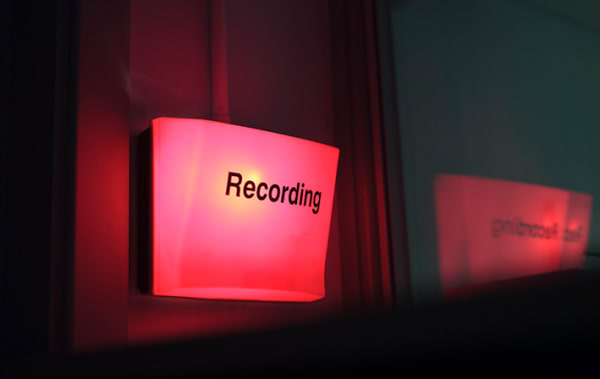
  • Red light indicating recording is taking place.
    Image © Vladimir Molico

    Lens-Based and Audio-Visual

    Find out about the workspaces and studios that support Lens-Based and Audio-Visual practice.

  • Student reading a book in between two bookshelves in the Library
    Students in the Digital Space. London College of Communication, UAL. Photograph: Alys Tomlinson

    The Digital Space

    The Digital Space is an open-plan, creative hub with computers set up with specialist software.

  • Student by library bookshelves.
    Photography by Alys Tomlinson.

    Library Services

    We have a whole range of collections, services and facilities to support your written and practice-based work. Find library locations and opening times across UAL.

Staff

Details of the teaching team will be added ahead of the course start date.

Fees and funding

Home fee

£9,790 per year

This fee is correct for entry in September 2026  and is subject to change for entry in September 2027.

Tuition fees may increase in future years for new and continuing students.

Home fees are currently charged to UK nationals and UK residents who meet the rules. However, the rules are complex. Find out more about our tuition fees and determining your fee status.

International fee

£30,890 per year

This fee is correct for entry in September 2026 and is subject to change for entry in September 2027.

Tuition fees for international students may increase by up to 5% in each future year of your course.

Students from countries outside of the UK will generally be charged international fees. The rules are complex so read more about tuition fees and determining your fee status.

Additional costs

You may need to cover additional costs which are not included in your tuition fees, such as materials and equipment specific to your course. For a list of general digital equipment you may need (and how you can borrow equipment), visit our Study costs page.

Accommodation

Find out about accommodation options and how much they will cost, and other living expenses you'll need to consider.

Scholarships, bursaries and awards

Find out more about bursaries, loans and scholarships.

If you’re based in the UK and plan to visit UAL for an Open Event, check if you’re eligible for our UAL Travel Bursary. This covers the costs of mainland train or airline travel to visit UAL.

How to pay

Find out how you can pay your tuition fees.

Scholarship search

Entry requirements

The standard minimum entry requirements for this course are:

104 UCAS tariff points, which can be made up of one or a combination of the following accepted full level 3 qualifications:

  • A Levels at grade C or above (preferred subjects include: English; History; Media; Business; Art and Design, or other subjects within Social Sciences).
  • Distinction at Foundation Diploma in Art & Design (Level 3 or 4).
  • Distinction, Merit, Merit at BTEC Extended Diploma (preferred subjects: Art and Design, Business/ Business Studies, IT & Computing, Media).
  • Merit at UAL Extended Diploma.
  • Access to Higher Education Diploma (preferred subject: Digital and Creative Media, Marketing, Humanities and Social Sciences).
  • OR equivalent EU/International qualifications, such as International Baccalaureate Diploma at 24 points minimum

And 3 GCSE passes at grade 4 or above (grade A*-C) including English and Maths.

AP(E)L – Accreditation of Prior (Experiential) Learning

If you do not meet these entry requirements but your application demonstrates additional strengths and alternative relevant experience, you may still be considered.

This could include:

  • substantial related academic or work experience, which could be considered equivalent to the minimum entry requirements
  • a strong academic or other professional reference in conjunction with the above.

Each application will be considered on its own merit. We cannot guarantee an offer in each case.

English language requirements

  • IELTS level 6.5 with a minimum of 5.5 in reading, writing, listening and speaking.

All classes are taught in English. If English isn’t your first language, you will need to show evidence of your English language ability when you enrol. For further guidance, please check our English language requirements.

Selection criteria

Offers will be made based on the following selection criteria:

  • A strong interest in marketing communications theory and practice, particularly within contemporary cultural and digital environments
  • Analytical and creative problem-solving skills, with the potential to develop professional communication, strategic thinking and collaborative working practices
  • Curiosity about audiences and communities, and how brands and campaigns are developed, communicated and experienced across a range of platforms and markets
  • Motivation to succeed on the course and to pursue future opportunities in marketing communications or related creative industries

Information for disabled applicants

UAL is committed to achieving inclusion and equality for disabled students. This includes students who have:

     
  • Dyslexia or another Specific Learning Difference
  • A sensory impairment
  • A physical impairment
  • A long-term health or mental health condition
  • Autism
  • Another long-term condition which has an impact on your day-to-day life

Our Disability Service arranges adjustments and support for disabled applicants and students.

Read our Disability and dyslexia: applying for a course and joining UAL information.

Apply now

Application deadline

Applications are now closed for 2026/27 entry. Applications for 2027/28 entry will open in autumn 2026.

Apply now

Application deadline

Applications are now closed for 2026/27 entry. Applications for 2027/28 entry will open in autumn 2026.

How to apply

Follow this step-by-step guide to apply for this course

Step 1: Initial application

You will need to submit an initial application including your personal statement.

Personal statement advice

The total character limit is 4,000 characters or less.

When creating your personal statement on the UCAS website, you will need to answer these 3 questions:

  • Why do you want to study this course or subject?
  • How have your qualifications and studies helped you to prepare for this course or subject?
  • What else have you done to prepare outside of education and why are these experiences useful?

To find out more about what to put in your personal statement, visit the UCAS advice page. For more information and support with applying to our courses, read our undergraduate application advice.

Step 2: Interview

You may be invited to an interview following our review of your application. All interviews are held online and last 15 to 20 minutes.

For top tips, see our Interview advice.

You also need to know

Communicating with you

Once you have submitted your initial application, we will email you with your login details for our applicant portal.

Requests for supplementary documents like qualifications and English language tests will be made through the applicant portal. You can also use it to ask questions regarding your application. Visit our After you apply page for more information.

Visas and immigration history check

All non-UK nationals must complete an immigration history check. Your application may be considered by our course teams before this check takes place. If your course requires a portfolio and/or video task, we may request these before we identify any issues arising from your immigration history check. Sometimes your history may mean that we are not able to continue considering your application. Visit our Immigration and visas advice page for more information.

External student transfer policy

UAL considers transfers from other institutions on a case-by-case basis. Read about how to apply to transfer into year 2 or 3 on our Undergraduate Apply page, and read our Student transfer policy for more information.

Alternative offers

If we are unable to consider you for the course you have applied to but your application is really strong, we may make you an alternative offer on a different course or at a different UAL College. This happens when our admissions tutors have found another course that they believe would be a strong match for your skills and interests.

Deferring your place

We can consider deferral requests if the course can accommodate this. You must apply in the year that you intend to start your course. If you are made an offer and your circumstances change, you can submit a deferral request to defer your place by 1 academic year. You must have met your conditions by 31 August 2026. If you need an English language test in order to meet the entry requirements, the test must be valid on the deferred start date of your course. If not, you will need to reapply. Requests are considered on a case-by case basis.

Contextual Admissions

This course is part of the Contextual Admissions scheme.

This scheme helps us better understand your personal circumstances so that we can assess your application fairly and in context. This ensures that your individual merit and creative potential can shine through, no matter what opportunities and experiences you have received.

Careers

BA (Hons) Marketing Communications prepares students for a wide range of careers and opportunities including:

  • Marketing and brand communications (marketing executive, brand coordinator, campaign assistant)
  • Advertising and creative agencies (client services, campaign production)
  • Social and digital media (content creation, community management, influencer marketing)
  • PR and events (publicity, events coordination, communications support)
  • Content and storytelling (copywriting, branded content, editorial content production)
  • Retail and consumer experience (customer engagement, experiential marketing, e-commerce)
  • Freelance and own businesses (creative start-ups, consultancy, independent projects.

UAL Alumni Association

Our alumni association offers graduates support and a number of benefits.

Student Jobs and Careers

Find out how careers and employability helps our students and graduates start their careers.