Postgraduate

MA Responsible AI for the Creative Industries

Tessellated images of AI work.
Image credit: Wes Goatley, LCC.
College
London College of Communication
Start date
September 2027
Course length
1 year

MA Responsible AI for the Creative Industries empowers you with skills, critical thinking and interdisciplinary approaches to become a leader in responsible AI across the creative industries.

Course summary

Applications closed 2026/2027

Applications are now closed for 2026/27 entry. Applications for 2027/28 entry will open in autumn 2026.

Important course update: Our new building

You will be one of the first students to join us in our cutting-edge new building for London College of Communication, just across the road from our current site in Elephant and Castle.

Validation

This course is undergoing validation. This is the process by which we ensure the course provides a high-quality academic experience. During validation, there may be some changes to the course content displayed on this page. Please contact us if you have any questions about the course.

Why choose this course at London College of Communication

  • Be the creative force shaping AI: Learn how to use, question and rethink AI through creative practice and critical thinking.
  • Focus on ethics and responsibility: Learn how to critically and creatively use AI tools that emphasise privacy, low-energy computing, community ownership, and open-source ideals in your own practice.
  • Based in current practice, with the future in mind: Learn what creative practitioners need to understand, challenge, and responsibly use AI in a rapidly changing world.
  • Combine core learning with world-leading creative specialisms: Choose a unit from the Media, Screen or Design Schools to connect AI with your own creative practice.
  • Prepare for future careers: Develop the knowledge to inform responsible AI practices across the creative, cultural and media industries.

Open Days

The next Open Day for this course will be announced soon.

Course overview

MA Responsible AI for the Creative Industries explores artificial intelligence as a cultural, political, and creative material. The course develops your practical skills to produce real-world creative work, while building the confidence to make ethical, informed decisions about technology. This integrated approach equips you with an in-demand hybrid skillset, combining creative practice, critical judgement, and technical understanding, preparing you to lead responsibly in today’s creative industries.

As LCC’s first MA taught across the Design, Media, and Screen Schools, the course brings together students from design, media, and screen disciplines, including games, animation, film, photography, and interaction design. You’ll work alongside people from different creative backgrounds and discover how AI connects to your own specialism. Teaching combines shared learning in creative AI and critical thinking with hands-on studio projects.

This course has critical making at its core. Ethics, authorship, policy, and environmental impact are embedded throughout. You’ll experiment with AI tools, build and break prototypes, uncover bias and labour conditions, and translate critique into artefacts, performances, and publications.

This course has been designed for future-facing creatives who want to use AI thoughtfully and critically in their work. Graduates emerge ready to lead responsibly across creative, policy, and public sectors.

What to expect

  • Study across Design, Screen and Media Schools: A shared studio model means you’ll be part of a diverse community exploring related issues on LCC’s first cross-College MA.
  • Technical fluency: Weekly hands-on workshops will build your expertise in areas including image synthesis, text generation, and audio tools
  • Critical analysis of AI: You’ll explore bias, labour conditions, environmental impact, and governance frameworks.
  • Develop your specialisation: through an elective unit drawn from existing MA courses in your discipline.
  • Live Collaborative Brief: Tackling an industry or community challenge, with work presented to external stakeholders.
  • Weekly tutorials: Connecting your practice to ethics, authorship, policy, and sustainability with supportive challenge.

Industry experience and opportunities

The cross-College model of the course is preparation for working in industry, as you build professional ways of working and relationships with practitioners across design, games, animation, film, photography and interaction design that will last beyond LCC.

On the Collaborative Brief you’ll work in interdisciplinary teams on live challenges set by industry or community partners. These mirror professional workflows, requiring negotiation of technical, ethical and creative decisions, and presentation to external stakeholders. Outcomes have included responsible AI strategies and prototype tools with provenance tracking.

You’ll present your Final Major Project at a public exhibition, creating a direct route into professional networks. We expect our graduates move into leadership roles in AI-enabled creative industries, bringing responsible practice to organisations across culture, media, and technology.

Mode of study

MA Responsible AI for the Creative Industries is in Full Time mode which runs for 45 weeks over 12 months. You will be expected to commit 40 hours per week to study.

Contact us

Register your interest to receive information and updates about studying at UAL.

Contact us to make an enquiry.

Course units

We are committed to ensuring that your skills are set within an ethical framework, and we have worked to embed UAL’s Principles for Climate, Racial and Social Justice Principles into the curriculum and in everything we do.

As part of this initiative, we’ve shaped our courses around social and environmental sustainability principles that ensure learning outcomes reflect the urgent need to equip you with the understanding, skills, and values to foster a more sustainable planet. Our aim is to change the way our students think, and to empower you to work towards a sustainable future.

Unit 1: The Practice of Responsible AI

This core unit establishes critical foundations for responsible AI practice. You'll explore AI systems as cultural and political artefacts, examining bias, labour conditions, environmental impact, and governance frameworks. Through hands-on workshops, you'll interrogate commercial platforms (image synthesis, LLMs, audio tools) while building technical fluency. Ethics, provenance, and explainability are embedded in practical exercises, ensuring you can critically evaluate AI tools within your creative discipline. The unit culminates in a reflective portfolio demonstrating your ability to apply responsible AI principles to real-world creative challenges.

Unit 2: Elective Unit

Choose from a curated selection of specialist MAs across LCC's Design, Screen and Media schools. This flexibility allows you to deepen your disciplinary expertise while applying responsible AI methods to your specific practice area—whether graphic design, animation, filmmaking, interaction design, or photography. Each elective unit offers discipline-specific seminars and tutorials, enabling you to contextualise AI within established creative frameworks. This unit ensures your AI practice remains grounded in disciplinary depth.

Unit 3: Collaborative Brief

Working in interdisciplinary teams, you'll tackle a live industry or community challenge involving AI and creative practice. This unit mirrors professional workflows, requiring you to negotiate technical, ethical, and creative decisions across disciplinary boundaries. Past briefs have included developing responsible AI strategies for cultural institutions, creating transparent generative design systems, and prototyping AI tools with provenance tracking. You'll present your work to external stakeholders, receiving feedback from both industry partners and academic reviewers. The unit develops collaboration, project management, and communication skills essential for leadership roles in AI-enabled creative industries.

Unit 4: Final Major Project

Your FMP is a self-directed practice-based project that demonstrates your ability to lead responsible AI innovation in your chosen field. You'll produce a substantial artefact, performance, or publication alongside a critical commentary exploring the ethical, technical, and creative decisions underpinning your work. Previous projects have included AI-assisted documentary filmmaking with consent frameworks, generative design systems for inclusive public spaces, and critical prototypes exposing bias in image synthesis tools. You'll present your work at a public exhibition, engaging with industry, academic, and public audiences. This unit prepares you for professional practice as a responsible AI leader.
Learning and teaching methods

  • Lectures
  • Seminars
  • Tutorials
  • Guest Lectures and Workshops
  • Practical Group Workshops

Assessment methods

  • Presentation
  • Portfolio
  • Peer Assessment
  • Online Journal/website/blog
  • Written Report/Essay

Facilities

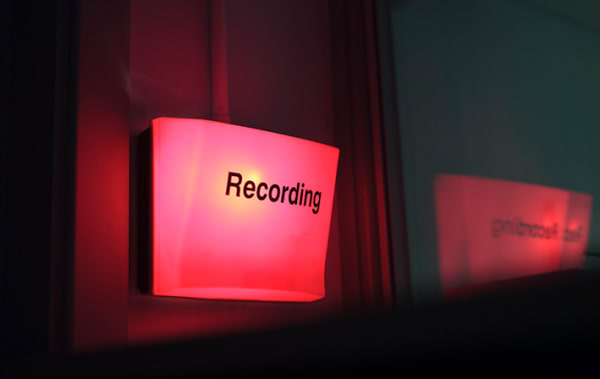
  • Red light indicating recording is taking place.
    Image © Vladimir Molico

    Lens-Based and Audio-Visual

    Find out about the workspaces and studios that support Lens-Based and Audio-Visual practice.

  • Student reading a book in between two bookshelves in the Library
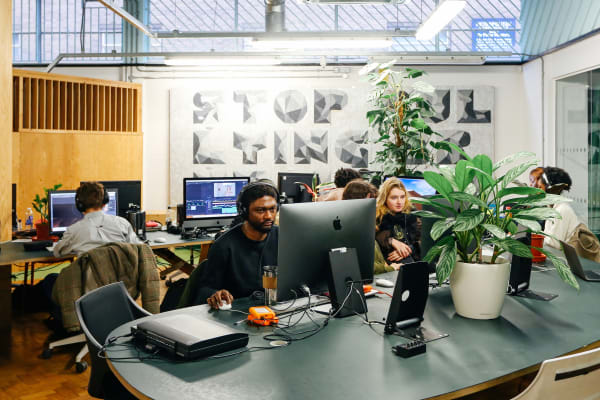
    Students in the Digital Space. London College of Communication, UAL. Photograph: Alys Tomlinson

    The Digital Space

    The Digital Space is an open-plan, creative hub with computers set up with specialist software.

Staff

Fees and funding

Home fee

£14,420

This fee is correct for 2026/27 entry and is subject to change for 2027/28 entry.

Tuition fees may increase in future years for new and continuing students on courses lasting more than one year. For this course, you can pay tuition fees in instalments.

Students from countries outside of the UK will generally be charged international fees. The rules are complex so read more about tuition fees and determining your fee status.

International fee

£30,890

This fee is correct for 2026/27 entry and is subject to change for 2027/28 entry.

Tuition fees may increase in future years for new and continuing students on courses lasting more than one year. For this course, you can pay tuition fees in instalments.

Students from countries outside of the UK will generally be charged international fees. The rules are complex so read more about tuition fees and determining your fee status.

Additional costs

You may need to cover additional costs which are not included in your tuition fees, such as materials and equipment specific to your course. For a list of general digital equipment you may need (and how you can borrow equipment), visit our Study costs page.

Accommodation

Find out about accommodation options and how much they will cost, and other living expenses you’ll need to consider.

Scholarships, bursaries and awards

If you’ve completed a qualifying course at UAL, you may be eligible for a tuition fee discount on this course. Find out more about our Progression discount.

You can also find out more about the Postgraduate Masters Loan (Home students only) and scholarships for Home and International students. Discover more about student funding.

If you’re based in the UK and plan to visit UAL for an Open Event, check if you’re eligible for our UAL Travel Bursary. This covers the costs of mainland train or airline travel to visit UAL.

How to pay

Find out how you can pay your tuition fees.

Scholarship search

Entry requirements

We welcome applications from creatives working across a wide range of disciplines from design, media and screen areas of creative practice and beyond. We encourage applications from applicants with diverse academic and professional backgrounds. Educational level may be demonstrated by:

  • Honours degree (named above);
  • Possession of equivalent qualifications;
  • Prior experiential learning, the outcome of which can be demonstrated to be equivalent to formal qualifications otherwise required;
  • Or a combination of formal qualifications and experiential learning which, taken together, can be demonstrated to be equivalent to formal qualifications otherwise required.

AP(E)L – Accreditation of Prior (Experiential) Learning

If you do not meet these entry requirements but your application demonstrates additional strengths and alternative relevant experience, you may still be considered.

This could include:

substantial related academic or work experience, which could be considered equivalent to the minimum entry requirements

  • a strong academic or other professional reference in conjunction with the above.

Each application will be considered on its own merit. We cannot guarantee an offer in each case.

English language requirements

IELTS 6.5 (or equivalent) is required, with a minimum of 5.5 in each of the four skills.

All classes are taught in English. If English isn’t your first language, you will need to show evidence of your English language ability when you enrol. For further guidance, please check our English language requirements.

Selection criteria

Offers will be made based on the following selection criteria:

  • An interest in AI as a critical practice for or related to a creative design, media or screen or related subject, including an interest in the social, cultural and ethical implications.
  • A willingness to work both independently and collaboratively, including contributing to discussions and studio-based group projects.
  • Clear communication skills, including the ability to articulate ideas and critical positions through written, verbal and/or creative work
  • Capacity for research led creative practice, intellectual enquiry and reflective thinking, demonstrated through contextual awareness (professional, cultural, social and historical) and evidence of research, analysis, development and evaluation from previous academic study and/or professional experience.
  • Please note there is no requirement for a technical or coding background; applicants are assessed on critical, creative and conceptual engagement rather than technical expertise.

Information for disabled applicants

UAL is committed to achieving inclusion and equality for disabled students. This includes students who have:

     
  • Dyslexia or another Specific Learning Difference
  • A sensory impairment
  • A physical impairment
  • A long-term health or mental health condition
  • Autism
  • Another long-term condition which has an impact on your day-to-day life

Our Disability Service arranges adjustments and support for disabled applicants and students.

Read our Disability and dyslexia: applying for a course and joining UAL information.

Apply now

Application deadline

Applications are now closed for 2026/27 entry. Applications for 2027/28 entry will open in autumn 2026.

Read more about deadlines

Apply now

Application deadline

Applications are now closed for 2026/27 entry. Applications for 2027/28 entry will open in autumn 2026.

Read more about deadlines

How to apply

Follow this step-by-step guide to apply for this course

Step 1: Initial application

Your portfolio should showcase recent work that demonstrates your creative practice, research interests and potential for postgraduate study.

It should:

  • be maximum 20 pages, including your video task
  • feature work from a maximum of 5 projects
  • show your practical and research-led engagement with AI for design, media, screen or related practices.

For each project, please include:

  • a short statement outlining the project's aims and your role or contribution.
  • feature examples of your design process to explain how you develop your work from initial ideas to final outcomes.
  • final outcomes or completed work, which may include images, video, installations or other creative outputs.

We are looking for evidence of your ability to develop and communicate ideas, think critically, reflect on your work and engage with creative and research-led practice.

Step 2: Digital portfolio

We would like you to submit a 2-3 minute video to help us learn more about you:

  • Please speak clearly in English and face the camera.
  • Your video task is submitted along with your portfolio.
  • Read our guidance for how to submit your video task and which file types we accept.

As part of your video task, please respond to the following direction:

  • Please choose one project from your portfolio and discuss:
  • What inspired the project and what you wanted to achieve.
  • What the experience taught you about AI in relation to creativity in design, media, screen practice or a related field.
  • Talk about what interests you most about AI as a creative and critical practice for a design, media, screen practice.
  • Include any social, cultural or ethical questions you would like to explore.
  • How you will go about exploring this subject including any research methods or creative practice.

We are looking for clear communication, curiosity and critical thinking. This statement helps us understand your current interests and research direction and recognise these may evolve during the course.

Step 3: Interview

You may be invited to an interview following our review of your application. All interviews are held online and last 15 to 20 minutes.

For top tips, see our Interview advice.

You also need to know

Communicating with you

Once you have submitted your initial application, we will email you with your login details for our applicant portal.

Requests for supplementary documents like qualifications and English language tests will be made through the applicant portal. You can also use it to ask questions regarding your application. Visit our After you apply page for more information.

Applying to more than 1 course

You can apply for more than 1 postgraduate course at UAL but we recommend that you apply for a maximum of 3 courses.

As every course has its own entry and assessment requirements, we recommend tailoring each application to showcase how your experience, skills and interests match that course. Applying for many different courses may make it more difficult for you to show that you are suitable for each course in a competitive admissions process.

Only apply to the course(s) you are most interested in – applying for too wide a range of different courses may reduce your ability to clearly demonstrate your suitability for each. It’s better to make fewer bespoke applications than many generic ones. This will help you to stand out where we have high demand for places.

If you receive offers for multiple courses, you'll only be able to accept 1 offer. UAL doesn't accept repeat applications to the same course in the same academic year.

Visas and immigration history check

All non-UK nationals must complete an immigration history check. Your application may be considered by our course teams before this check takes place. If your course requires a portfolio and/or video task, we may request these before we identify any issues arising from your immigration history check. Sometimes your history may mean that we are not able to continue considering your application. Visit our Immigration and visas advice page for more information.

External student transfer policy

UAL accepts transfers from other institutions on a case-by-case basis. Read our Student transfer policy for more information.

Alternative offers

If we are unable to consider you for the course you have applied to but your application is really strong, we may make you an alternative offer on a different course or at a different UAL College. This happens when our admissions tutors have found another course that they believe would be a strong match for your skills and interests.

Deferring your place

We do not accept any deferral requests for our postgraduate courses. This means that you must apply in the year that you plan to start your course and you will not be able to defer your place to start at a later date.

Application deadlines

Most of our postgraduate courses have 2 rounds of deadlines: one in December and one in March.

As long as you apply ahead of each deadline we will consider your application alongside all the other applications in that round. We always make sure to hold enough places back for round 2 to make sure we can consider your application fairly, no matter which round you apply in.

If there are still places available after the second deadline, the course will remain open to applications until all places have been filled.

For our MBA courses, there is only 1 deadline. This is 31 July for international applicants and 31 August for UK applicants. This is to make sure you have enough time to apply for your visa if you are an international student.

For our January-start courses, the deadline is in October. If there are still places available after this deadline, the course will remain open to applications until all places have been filled.

Careers

MA Responsible AI for Creative Industries prepares students for a wide range of careers and opportunities including, but not limited to:

  • Designers and AI artists (sustainable design, critical arts, speculative design)
  • Creative industries consultancy (media, fashion, design and cultural organisations adopting AI)
  • Entrepreneurial and interdisciplinary practice (creative start-ups, independent consultancy, experimental practice)
  • Strategy (AI innovation strategist, creative technology consultant)
  • Governance and policy (AI governance, ethics advisory, policy development)
  • Digital product and innovation (product strategy, service design, innovation management)
  • Advocacy, campaigning and public engagement (digital rights, AI literacy, community and cultural advocacy, sustainable computing)
  • Research and development (critical AI research, digital culture)
  • Education (teaching, curriculum development).

UAL Alumni Association

Our alumni association offers graduates support and a number of benefits.

Student Jobs and Careers

Find out how careers and employability helps our students and graduates start their careers.