Postgraduate

MA Marketing Communications

Photograph of someone taking notes on an ipad, against a green sofa.
Photographer: Babett Kürschner.
College
London College of Communication
Start date
September 2027
Course length
1 year

MA Marketing Communications empowers you with the strategic, creative and data-driven skills to lead and innovate for brands in today’s fast-moving global communications industries. 

Course summary

Applications closed 2026/2027

Applications are now closed for 2026/27 entry. Applications for 2027/28 entry will open in autumn 2026.

Important course update: Our new building

You will be one of the first students to join us in our cutting-edge new building for London College of Communication, just across the road from our current site in Elephant and Castle.

Validation

This course is undergoing validation. This is the process by which we ensure the course provides a high-quality academic experience. During validation, there may be some changes to the course content displayed on this page. Please contact us if you have any questions about the course.

Why choose this course at London College of Communication

  • Advanced creative and strategic thinking: Consolidate your understanding of creativity, ideation and innovation for marketing communications in a rapidly changing AI-driven world.
  • Industry, policy and governance insight: Explore marketing within cultural, ethical, regulatory and governance contexts, informed by the latest research and professional practice.
  • Study in a global creative capital: Based in London, you’ll have opportunities to engage with international brands, agencies and creative organisations.
  • Industry-recognised frameworks: The course aligns with professional standards set by the Chartered Institute of Marketing (CIM) and the Data and Marketing Association (DMA), strengthening your employability and professional credibility.
  • Enterprise and leadership at the core: Ideal for graduates and professionals seeking progression into leadership, consultancy, policy, strategy or specialist communications roles.

Open Days

The next Open Day for this course will be announced soon.

Course overview

MA Marketing Communications gives you a rigorous grounding in brand strategy and communication for consumer audiences. You’ll develop a critical and ethically informed approach to planning, executing and evaluating multi-channel brand campaigns. Engaging with the latest research and industry practice, you’ll graduate with a hybrid creative technological skillset that is highly valued by employers.

The course is distinctive in combining industry standards with creative practice, situated within a global leader for creative education. This unique setting means you’ll work at the intersection of marketing, design, media, business and culture to create effective solutions to complex and uncertain market and brand challenges.

Designed to develop leadership in creative marketing communications, you’ll build practical and analytical skills in brand storytelling, including from the production of brand assets through copywriting and design, and planning and evaluating campaign performance.

Enterprise and entrepreneurship are embedded throughout the course, and you will graduate prepared for careers leading strategy in the growing marketing communications sector, or for creating and leading future-facing brands.

What to expect

  • Professionally accredited and informed by leading research and industry practice, so that you develop a future-facing approach.
  • Delivered within a creative practice university in the heart of London’s creative industries. Offering strong cultural, industry and professional connections.
  • Learning-by-doing approach. Underpinned by critical enquiry and analysis, so you can evaluate data and generate strategic insight-led solutions combined with creative skills to develop marketing communications assets.
  • Data-driven and technology-focused. Emphasis on data-driven marketing, AdTech and emerging technologies, preparing you for analytics-led roles, including the integration of AI in marketing communications.
  • Build the technical, digital, transferable and sustainability skills required for work and the future of work through live briefs set by our industry partners.
  • Focus on cultural insight and global contexts. Supporting informed decision-making in complex and uncertain environments.
  • Commitment to ethical and sustainable practice. Engage with the social, cultural and environmental impact of marketing and challenging established practices.
  • Development of enterprise, leadership and self-direction. Manage projects, take strategic initiative, and develop innovative solutions.

Industry experience and opportunities

Employability is embedded throughout the course, giving students regular opportunities to engage with the marketing communications industry through networking events, industry workshops and live briefs. By working on real-world projects set by external partners, students gain first-hand experience of contemporary challenges in marketing communications and collaborate with professionals to develop practical, strategic solutions.

The course works closely with trade associations and commercial partners to support inclusive employment practices and ensure graduates are well prepared for careers across brands, agencies, NGOs and the creative industries.

Mode of study

MA Marketing Communications is in Full Time mode which runs for 45 weeks over 12 months. You will be expected to commit 40 hours per week to study.

Contact us

Register your interest to receive information and updates about studying at UAL.

Contact us to make an enquiry.

Course units

UAL is committed to ensuring that its students’ knowledge and skills are set within a contemporary personal and professional ethical framework so that they may make a positive impact in practice, particularly in relation to UAL’s Principles for Climate, Racial and Social Justice. The UAL Principles help inform the course’s approach to ethical awareness and application within the curriculum, leading to advocacy, mitigation, and urgency in developed practice. Ethical behaviours and values are embedded in course aims and are assessed throughout. Aligned with this is our expectation that students will be ready to apply these to their careers and to respond and adapt to societal change and emerging technologies, including AI.

Block 1

Marketing and Communications Industries (20 credits)

As the foundation of your postgraduate studies, this unit considers the history and contemporary development of the marketing communications industry and its continued integration with media and platforms. You’ll consider the relationship between brands, marketers and audiences and the marketing and advertising agencies on which they are built. The unit also addresses the changing nature of technology, media and platforms with a focus on AI integration. You will also develop an advanced understanding of media communications work in relation to global, regional and national political economies, social and cultural contexts and regulatory compliance.

Brand Management (20 credits)

This unit examines how brands are strategically developed, positioned, and sustained in competitive and rapidly evolving markets. It provides an in-depth understanding of brand identity, equity, and value creation, equipping you to craft coherent brand strategies that resonate with target audiences across diverse platforms. You will develop a critical and contextual understanding of the concept of brand and develop content creation skills in areas such as brand storytelling, portfolio management, digital brand experience, and reputation management. The course also addresses global and cultural dimensions of branding, alongside ethical considerations and responsible leadership, preparing graduates to manage brands with both commercial impact and long-term integrity.

Researching Marketing Communications (20 credits)

You’ll be introduced to the research process by learning methods for data gathering and data analysis. With a focus on research outcomes, you’ll be supported to then apply these techniques to your written work and creative practice, and to propose a research project for your independent study for your Final Major Project.

Block 2

Data Insight and Consumer Behaviour (20 credits)

This unit explores how data is used to understand, predict, and influence the ways people make decisions as consumers. It introduces you to key concepts in behavioural science, marketing analytics, and data interpretation, equipping you to uncover patterns in consumer attitudes and actions in digital and physical environments. Through a combination of theory and practical application, students develop their skills in collecting, analysing, and translating data into meaningful insights that inform strategy, enhance customer experience, and support ethical decision-making and the responsible use of data.

Collaborative Unit (20 credits)

This unit develops your skills in teamworking, business and innovation. Working in partnership with industry and with postgraduate students from your course and beyond, you will research and deliver a collaborative project that meets objectives outlined by a marketing opportunity, industry imperative or public engagement.

Option Unit (20 credits)

You’ll have the opportunity to choose from a range of specialist research-based and creative practice topics to develop your skills and interests in marketing communications and to further develop your approach to your Final Major Project. Options could include Content Creation for Professional Communications, Media Futures, Media Business & Entrepreneurship.

Block 3

Final Major Project (60 credits)

Your Final Major Project is your opportunity to design and undertake a major piece of self-generated, self-directed research, which demonstrates your advanced critical, analytical and practical skills, aligned to your knowledge of marketing communications and the wider media and business environment. You’ll apply an appropriate method of enquiry from a range learned on the course to a portfolio, research-based investigation or industry report. The Final Major Project is your major statement calling card– reflecting innovative work that will form part of your future. It will support you to launch a career in the marketing communications and media industries, or prepare you for further study.

Learning and teaching methods

  • Lectures
  • Seminars
  • Tutorials
  • Workshops
  • Self-directed learning
  • Industry guest speakers
  • Study trips and visits (as appropriate)

Assessment methods

  • Reports and essays
  • Individual and group work
  • Audio-visual content creation
  • Portfolios Presentations
  • Reflective statements
  • Formative assessment (feedback on work in progress)

Facilities

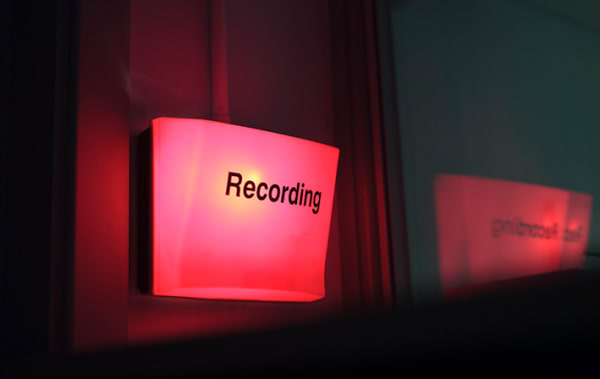
  • Red light indicating recording is taking place.
    Image © Vladimir Molico

    Lens-Based and Audio-Visual

    Find out about the workspaces and studios that support Lens-Based and Audio-Visual practice.

  • Student reading a book in between two bookshelves in the Library
    Students in the Digital Space. London College of Communication, UAL. Photograph: Alys Tomlinson

    The Digital Space

    The Digital Space is an open-plan, creative hub with computers set up with specialist software.

  • Student by library bookshelves.
    Photography by Alys Tomlinson.

    Library Services

    We have a whole range of collections, services and facilities to support your written and practice-based work. Find library locations and opening times across UAL.

Fees and funding

Home fee

£14,420

This fee is correct for 2026/27 entry and is subject to change for 2027/28 entry.

Tuition fees may increase in future years for new and continuing students on courses lasting more than one year. For this course, you can pay tuition fees in instalments.

Students from countries outside of the UK will generally be charged international fees. The rules are complex so read more about tuition fees and determining your fee status.

International fee

£30,890

This fee is correct for 2026/27 entry and is subject to change for 2027/28 entry.

Tuition fees may increase in future years for new and continuing students on courses lasting more than one year. For this course, you can pay tuition fees in instalments.

Students from countries outside of the UK will generally be charged international fees. The rules are complex so read more about tuition fees and determining your fee status.

Additional costs

You may need to cover additional costs which are not included in your tuition fees, such as materials and equipment specific to your course. For a list of general digital equipment you may need (and how you can borrow equipment), visit our Study costs page.

Accommodation

Find out about accommodation options and how much they will cost, and other living expenses you’ll need to consider.

Scholarships, bursaries and awards

If you’ve completed a qualifying course at UAL, you may be eligible for a tuition fee discount on this course. Find out more about our Progression discount.

You can also find out more about the Postgraduate Masters Loan (Home students only) and scholarships for Home and International students. Discover more about student funding.

If you’re based in the UK and plan to visit UAL for an Open Event, check if you’re eligible for our UAL Travel Bursary. This covers the costs of mainland train or airline travel to visit UAL.

How to pay

Find out how you can pay your tuition fees.

Scholarship search

Entry requirements

We welcome applications from people with diverse academic and professional backgrounds.

The standard minimum entry requirements for this course are:

  • An Honours degree at 2.2 or above.

AP(E)L – Accreditation of Prior (Experiential) Learning

If you do not meet these entry requirements but your application demonstrates additional strengths and alternative relevant experience, you may still be considered.

This could include:

  • substantial related academic or work experience, which could be considered equivalent to the minimum entry requirements
  • a strong academic or other professional reference in conjunction with the above.

Each application will be considered on its own merit. We cannot guarantee an offer in each case.

English language requirements

  • IELTS 7.0 (or equivalent) is required, with a minimum 6.0 in each of the four skills.

All classes are taught in English. If English isn’t your first language, you will need to show evidence of your English language ability when you enrol. For further guidance, please check our English language requirements.

Selection criteria

Offers will be made based on the following selection criteria:

  • A relevant educational background or professional experience, or transferable skills that show you are ready for postgraduate study
  • An ability to think critically about marketing communications, and a willingness to question ideas and practices
  • A willingness to work collaboratively, share ideas and learn with others in a studio‑based and discussion‑led learning environment
  • A clear and well-written application that explains your interest in and motivation for the course and future career

Information for disabled applicants

UAL is committed to achieving inclusion and equality for disabled students. This includes students who have:

     
  • Dyslexia or another Specific Learning Difference
  • A sensory impairment
  • A physical impairment
  • A long-term health or mental health condition
  • Autism
  • Another long-term condition which has an impact on your day-to-day life

Our Disability Service arranges adjustments and support for disabled applicants and students.

Read our Disability and dyslexia: applying for a course and joining UAL information.

Apply now

Application deadline

Applications are now closed for 2026/27 entry. Applications for 2027/28 entry will open in autumn 2026.

Read more about deadlines

Apply now

Application deadline

Applications are now closed for 2026/27 entry. Applications for 2027/28 entry will open in autumn 2026.

Read more about deadlines

Careers

MA Marketing Communications prepares students for a wide range of careers and opportunities including:

  • Brand and marketing strategy (brand strategist, campaign planner)
  • Creative communications (content strategist, copywriter)
  • Advertising and media (account management, media planning)
  • Digital and social media marketing (social media strategist, community manager)
  • PR and corporate communications (communications consultancy, reputation management)
  • Insights and audience research (consumer insights, trend forecasting, cultural analysis)
  • Freelance consultancy and creative practice (brand consultant, creative entrepreneur)
  • Policy and governance (advisor, researcher).

UAL Alumni Association

Our alumni association offers graduates support and a number of benefits.

Student Jobs and Careers

Find out how careers and employability helps our students and graduates start their careers.