Undergraduate

BA (Hons) Fashion Retail Design and Brand Experience

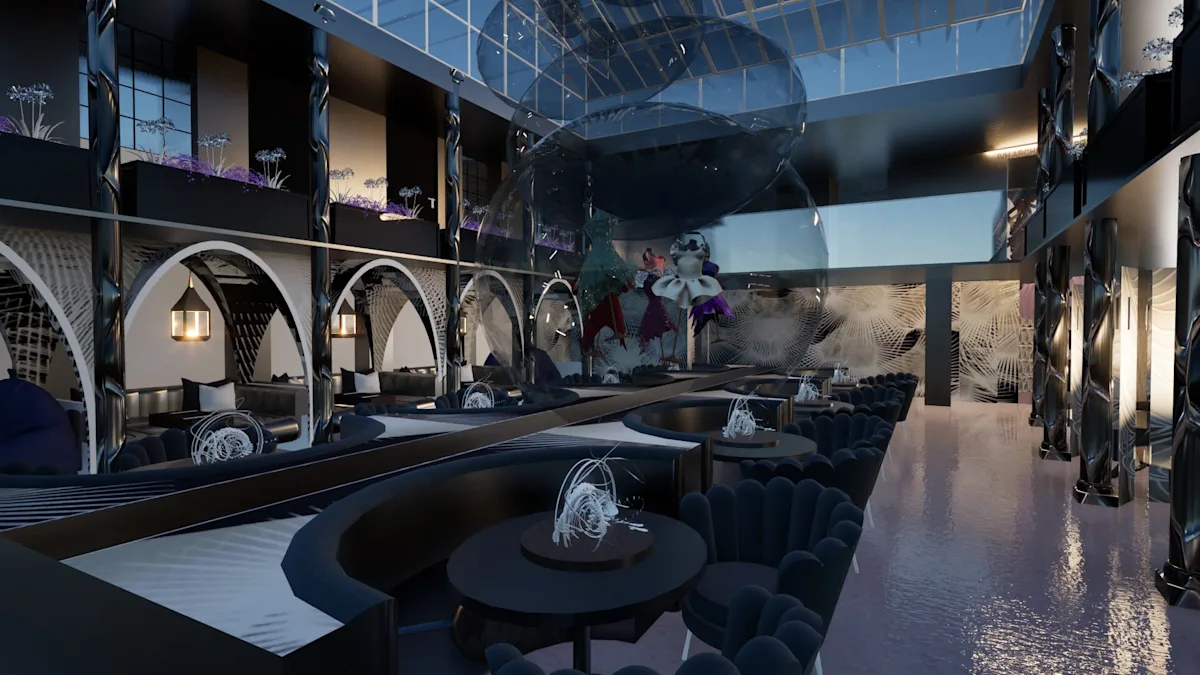
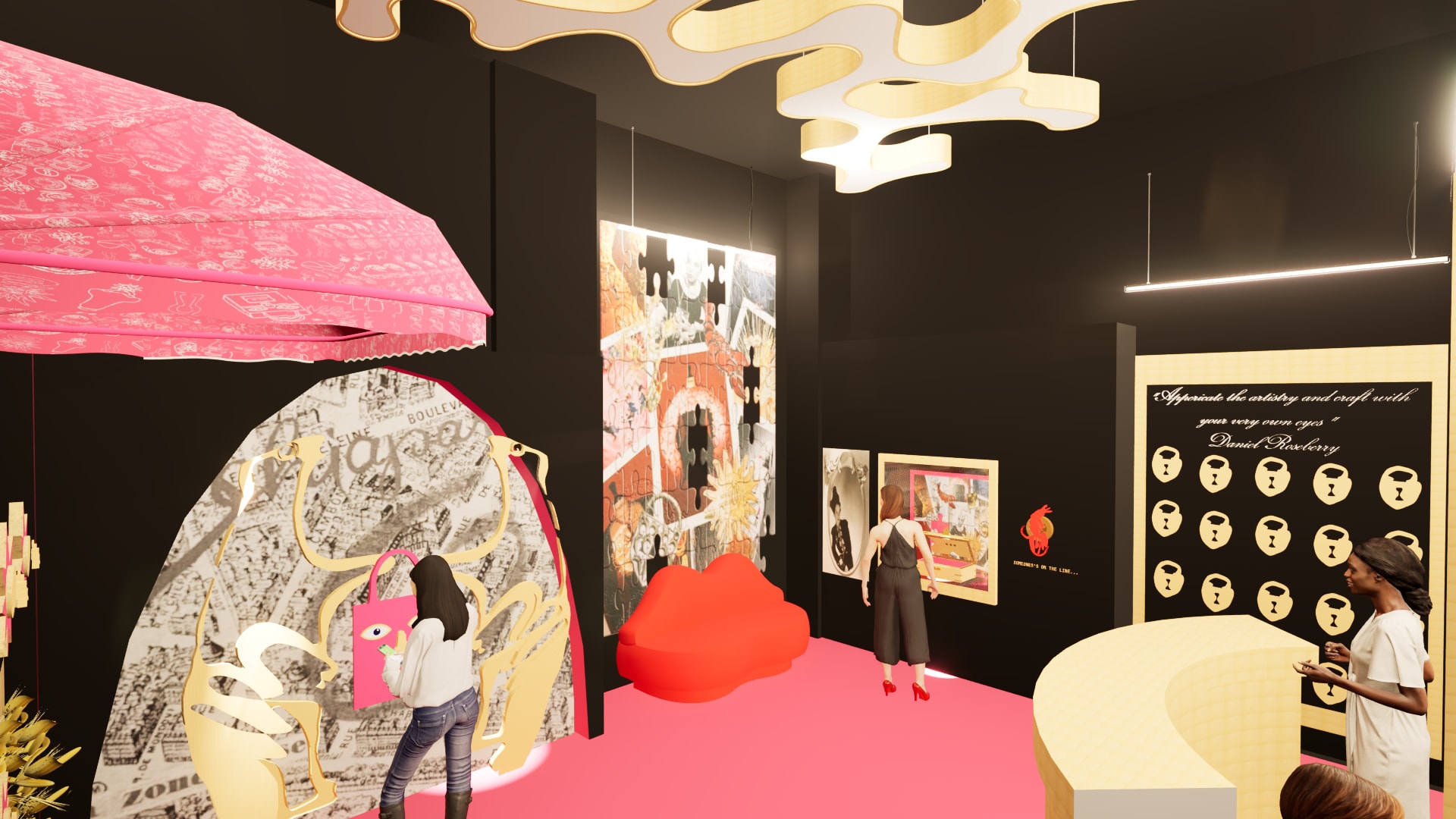
Rendering of a portable soft architecture environment.
Lulu Tweedie | BA (Hons) Fashion Visual Merchandising and Branding | UAL Showcase | LCF
College
London College of Fashion
UCAS code
5P61
Start date
September 2026
Course length
3 years / 4 years (with placement year in industry)

Master an array of practical and digital design skills covering all aspects of visual retail display and branded fashion spaces by responding to current and emerging trends.

Course summary

Applications closed 2026/27 

We are no longer accepting applications for 2026/27 entry to this course.

Course title change

The title of this course has changed from BA (Hons) Fashion Visual Merchandising and Branding to BA (Hons) Fashion Retail Design and Brand Experience for entry in 2026/27.

Why choose this course at London College of Fashion

  • Consumer Psychology: Understand the psychology behind consumer shopping behaviour and how to use visual merchandising techniques to influence purchasing decisions.
  • Hands-on projects: Gain practical experience by designing live projects both physically and digitally, and work with real brands to bring your creative visions to life in retail and online spaces.
  • Real-world experience: You can add a work placement into your course after two years full time study and you'll engage with professionals on projects and industry visits.
  • Brand identity: Master the process of creating and maintaining strong brand identities through innovative visual merchandising, ensuring consistency across all consumer touchpoints.
  • Graduate destinations: Graduates have gone on to work in a number of interesting roles including: Digital Visual Merchandiser and Junior Retail Space and Installation Designer. Graduates have found employment with notable brands such as: Burberry, Axel Arigato and Alexander McQueen.

Upcoming Open Days and Virtual Events

Discovery Webinar: Studying at LCF | Wednesday 12 August

Want to visit us in person? Join us every Wednesday for a College Tour.

Global experiences

This course offers the opportunity to study abroad short-term over the summer break (subject to meeting requirements). Going abroad as part of your degree is an exciting experience that broadens your horizons and helps you build a global network.

Scholarships, bursaries and awards

Use our scholarship search to discover if you are eligible for any scholarships, bursaries or awards.

Course overview

Introduction

The BA (Hons) Fashion Retail Design and Brand Experience course is designed for creative individuals who want to shape the future of fashion through innovative retail environments, immersive brand experiences and customer-centred design. As the fashion industry continues to evolve in response to technological advancement, changing consumer expectations and new modes of engagement, the course prepares you to design experiences that connect brands with audiences across physical, digital and hybrid retail spaces. You are encouraged to think beyond traditional retail space, exploring how design can influence perception, behaviour and meaningful connections between brands and their consumers.

The course combines creative design practice with strategic thinking, enabling you to develop expertise in retail design, spatial design, branding, visual communication and customer experience. Through research, experimentation and collaboration with industry, you will investigate contemporary challenges facing fashion retail while developing innovative responses that are socially responsible, commercially relevant and environmentally conscious. Live projects, professional practice, emerging technologies and interdisciplinary working provide opportunities to develop confidence, adaptability and the practical skills required to respond to an increasingly dynamic global retail environment.

Throughout the course, you are supported to become independent, reflective and future-focused spatial designers who can communicate ideas effectively and translate research into compelling retail concepts and brand experiences. When you Graduate you will leave with a professional portfolio that demonstrates your creativity, critical thinking and technical capabilities, preparing you for careers in fashion retail design, brand experience, experiential marketing, creative direction, spatial and exhibition retail design, customer experience, visual communication, retail consultancy, visual merchandising, or postgraduate study. As a graduate, you will have the knowledge, skills and confidence to contribute to the future development of the fashion industry through innovative, inclusive and sustainable design solutions.

What to expect

  • Retail Design and Brand Experience: You will develop expertise in fashion retail design, brand experience, spatial design, visual communication, visual merchandising and customer experience through creative, research-informed projects that take ideas from concept to realisation.
  • Consumer Insight and Future Retail: You will explore trend forecasting, consumer behaviour, retail strategy, branding, digital technologies and sustainable design practices to create innovative retail experiences across physical, digital and hybrid environments.
  • Creative Design and Professional Practice: You will design and communicate compelling retail concepts and brand experiences that respond to changing consumer expectations while balancing creativity, commercial awareness and responsible design.
  • Career Development and Industry Readiness: You will graduate with the knowledge, creative confidence and professional capabilities to pursue careers in fashion retail design, brand experience, spatial design, creative direction, customer experience, retail strategy and related creative industries.

Work experience and opportunities

You will be given the opportunity to undertake an optional industry or enterprise placement year between the second and final year of the course which will enhance your employability by offering valuable experience and contacts within the industry as well as earning an additional Diploma in Professional Studies qualification. You also have the opportunity to work with industry in your second year as part of the curriculum.

Mode of study

BA (Hons) Fashion Retail Design and Brand Experience runs for 90 weeks in full time mode. It is divided into 3 stages over 3 academic years. Each stage lasts 30 weeks.

Climate, Social and Racial Justice

We are committed to developing ethical Fashion Business practices. To achieve this, we are working to embed UAL’s Principles for Climate, Social and Racial Justice into the course.

Contact us

Register your interest to receive information and updates about studying at UAL.

Contact us to make an enquiry.

Course units

Stage 1

In stage 1 (year 1) you are required to complete 120 credits at level 4 in order to progress to stage 2 (year 2): 

Block 1

Introduction to Fashion Retail Design and Brand Experience introduces you to your course and its subject specialism as well as to effective learning and studentship at undergraduate level. Students come from many diverse educational backgrounds and a part of this unit will enable to you reflect on your own background and how that shapes the way you approach your course. (20 Credits)

Principles of Fashion Retail Design introduces you to the fundamental principles of fashion retail design through the exploration of 2D and 3D design processes, visual communication, and spatial thinking. You will develop creative and technical skills through drawing, model-making, visualisation, and material experimentation, enabling you to understand how design influences the presentation of fashion products and the customer experience within retail environments. (40 credits)

Block 2 

Fashion Branding for the Physical Environment explores how fashion brands communicate identity, values, and retail storytelling through physical environments. You will explore how fashion brands construct and communicate identity, image, and personality through spatial design within retail and branded physical environments. (20 credits)

Fashion Cultures and Histories investigates fashion as a social, political and cultural practice. It foregrounds fashion’s role in representing and communicating identity through historical and contemporary forms of dress, from everyday style to haute couture. The unit will introduce you to key concepts, debates and ways of thinking about fashion as an expressive visual tool and a material object, and it will provide you with a foundation for further study in fashion cultures and histories. (20 Credits)

Fashion Branding for the Digital Environment develops your understanding of integrated digital and virtual environments within contemporary fashion brand experience. It explores how fashion brands use digital media, platforms, and emerging technologies to communicate identity, engage audiences, and support retail and commercial objectives. (20 credits)

Stage 2

In stage 2 (year 2) you are required to complete 120 credits at level 5 to progress to Stage 3 (year 3):

Block 1

Critical Issues in Fashion Research will broaden or deepen your learning of areas relating to your interests in your chosen field of cultural and historical studies in fashion. You will participate in lectures, seminars and workshops with students from other courses within your School and will read relevant academic texts and complete a formal academic essay for assessment. (20 Credits)

Curating the Consumer Experience introduces you to concepts of consumer behaviour and psychology through the investigation of how global consumers engage with fashion brands across physical, digital, and virtual brand experience environments. You will explore how individuals respond to curated brand communication, experiential design, and storytelling within contemporary fashion retail contexts. (40 credits)

Block 2 

Brand Development Fashion Store Design broadens your design and visualisation skills, enabling you to develop a comprehensive understanding of fashion retail design within a professional context, from concept development through to realisation and installation. You will be encouraged to integrate freehand drawing with industry-standard digital software to develop concepts for retail environments at a larger spatial scale. (20 credits)

Applied Professional Practice gives you the opportunity to apply your subject knowledge in a work-based context. This could be a work placement, an enterprise project or an industry project within the fashion or creative industries. (20 credits)

Futures and Innovation investigates current issues that are shaping the fashion industry in general and the retail design and brand experience areas in particular. It will explore various trend indicators that are likely to point to important influencing factors in the future. The content of the unit will evolve as the industry and its sphere of influence changes but will focus on trends in design, materials and the retail landscape. (20 credits)

Stage 3

In stage 3 (year 3 or 4) you are required to complete 120 credits at level 6:

Block 1

Project Proposal enables you to build a foundation in the theory and practice of research, exploring a range of methodologies. You will develop a research proposal to inform your final major project. (20 Credits) 

Fashion Retail Design Strategy develops your understanding of fashion retail strategy and its application to contemporary retail environments. It introduces key concepts of business and retail strategy, enabling you to analyse how fashion brands and retailers develop and position themselves within competitive global markets. (40 credits)

Block 2

The Final Major Project gives you the opportunity to develop a project within the general areas of fashion retail design and brand experience. This can reflect your particular interests and future career aspirations. The final outcome of your project will be a considerable body of work and will culminate with an opportunity to showcase your work. (60 Credits)

Students successfully completing stage 3 will be awarded the degree BA (Hons) Fashion Retail Design and Brand Experience.

A 20-credit unit is approximately equivalent to 200 hours of learning time, which includes a mixture of taught time, independent study and assessment.

Optional Diploma Year

Diploma in Professional Studies: Industry (Optional)

This optional diploma can be taken between years 2 and 3. With support from your tutors, you’ll undertake an industry placement for a minimum of 100 days/20 weeks. As well as developing industry skills, you’ll gain an additional qualification upon successful completion.

Diploma in Professional Studies: Enterprise (Optional)

This optional diploma can be taken between years 2 and 3. With support from your tutors, you’ll undertake an enterprise placement year where you will explore a business idea from proposal to minimal viable product (MVP). As well as developing enterprise skills, you’ll gain an additional qualification upon successful completion.

Diploma in Creative Computing (Optional)

Between years 2 and 3, you can undertake the year-long Diploma in Creative Computing. This will develop your skills in creative computing alongside your degree. After successfully completing the diploma and your undergraduate course, you’ll graduate with an enhanced degree: BA (Hons) Fashion Retail Design and Brand Experience (with Creative Computing).

Diploma in Storytelling (Optional)

Between years 2 and 3, you can undertake the year-long Diploma in Storytelling. Enhance your creative voice and discover how to engage audiences and enact change through compelling storytelling - a skill that's in demand across a range of creative industries. After successfully completing the diploma and your undergraduate course, you’ll graduate with an enhanced degree: BA (Hons) Fashion Retail Design and Brand Experience (with Storytelling).
Learning and teaching methods

The following teaching and learning methods are employed to support the integrated achievement of the course outcomes: 

  • Lectures
  • Seminars
  • Critiques
  • Tutorials
  • Studio based workshops
  • Collaborative Learning
  • Online learning
  • Workshop practice
  • Open access work
  • Visiting speakers
  • Demonstrations
  • Self-directed study

Assessment methods

The following assessment methods are employed to support the integrated achievement of the course outcomes:

  • Set projects
  • Critical and peer appraisals
  • Written critiques
  • Self-evaluation
  • Presentations
  • Portfolio development
  • Artefact creation
  • Technical Guidelines
  • Industry based projects
  • Individual negotiated projects
  • Posters
  • Group Projects
  • Design rationale
  • Research Projects
  • Essay
  • Reports

Student voices: Molly Mason, Visual Merchandiser

UAL Showcase

Explore work by our recent students on UAL Showcase

Stories

  • Charlie Quiney's Physical Space Show Room , Charlie Quiney BA (Hons) Fashion Visual Merchandising and Branding 2024

    LCF24: Charlie Quiney's 'Grailed' in GenZ TikTok trendsetters shaping fast fashion and luxury trends

    BA (Hons) Visual Merchandising and Branding student Charlie Quiney's final major project, "Grailed," has captivated attention with its innovative approach to exploring cultural currency, nostalgia, and consumer behaviour within the Gen-Z market.

  • Yidan Xu's Divergence of Normalities Interactive Sound Box , Yidan Xu BA (Hons) Fashion Visual Merchandising and Branding 2024

    LCF24: Yidan Xu's "Divergence of the Normalities"

    Take a deep dive into BA (Hons) Fashion Visual Merchandising and Branding graduate Yidan Xu's compelling project, "Divergence of the Normalities," exploring the intricate intersections of visual merchandising, emotional resonance, and innovative

  • LCF Undergraduate Class of 2023 – Fashion Business School at Protein Studios. Photography by Eilwen Jones.

    LCF23: Fashion Business Breakfast recap

    Recapping LCF23's Fashion Business Breakfast featuring the work from LCF’s undergraduate Fashion Business School courses.

  • Image credit: Ana Escobar

    LCF23: How gamification has influenced fashion

    We interviewed Mans Blomberg, a final year student of BA Fashion Visual Merchandising & Branding. Mans' comprehensive report delves into the evolving relationship between gaming and fashion, shedding light on the transformative effects of

Facilities

Staff

Demetra Kolakis

Demetra Kolakis is the Course Leader for BA (Hons) Fashion Retail Design and Brand Experience at the University of the Arts London. She holds a BA from Columbia University, a BFA from Concordia University, and a MA from UAL and is currently pursuing a PhD at UAL.  Research interests include the interplay between consumption, production and experience in relation to contemporary fashion, modernism, visual culture and cultural processes.  Her current research interests are the sensory characteristics and atmospheric qualities of the built fashion environment and their relationship to behaviour. Her work has been exhibited at pop ups, galleries, and international shows including Project, Premiere Vision NYC, Trunk, Atelier, Who’s Next, Ideal Berlin, Best Shop Berlin, Designers Against Aids, and Premium Berlin. She has been a speaker at international conferences and a visiting lecturer in universities worldwide teaching fashion spatial design literacy and practices. In 2018, she received the UAL Teaching Award for excellence in teaching. In 2019, received a fellow of the Royal Society of Arts.

Edward Stammers

Edward Stammers is the programme director for the Fashion Business Programme and has an MA in Fashion Merchandise Management and a PG Cert in Education. He is a fellow of the British Display Society and has worked in the visual merchandising industry for twenty-five years, managing global visual merchandising and marketing campaigns as design and project manager for Rootstein Display Mannequins. His research interests centre on the function and perception of the mannequin form and the challenges to the mannequin that are developing from the increased use of digital technology within the fashion retail environment.

Jonathan Baker

Jonathan Baker is a senior lecturer and subject specialist in Fashion Visual Merchandising. He is also a freelance industry consultant, writer and blogger and former Chief world Expert in Visual Merchandising for Worldskills.org. Jonathan previously worked within the retail and visual merchandising industry across 18 high street brands, including Topman, Topshop, Burtons, and has taught for 22 years. He studied MAs in Design at Central St. Martin’s and Art in Architecture (UEL) has also taught Visual Merchandising at several international universities and presented as a guest speaker at conferences in New York, Moscow, Beijing, Herfei, Shanghai, Amsterdam, London, Dubai, Rome, Panama, Guatemala, Lisbon, and Cape Town. Jonathan is the Author of Fashion Visual Merchandising published by Bloomsbury Press in (1stEd.) 2014 and (2ndEd.) 2021.

Sarah Bailey

Sarah Bailey is a Senior Lecturer at London College of Fashion where she specialises in working collaboratively with industry fashion brands such as Liberty and Stella McCartney. She is a leading Visual Merchandising and Creative Consultant with more than 20 years global fashion and retail experience. Her clients have included: Fenwick, Charlotte Tilbury, Harrods, and Museum of London. Previously she was former course director at London College of Fashion, where she launched the BA Fashion Visual Merchandising and Branding Degree. Sarah has a master's degree in Academic Practice in Art, Design and Visual Communications and is a fellow of The Higher Education Academy. Sarah is author of Visual Merchandising for Fashion book published by Bloomsbury Press, and has been featured in The Financial Times, Vogue, Drapers Record and on the BBC.

Fees and funding

Home fee

£9,790 per year

This fee is correct for entry in September 2026  and is subject to change for entry in September 2027.

Tuition fees may increase in future years for new and continuing students.

Home fees are currently charged to UK nationals and UK residents who meet the rules. However, the rules are complex. Find out more about our tuition fees and determining your fee status.

International fee

£30,890 per year

This fee is correct for entry in September 2026 and is subject to change for entry in September 2027.

Tuition fees for international students may increase by up to 5% in each future year of your course.

Students from countries outside of the UK will generally be charged international fees. The rules are complex so read more about tuition fees and determining your fee status.

Additional costs

You may need to cover additional costs which are not included in your tuition fees, such as materials and equipment specific to your course. Typical approximate costs for this course include: ​

  • Laptop or desktop computer (recommended specification will be provided)
  • Adobe Creative Cloud: £42 per year
  • Final project materials (Year 3): £20-£250
  • Drawing materials: £10-£20
  • Visual research (e.g. exhibition visits): £10-£20 each
  • Sketchbooks: £5-£20 each

For a list of general digital equipment you may need (and how you can borrow equipment), visit our Study costs page.​

Accommodation

Find out about accommodation options and how much they will cost, and other living expenses you'll need to consider.

Scholarships, bursaries and awards

Find out more about bursaries, loans and scholarships.

If you’re based in the UK and plan to visit UAL for an Open Event, check if you’re eligible for our UAL Travel Bursary. This covers the costs of mainland train or airline travel to visit UAL.

How to pay

Find out how you can pay your tuition fees.

Scholarship search

Entry requirements

The standard minimum entry requirements for this course are:

One or a combination of the following accepted full level 3 qualifications.

  • 112 UCAS tariff points from two or more A Levels (preferred subjects include Art, Design, English and Maths);
  • Distinction, Merit, Merit at BTEC Extended Diploma (preferred subjects Art & Design);
  • Distinction at Foundation Diploma in Art and Design;
  • Merit at UAL Extended Diploma;
  • Access Diploma or 112 new UCAS tariff points from the Access to HE Diploma;
  • 112 new UCAS tariff points from a combination of the above qualifications or an equivalent full Level 3 qualification;
  • or equivalent EU or non-EU qualifications such as International Baccalaureate Diploma
  • and Six GCSE passes at grade A*-C or grade 9-4, with a grade C or 4 for Maths.

APEL (Accreditation of Prior (Experiential) Learning)

Applicants who do not meet these course entry requirements may still be considered in exceptional cases. The course team will consider each application that demonstrates additional strengths and alternative evidence. This might, for example, be demonstrated by:

  • Related academic or work experience
  • The quality of the personal statement
  • A strong academic or other professional reference
  • OR a combination of these factors 

Each application will be considered on its own merit but we cannot guarantee an offer in each case.

English Language Requirements

IELTS level 6.0 with a minimum of 5.5 in reading, writing, listening and speaking. Please check our main English Language Requirements

Selection criteria

The course team seeks to recruit students who can demonstrate:

  • A strong interest in and understanding of retail branding and visual merchandising
  • The potential for creating original visual merchandising concepts
  • Fashion industry experience
  • An ability to work as part of a team
  • An ability to undertake self-directed study
  • A motivation to succeed on the course  

Information for disabled applicants

UAL is committed to achieving inclusion and equality for disabled students. This includes students who have:

     
  • Dyslexia or another Specific Learning Difference
  • A sensory impairment
  • A physical impairment
  • A long-term health or mental health condition
  • Autism
  • Another long-term condition which has an impact on your day-to-day life

Our Disability Service arranges adjustments and support for disabled applicants and students.

Read our Disability and dyslexia: applying for a course and joining UAL information.

Apply now

Applications closed 2026/27 

We are no longer accepting applications for 2026/27 entry to this course.

Applications for 2027/28 entry will open in Autumn 2026.

Apply now

Applications closed 2026/27 

We are no longer accepting applications for 2026/27 entry to this course.

Applications for 2027/28 entry will open in Autumn 2026.

How to apply

Follow this step-by-step guide to apply for this course

Step 1: Initial application

You will need to submit an initial application including your personal statement.

Personal statement advice

The total character limit is 4,000 characters or less.

When creating your personal statement on the UCAS website, you will need to answer these 3 questions:

  • Why do you want to study this course or subject?
  • How have your qualifications and studies helped you to prepare for this course or subject?
  • What else have you done to prepare outside of education and why are these experiences useful?

To find out more about what to put in your personal statement, visit the UCAS advice page. For more information and support with applying to our courses, read our undergraduate application advice.

Step 2: Interview

You may be invited to an interview following our review of your application. All interviews are held online and last 15 to 20 minutes.

For top tips, see our Interview advice.

You also need to know

Communicating with you

Once you have submitted your initial application, we will email you with your login details for our applicant portal.

Requests for supplementary documents like qualifications and English language tests will be made through the applicant portal. You can also use it to ask questions regarding your application. Visit our After you apply page for more information.

Visas and immigration history check

All non-UK nationals must complete an immigration history check. Your application may be considered by our course teams before this check takes place. If your course requires a portfolio and/or video task, we may request these before we identify any issues arising from your immigration history check. Sometimes your history may mean that we are not able to continue considering your application. Visit our Immigration and visas advice page for more information.

External student transfer policy

UAL considers transfers from other institutions on a case-by-case basis. Read about how to apply to transfer into year 2 or 3 on our Undergraduate Apply page, and read our Student transfer policy for more information.

Alternative offers

If we are unable to consider you for the course you have applied to but your application is really strong, we may make you an alternative offer on a different course or at a different UAL College. This happens when our admissions tutors have found another course that they believe would be a strong match for your skills and interests.

Deferring your place

We can consider deferral requests if the course can accommodate this. You must apply in the year that you intend to start your course. If you are made an offer and your circumstances change, you can submit a deferral request to defer your place by 1 academic year. You must have met your conditions by 31 August 2026. If you need an English language test in order to meet the entry requirements, the test must be valid on the deferred start date of your course. If not, you will need to reapply. Requests are considered on a case-by case basis.

Contextual Admissions

This course is part of the Contextual Admissions scheme.

This scheme helps us better understand your personal circumstances so that we can assess your application fairly and in context. This ensures that your individual merit and creative potential can shine through, no matter what opportunities and experiences you have received.

Careers

Your future employability is central to all our courses and as a student with us you’ll have access to a wealth of resources to prepare you for your future career in the fashion industry. Graduate Futures is our dedicated employability team who will work with you throughout your time with us to get you ready for employment. There are also a variety of opportunities on the course to enhance your employability.

Industry Engagement

Our students engage with the industry in a variety of ways throughout the course, ensuring that their learning is deeply rooted in current professional practice. We have longstanding links with major fashion brands, global retailers, creative agencies, and trend forecasting companies. These collaborations ensure that our students gain valuable industry experience through work placements, live industry projects, and visits from guest speakers.

In the past, students have tackled real-world challenges during live briefs set by renowned brands such as Harrods, Anya Hindmarch and Stella McCartney. These often involve working collaboratively in groups, developing innovative visual merchandising concepts and branding strategies designed to transform customer experiences and drive brand engagement.

Potential Careers

As a graduate of our course, you will be equipped with a diverse range of professional skills, including creative problem-solving, commercial awareness, and strategic brand communication skills. You will also have developed practical expertise in visual merchandising, digital technologies, and customer experience design, as well as gained hands-on experience working with a variety of industry-standard software and visual presentation tools.

This means that upon graduation, you will be fully prepared to pursue a career as a Visual Merchandiser, Brand Strategist, Retail Experience Designer, or Creative Consultant, while also having the flexibility to transfer your talent and knowledge into other dynamic sectors such as marketing, events management, or digital content creation.

LCF alumni

Our graduates have gone on to secure influential roles across the global fashion and retail industries, working for prestigious brands and pioneering their own businesses. Many have also launched successful entrepreneurial ventures, demonstrating the adaptability and innovation fostered on this course. Previous graduates have secured positions at:

  • Alexander McQueen
  • Axel Arigato
  • Burberry
  • Harvey Nichols
  • Selfridges