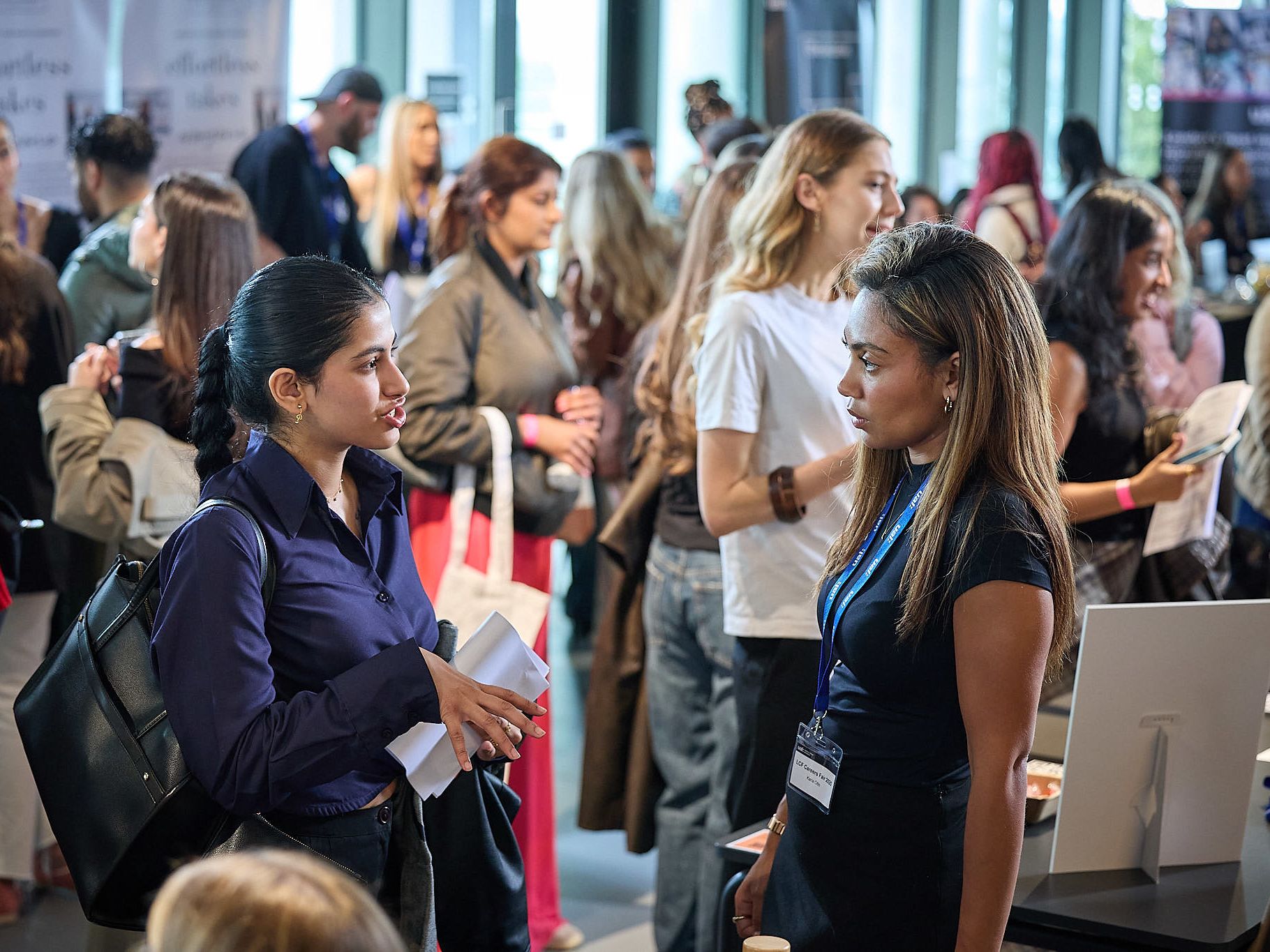
Hiring event staff in London the right way
- Written byArts Temps
- Published date 13 August 2026
Share story
What to prepare before you hire event staff in London
Key takeaways
- Staffing needs are shaped by your event format, guest count, venue layout, and level of service, not the other way around
- Event staff roles fall into three main categories: guest-facing, brand and promotional, and operational; knowing which applies to your event matters before you brief anyone
- Hiring through an event staffing agency transfers compliance and vetting responsibilities away from you
- A strong brief gives an agency what it needs to match the right people to your event, not just the nearest available ones
- You do not need every detail finalised before making contact; date, format, and approximate headcount are enough to start
Most events that end with staffing problems did not go wrong on the day. They went wrong several weeks earlier, when the brief was vague, the roles were undefined, or the agency was contacted too late to do its best work.
The friction rarely looks dramatic. It shows up as a host who needed more direction than expected, a registration desk that ran slower than it should, a team that was the right size on paper but wrong for the format. These are not failures of execution; they are failures of preparation.
The UK events industry is valued at £61.65bn, and the staff behind each of those events shape how they are experienced. Getting that right starts before anyone picks up the phone.
Map your event before you think about staffing
Headcount is not the starting point. It is an output; one that follows from understanding what your event actually involves.
Before you can scope your staffing needs, you need a clear picture of the event itself. These are the variables that drive the staffing calculation:
- Event format: A seated dinner, standing reception, trade show, brand activation, and conference each need different roles in different combinations. Format determines the shape of the team.
- Guest count and flow: Total numbers matter, but so does how guests move. A fixed-seat audience needs different coverage to a multi-zone activation where guests circulate.
- Duration including setup and breakdown: Shift lengths need to account for time before doors open and after they close. A team that can cover a six-hour event may not be the right fit for a ten-hour one.
- Venue type and layout: A single open space is staffed differently to a multi-room venue or an outdoor site. Layout affects where people need to be and how many are needed to cover it.
- Level of service: Formal plated service, canapé service, and self-serve bars carry different staffing ratios and skill requirements. Knowing which applies changes the numbers significantly.
Once these variables are clear, the role picture tends to follow naturally.
Deciding which roles your event needs
A job title tells you what someone is called. What matters for event staffing is what they will actually be doing on the day and who they will be interacting with.
Role category | Roles | Best suited to |
Guest-facing and front-of-house | Hosts and welcome staff, ushers, guest registration and check-in teams, on-site support staff | Conferences, private functions, cultural events, and occasions where guest arrival and flow need managing |
Brand and promotional | Brand ambassadors, promotional teams, trade show and exhibition staff, sampling staff | Product launches, activations, trade shows, exhibitions, and events where staff are representing a brand or campaign to an audience |
Operational and on-site coordination | Event managers, event coordinators, operations assistants, on-site team leads | Large-scale events and multi-zone venues where the client team needs coordinated on-site support |
The distinction that matters most is not the job title but the type of interaction. Guest-facing roles depend on composure and communication. Brand and promotional roles require product knowledge and sustained energy. Coordination roles need people who can manage a moving picture across an entire event, not just one part of it.
If you are unsure which combination applies, a brief is still worth submitting. A good agency will ask the right questions to help you work through it before anyone is placed.
Some events require specialist roles such as security staff, stewards, crowd marshals, and licensed door staff. These fall outside a standard event staffing brief and are typically sourced through specialist licensed providers separately.
Your options for hiring event staff in London
There are two main routes to sourcing event staff, and they suit different needs.
The first is supplier marketplaces and direct-booking services. These let you submit a request and receive quotes from multiple providers, or book staff directly online. They can work well for straightforward, lower-volume needs. The trade-off is that vetting, briefing, and contingency are yours to manage. Under the Agency Workers Regulations, compliance obligations sit with whoever employs the staff, and when you go direct, that responsibility falls on you.
The second is an event staffing agency in London. Here, the agency handles matching, vetting, briefing, and contingency. You get a managed process with a single point of contact rather than a list of individual providers to coordinate.
Supplier marketplace or direct booking | Event staffing agency | |
Vetting and compliance | Employer-led; right-to-work checks and contracts are your responsibility | Agency-led; the agency handles checks, contracts, and statutory obligations |
Briefing and matching | Employer-led; you select from available staff | Consultative; the agency matches staff to your brief and brand |
Contingency cover | Employer arranges; if someone cancels, finding cover is on you | Agency manages; the agency holds a pool of vetted staff to cover absences |
Ongoing relationship | Transactional; starts fresh each booking | Builds over time; staff who know your events can be requested again |
For events where brand representation, guest management, or reliable on-day coordination matters, the agency route reduces the risk of things going wrong at short notice.
How to create a brief for an event staffing agency
The quality of the match an agency can make depends directly on the quality of the information it receives.
A strong brief does not need to be long. It needs to cover:
- Event type and format (seated, standing, activation, conference, exhibition)
- Date, venue location, and total duration including setup and breakdown
- Confirmed or estimated guest count
- Roles needed and approximate headcount per role
- Dress code or any uniform requirements
- Any specific skills, languages, or experience relevant to the event
- Brand or venue guidelines staff should know before the day
A brief does not need to be complete before you make contact. Date, format, and role types are enough to start the conversation. A good agency will fill the gaps through the briefing process and ask what it needs to make the right match.
Hiring event staff in London through UAL Arts Temps
UAL Arts Temps is the social enterprise recruitment agency of University of the Arts London. For event staffing, we draw on a talent pool of UAL students, graduates, and alumni trained across 6 specialist creative colleges.
The event roles we fill include hosts, ushers, coordinators, brand ambassadors, and on-site support teams for corporate functions, cultural events, brand activations, and large-scale productions. Staff bring cultural awareness and professional presentation suited to events where the audience is discerning.
As a London-based creative recruitment agency, we are an accredited London Living Wage employer, meaning every staff member we place is paid a rate independently calculated to reflect the real cost of living in the capital. We are also a corporate member of the Recruitment and Employment Confederation, with processes independently assessed against its professional code of practice.
Working with Arts Temps means support that does not stop at placement. If something needs adjusting after staff are confirmed, you are not managing it alone. That values-led approach to recruitment is a different experience to sourcing staff through a supplier marketplace, where the transaction ends at booking.
Get your event staffing right from the start
The work that shapes how an event is staffed happens well before the day. It happens when you map what your event actually involves, when you identify the roles that will make it run well, and when you put a brief together that gives an agency enough to work with.
Events staffed well tend to share one thing: the people behind them did the preparation early. Not perfectly, and not all at once, but early enough to give the process the time it needs.
Submit a hiring brief and the Arts Temps team will be in touch.
FAQs
How far in advance should you contact an event staffing agency in London?
For larger or more complex events, 4 to 6 weeks gives an agency time to identify, match, and brief the right people. Smaller events can often be staffed on shorter notice. Getting in touch early improves the quality of the match, not just the availability.
What happens if your event details change after briefing an agency?
Changes to guest count, timings, or roles after a brief is submitted are common. Communicate them as early as possible so the agency can adjust before the day. Most changes are manageable with enough notice.
Do you need a finalised venue before approaching an event staffing agency?
No. Date, format, and approximate guest count are enough to start. Venue details affect logistics but are not required for an agency to begin assessing your staffing needs. Waiting until everything is confirmed often means contacting an agency later than is useful.