Finding world-class fashion designers in London

- Written byArts Temps
- Published date 25 June 2026
Share story
Hiring a fashion designer who makes your brand stand out
Key takeaways
- Fashion designers specialise in different areas, and the right specialism for your brand depends on what you actually need them to do.
- A brief written for "a fashion designer" in general often leads to mismatched applicants and wasted time.
- London offers several routes to fashion design talent, each suited to different project types and timelines.
- The best hiring route depends on your budget, your timeline, and how much support you want during the process.
Two job adverts can both say "fashion designer" and describe entirely different roles. One might need someone who can sketch a collection from scratch. The other might need someone who can turn an existing concept into a pattern ready for production.
When you hire a fashion designer in London, this gap is where most hiring mismatches happen, since the job title tells you very little on its own. Getting clear on the work behind it first saves time and avoids awkward conversations later.
Fashion designer is not one job
"Fashion designer" covers a wide range of work, and most designers specialise in one part of it. Some focus on concept development: building collections, setting a creative direction, and responding to trend forecasting. Others focus on production: garment construction, pattern cutting, and turning a concept into something that can be made.
Designers also tend to specialise by category, and most fashion designers focus on one area, such as womenswear, menswear, childrenswear, sportswear, footwear or accessories. A designer with years in luxury womenswear may have little crossover with someone working in sustainable menswear or digital design. The table below sets out some of the main types you'll come across when hiring.
Type of fashion designer | What they focus on |
Womenswear designer | Clothing for women, spanning casual, occasion and formal wear |
Menswear designer | Clothing for men, often including tailoring, suiting and casualwear |
Knitwear designer | Knitted garments and accessories, using specialist knitting techniques and yarns |
Sustainable fashion designer | Eco-friendly materials and production methods, with environmental impact built into the design process |
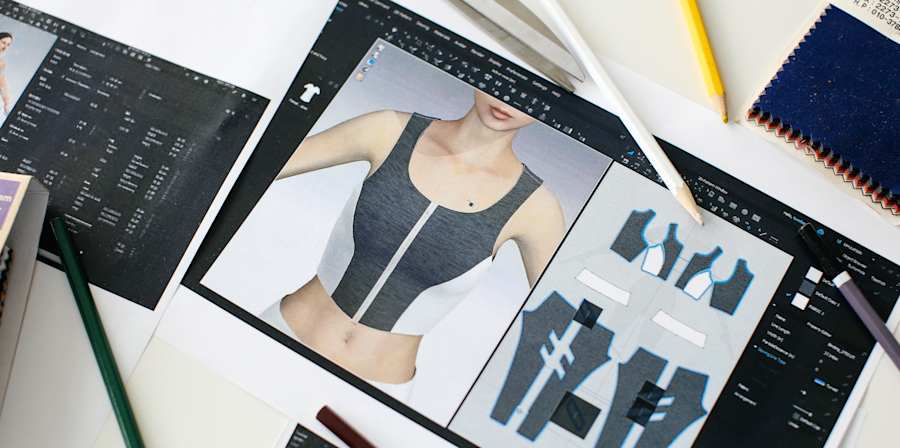
Digital or CAD designer | Digital tools to produce technical drawings, 3D visuals and design specifications |
Pattern cutter or production designer | Turning a design concept into a pattern and garment ready for manufacturing |
Naming the right specialism in your brief, rather than just "fashion designer," tells candidates and recruiters exactly what the role involves.
Define what your brand needs first
Once you know the range of specialisms you're choosing between, the next step is working out where your own project sits. A few steps make this easier.
- Decide whether you need concept development or production support. A new collection needs creative direction, while refreshing an existing range may only need help turning a concept into production-ready garments.
- Identify the category your project sits in. Womenswear, menswear, knitwear and accessories all draw on different design knowledge, so naming the category narrows your search considerably.
- Work out the technical skills the work requires. Some briefs call for CAD fashion design and tech pack design, others for hands-on garment construction and pattern cutting, and many need both.
- Decide whether this is a single project or an ongoing role. A one-off collection points towards project-based or freelance hiring, while continuous output across multiple seasons points towards an ongoing position.
With these answers in hand, you're ready to look at where to find that person in London, and which route fits your project best.
Where to find fashion design talent in London
Once your brief is clear, London offers several places to find fashion design talent.
Freelance platforms and marketplaces: Freelance platforms connect you directly with independent designers, often for project-based work, which suits a one-off brief such as a single collection. The creative industries rely heavily on this way of working, with a notably higher share of self-employed and freelance workers than the wider UK economy. The trade-off is that vetting falls to you, since portfolios vary widely.
Recruitment agencies and specialist partners: General and specialist creative recruiters can shortlist candidates for you, saving time compared with reviewing applications yourself. Specialist fashion recruiters tend to understand the specialisms covered earlier, which can reduce mismatches, though how much fashion-specific expertise an agency has varies.
Job boards and direct advertising: Advertising the role yourself, through job boards or your own channels, gives you full control: you write the brief, review every application, and make every decision. This route tends to take more time, particularly when assessing technical skills like pattern cutting from a CV alone.
Hiring through Arts Temps
UAL Arts Temps connects employers with fashion design talent from Central Saint Martins and London College of Fashion, two of UAL's specialist colleges. Both run courses structured around the specialisms covered earlier: Central Saint Martins runs separate fashion pathways in womenswear, menswear, knitwear, print and communication, while London College of Fashion's design courses span bespoke tailoring to sustainable and digital design.
This structure matters when you're hiring, as it means the talent we connect you with has trained within a specific specialism, not a general "fashion design" label. UAL is currently ranked 2nd in the world for art and design, a strength that runs across the fashion specialisms its colleges teach.
We take a consultative approach to understand your brief, then source, shortlist and introduce suitable candidates from our talent pool. Both temporary and permanent placements are supported, so whether you need someone for a single collection or an ongoing role, we can match the arrangement to your project.
As a social enterprise recruitment partner, we're London Living Wage accredited and a corporate member of the Recruitment and Employment Confederation. This values-led approach to recruitment means every placement meets fair pay standards, while connecting you with creatives who bring fresh thinking to your brand.
Get the right fashion designer for your next project
The clearer you are about what your brand needs, whether that's concept development, production support, or a category like menswear or knitwear, the easier it becomes to find the right person. Matching your brief to the right specialism is the difference between a hire that works and one that doesn't.
If you're ready to start, submit a hiring brief and our team will help you find the right fit for your brand.
Frequently asked questions
- How long does it typically take to hire a fashion designer in London?
A freelance platform can put you in touch with designers within days. Working with a recruitment partner to source and shortlist candidates usually takes longer, though it means less work for you along the way.
- Should I hire a fashion designer or a stylist for my project?
A fashion designer and a stylist do different jobs. The designer creates the garment itself, from an initial sketch through to a finished piece, while the stylist works with clothes that already exist, putting looks together for a shoot, show or campaign.
- Can I hire a fashion designer for a single project rather than a permanent role?
Plenty of fashion designers already work this way, taking on a single collection or project rather than a permanent position, so a fixed-term or freelance arrangement is a realistic option for most briefs.