Rebecca's story: From food waste research to a kimchi business
- Written byEllen Partridge
- Published date 30 July 2026
Share story
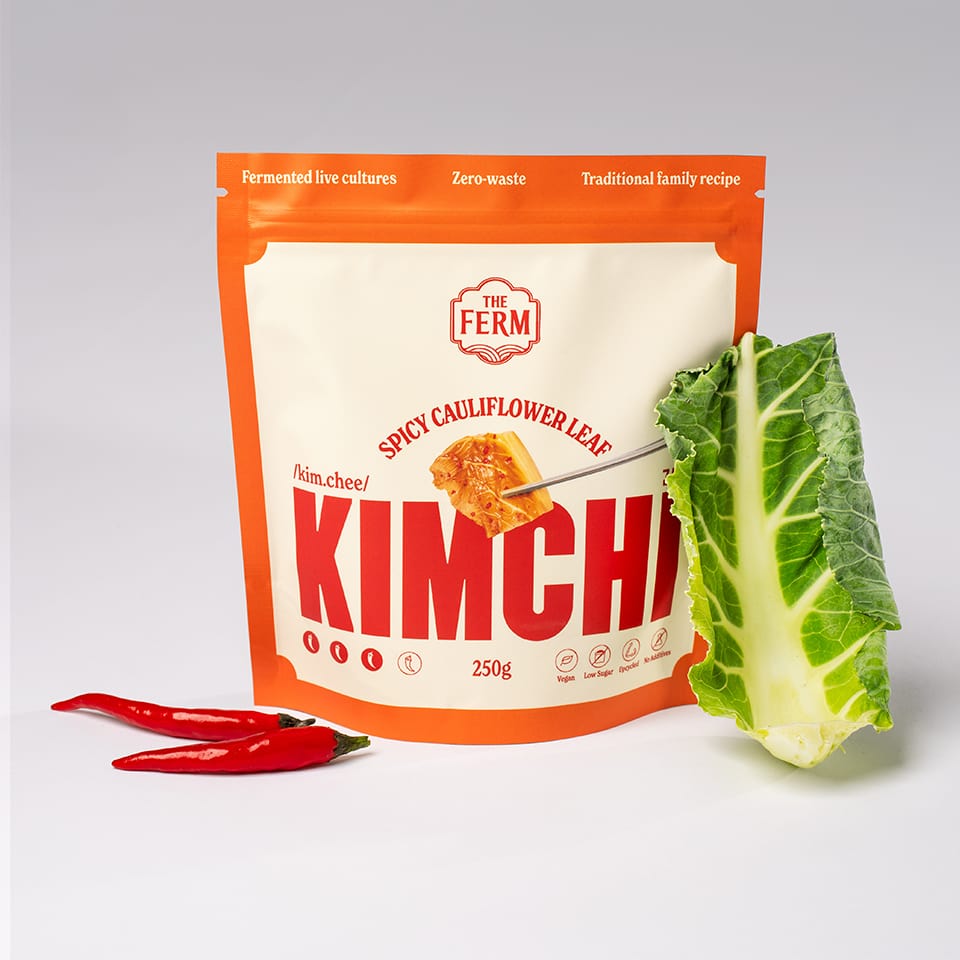
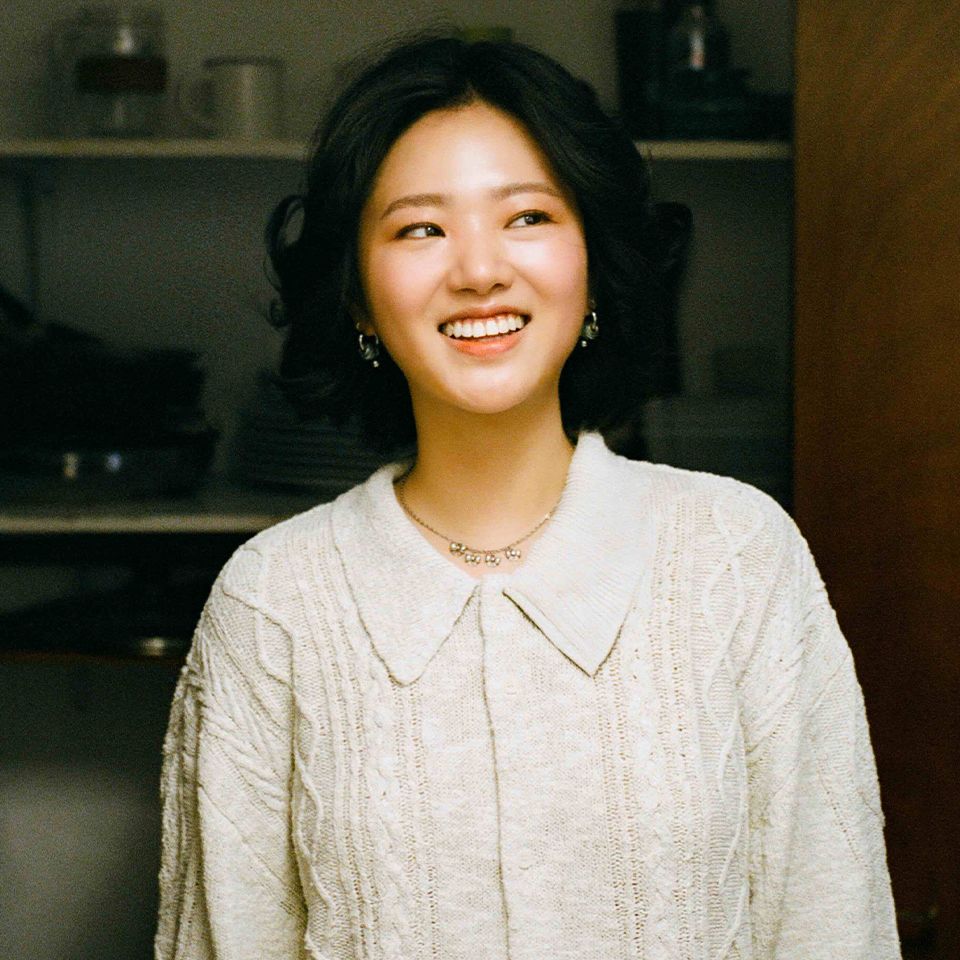
Rebecca Ghim is from Gwangju, South Korea and came to London to study her master’s at London College of Communication, UAL. Her research into food waste and food insecurity led her somewhere she never expected: founding her own business. The Ferm adapts traditional Korean fermentation techniques to turn British veg waste into kimchi, now stocked in stores across the UK.
Design with purpose
Studying her graphic design undergraduate course in the United States, Rebecca became disillusioned with ‘clickable’ design to promote impulse shopping.
Looking for a design course that was research-led with greater purpose, she discovered MA Design for Social Innovation and Sustainable Futures. The course would give her the freedom to explore topics she was interested in and give guidance on research methods. The impact went far beyond her design practice:
“The course really changed my day-to-day consumer behaviour, how I looked at design as a philosophy. So, it really was life-changing for me. It was deeply, profoundly meaningful and shaped my career.”
Specialising in food insecurity and waste
The course pushed Rebecca to root her research within a UN sustainability goal. Reflecting on a difficult relationship with food and frustrations with the food system, she chose food waste. The issue became even more urgent once she saw the data behind it.
“It was shocking to learn that 1/3 of food that is produced for human consumption is wasted. That's all the water, transport and labour that is wasted as well.”
While studying, Rebecca took the opportunity to volunteer at a food co-op in South London, Fareshares, and later worked on a Southwark Council brief on food insecurity as part of the course. These opportunities gave her valuable knowledge, but they also brought the issue of food insecurity a lot closer to home.
“Living in London, you don't really notice these things immediately, but there's quite a lot of food deserts. The food insecurity in certain demographics is quite severe. It was just a stark difference to what I've seen in Korea where even the poorest people would still have access to some level of food through foraging and fermentation knowledge.”
Her final units became increasingly personal to her, culminating in a dissertation on food justice and racial bias in the food system. Researching how Korean cooks have long used every part of an ingredient, she asked why that knowledge was so overlooked elsewhere:
“In Korea we use sweet potato stems, the leaves of chili, watermelon rind, but no one else is doing this. And yes, it's because we're resourceful – we’ve had to be because of war and poverty. But, why isn't anyone listening to this? I realised it's because Asian food is just not regarded as highly as European food. And therefore, this bias is creating a blind spot for people to integrate these techniques and insights.”
Her dissertation became a cookbook, built with resourceful recipes gathered from Buddhist monks, street vendors and generations of women whose culinary knowledge, Rebecca felt, had never been properly honoured.

The Ferm: From an idea to a business venture
Wanting to stay in the UK after graduation, Rebecca applied for a start-up visa UAL was sponsoring at the time. It was through this that an idea from her dissertation began to take shape into something real.
“I thought about how fermentation and kimchi could be a vehicle to reduce food waste. Any kind of fermentation technique unlocks so many different flavours. It tastes better, but also carries nutritional and digestive values as well.”
Drawing on her cookbook research, she looked for common ingredients in Britain that could stand in for parts of the vegetable Koreans traditionally use, such as sweet potato stems.
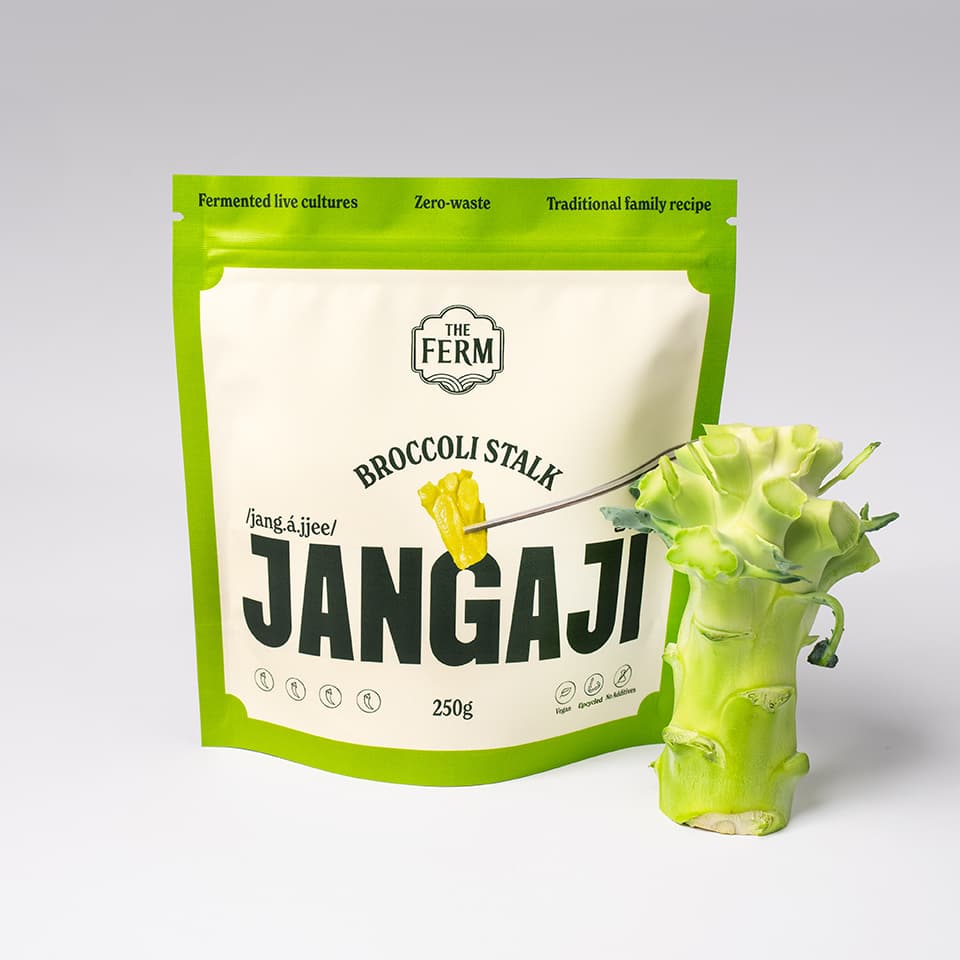
“I looked into the two ingredients that now feature in our products, cauliflower leaf and broccoli stems. They're super available over all over the UK, very sturdy, easy to transport. They don't wilt very fast.”
With no network in the food industry, Rebecca started from scratch, going to running and cycling clubs to meet chefs. She carried out lots of research and development into recipes, packaging, transporting goods, pricing and her product started to take shape. She started selling at farmers' markets most weekends and established a supply chain for waste veg within London, which was harder than she imagined.
“It's so easy to just order cabbages grown in Spain or the Netherlands and then they arrive to you the next day, whereas cabbage leaves from 20 minutes down the road in London, is so much harder to arrange.”
Milestones and next steps for The Ferm
While Rebecca had made great progress with the business by herself, meeting her business partner, Dr. Maylin Stanic, has really enabled the business to flourish.
“The Ferm has accelerated so much since I've met her. It's been a huge rollercoaster, but we're having so much fun. We're stocked in Planet Organic, and we’re launching with Selfridges in a few months. But what we're most proud of, I would say, is our team - people that we genuinely get along with that actually care about the company doing well.”
Every pouch of kimchi or jangaji carries a picture of Rebecca’s grandmother, a link between a kitchen in Korea and a factory in London. Seeing her grandmother represented on the product is a reminder of everything that has led to The Ferm’s success and how the products are really a story of immigration.
“To think my grandma didn't have an education and was just making kimchi out of necessity. And now in London, all the way across the world, people know about her work and her experiments and innovation. Because of that, I'm able to get a visa and stay in this place where I found home. That's really incredible.”
“The techniques and methods we use are traditional and true to my family recipe. But the ingredients that we're rescuing, like cauliflower and broccoli, are not available in Korea. These are British vegetables. It's not 100% ‘authentic’ but it's a story of immigration, like many different foods out there. It’s authentic to me, right?”
Interested to find out more?