Meet: Tere Chad

- Written byGiada Maestra
- Published date 06 May 2026
Share story
We caught up with alumna Tere Chad to discuss her creative process, which primarily focuses on sculpture and installation and her participatory cultural project, Neo Norte.
Tere studied MA Art and Science at Central Saint Martins (CSM), graduating in 2018.
"Being a creative artist involves a significant element of self-discovery: understanding who you are and what unique perspective you have to offer to the world."
Hi Tere! Could you introduce yourself?
A curator from Palazzo Butera in Sicily suggested the best way to introduce myself: "You're not an artist; you're a researcher who uses the medium of art to develop her research." At first, I wasn't sure if it was a compliment or a criticism, but I have now grown comfortable with the idea of being a researcher who uses art to understand our reality, human inconsistencies, and to resolve everyday problems.
My main media are sculpture and installation, and I am a trustee of the Royal Society of Sculptors.
What did you study at UAL, and how has that shaped your creative thinking and practice?
I studied MA Art and Science at Central Saint Martins (CSM) and graduated in 2018. The programme shaped my artistic practice as a form of research. Both artistic and scientific research are driven by curiosity, which acts as a motor in our attempt to comprehend our existence and the phenomena that sustain it. The key difference is that, while science uses rational methods to measure the variables involved in testing a hypothesis through our five senses: the arts use intuition, embodiment, feelings and expression as methodologies to explore the same questions.
The course helped me understand that the arts are just as indispensable as science in the development of our societies. I believe it is a mistake that our educational systems tend to segregate multidisciplinary thinking, because with AI and new technological developments we need, now more than ever, versatile and flexible professionals. I feel extremely privileged to have been able to study this pioneering course, which encourages creativity at its fullest potential.

What motivated you to choose Central Saint Martins (CSM)?
I chose CSM not only because it was the only university in the world to offer a master’s programme in Art and Science, but also because of its strong, avant-garde stance in fashion. Being a creative involves a significant element of self-discovery: understanding who you are and what unique perspective you have to offer to the world. This exercise in introspection is expressed through extrospection, through the construction of a persona, your brand and how you wish to be perceived by your audience. As an artist, you work 24/7; you are always your brand, a condition further exacerbated through social media. Each day felt like a runway, which compelled you to construct your persona and work on what you wanted to convey as an artist, starting with the basics: how you present yourself.

What did you enjoy most about your time at UAL?
What a difficult question! I enjoyed UAL so much that I would have stayed living inside if I were given the option; the security staff often had to usher me out at closing time. However, what I appreciated most was the experimental approach to education and the strong encouragement to collaborate in cross-disciplinary teams. To be truly creative and make a meaningful impact, you need to be able to lead and work within teams.
Yesterday in the studio, I listened to a podcast reflecting on the nature of creativity; they discussed the idea that developing creative projects requires collective effort and persistence to turn dreams into reality. UAL gives you both the confidence and the tools to materialise your ideas through teamwork and perseverance. It provided an environment that made me realise that, regardless of coming from the Southernmost country in the world (Chile), I was there to innovate. It made me feel that, through collective hard work, I could make a difference and empower creatives from the Global South through a project such as Neo Norte.

Could you tell us more about your project, Neo Norte?
When I arrived at UAL, it was my first time in Europe, and I soon became aware of the limited knowledge about Latin America. In Chile, I had studied Europe extensively at school and during my BA, whereas the common cultural references from my peers when I mentioned I was Latin American were ‘sun, samba and Narcos’, even though my country has neither tropical weather nor samba.
During the library induction, the librarian mentioned that they were in the process of decolonising the archives. After noticing the lack of books about Latin America, I co-founded the Latinos Creative Society in 2017 and, through the Latin American House, helped to donate several books to CSM’s library. I invited other students to collaborate on a manifesto, which received a grant from the Postgraduate Community Enhanced Project Fund. This, in turn, enabled me to curate an exhibition ‘Latin American Myth Deconstruction’ at the Crypt Gallery in Euston.
The projects developed with the Latinos Creative Society allowed me to build a portfolio and to present Neo Norte 1.0 at the Fundación Cultural de Providencia in Santiago, Chile, in 2018. Neo Norte is an artistic research project where I have invited more than 170 creatives to express, across different art forms, what would happen if the South became the new North. Inspired by Joaquín Torres García’s School of the South (1935), I have presented the project in five countries: Chile (2018), the UK (2019), Finland (2021), Italy (2023–2024) and Brazil (2024–2026), reaching over 574,000 visitors.
In its fifth edition in São Paulo, Neo Norte became a participatory cultural project that used textile upcycling and performance to reimagine the cultural values of the South, which we wish to project globally.
Neo Norte explores four main subthemes:
- Migration as creative destruction
- Cultural syncretism
- The integration of the digital with the natural environment
- Shamanism from both pre-Columbian and Western perspectives.

You ran a series of performances in November and December 2025. What did you want to communicate or achieve with the public through these performances?
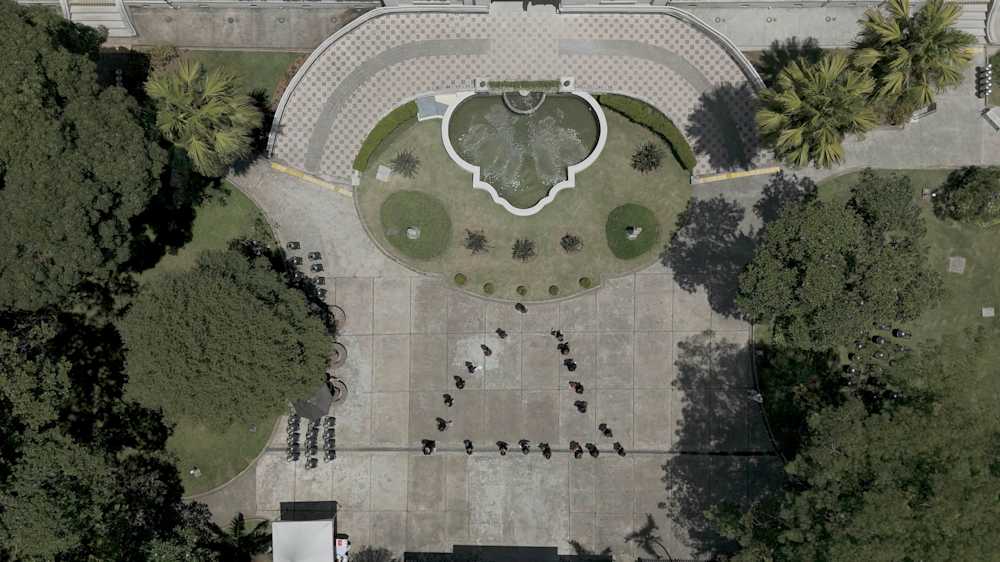
Neo Norte 5.0 proposed a collective form of resistance by reassessing our intuition and the cultural values of the Global South, suggesting alternative ways of confronting climate change. Through an upcycling marathon, a group of artists undertook a residency at the Memorial da América Latina to create the costumes and scenography used in three performances. Textile upcycling functioned as a method for mending the social fabric, while performance offered a ritual space for the emancipation of the body. All societies possess distinct ritual traditions, many of which have been altered by modern life. I therefore feel that performance as a media often acts as a contemporary form of ritual that can bring communities together.
Neo Norte 5.0 comprises 3 main performances:
- Performance 1: ‘Act of Relational Art with Migrants’
- Performance 2: ‘Women Healing the Earth’
- Performance 3: ‘The Voyage from the South’.

What’s next for you and Neo Norte?
When you complete a major project, it is important to allow time for reflection. I dedicated February to introspection: sharing the outcome report and documentary of Neo Norte 5.0 with partners, distributing the publication, evaluating achievements and areas for improvement for future editions, and planning the other projects I have scheduled for this year.
I’m currently working on my first public art commission in Kensington. I also had a performance in Sicily in March, an exhibition at Falconhurst Estate in Kent later that month, a project under evaluation in Mexico, another in Northern Ireland, and 3 projects in development in London.
Regarding Neo Norte, I have started conversations with institutions interested in potentially hosting the sixth edition in Nigeria, Paraguay or Bolivia. Ultimately, my ambition is to transform Neo Norte into a Foundation or Trust to support creatives from the Global South; however, to reach that stage, I must first ensure that each phase of the project is developed with great care and rigour.