
Top 6 styles of animation

- Written byJamison Kent
- Published date 20 October 2026
Share story
Key Takeaways
- Animation is a diverse and dynamic creative field.
- There are 6 types of animation styles, including 2D, 3D, stop motion, motion graphics, hybrid and anime animation.
- The role of artificial intelligence in animation production is evolving.
- University of the Arts London (UAL) offers a variety of courses for those looking to explore animation.
According to recent research, the global animation market was valued at $462,32 billion in 2025 and is expected to hit around $953.31 billion by 2034. The industry is growing rapidly, and recent technological advancements have increased the demand for skilled and adaptable animators.. The industry is growing rapidly, and recent technological advancements have meant that skilled animators are in high demand.
Animators bring images to life, transforming them into exciting sequences that work by creating an illusion of movement. Animation has an important role in the media and entertainment industry and is used in many different fields today, including film, TV, marketing, gaming, and education.
If you’re interested in a career in animation, take a look at our blog post on how to become an animator for some tips on how to get started. It is important to be familiar with the history of animation and types of animation styles to identify the kind of work you’d like to specialise in.
If you’re unsure about which types of animation you’d like to specialise in, UAL short course tutor Francesco de Manincor, a character and motion designer has advice.
Francesco recommends spending some time experimenting: "try different styles and techniques and don't be afraid to make mistakes. It’s a great way to learn and define what you like and want to do. Don’t let the tools, particularly software, dictate what you create. Mix traditional, analogue, and digital."
What is animation?
You may be wondering: what is animation? Well, animation can be defined as the process of creating the illusion of movement by displaying a sequence of images in quick succession. Technology has changed a lot since the early days of hand-drawn animation. There are more creative tools available to animators now than ever before. Today, animators work across several distinct styles.
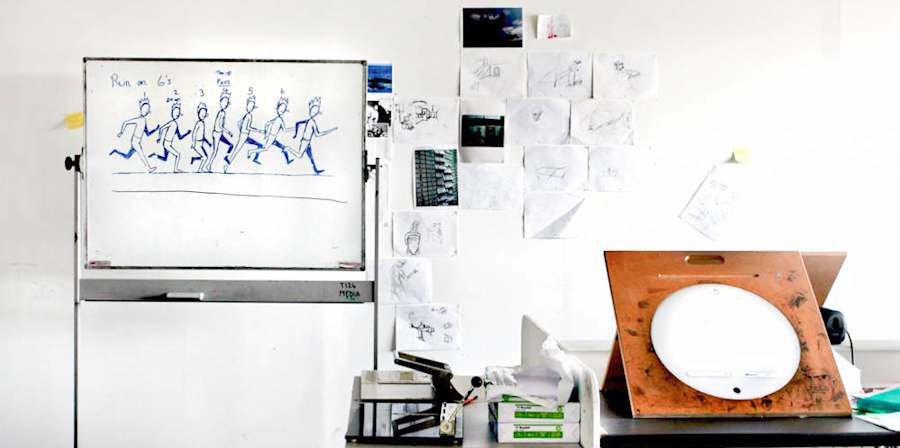
Different styles of animation
You are likely to encounter at least one style of animation every day whether it is on your Instagram feed or an advertisement on public transportation. The 6 different animation styles include: 2D, 3D, stop motion, motion graphics, hybrid and anime animation.
2D animation
2D animation is all about creating movement in a 2-dimensional space. This style includes traditional and vector-based animation. Traditional animation, the oldest form, is when an animator meticulously hand-draws each frame on paper, which is then photocopied or retraced onto transparent acetate sheets. Paint is applied, and each cel is photographed to produce an animated sequence.
This kind of animation was used by Walt Disney Animation Studios in many of their early films, including The Lion King (1994), Sleeping Beauty (1959), and Cinderella (1950). Traditional animation is a good choice for artists who enjoy working with analogue media; however, it is a lengthy process that requires considerable attention to detail. If you are interested in exploring the craft, UAL offers a Drawn Animation for Beginners short course.
Advancements in animation software have meant that 2D vector-based animation is now an increasingly popular choice for artists. Rather than sketching every frame, artists can reduce production time and costs by using software such as Toon Boom Harmony, Adobe Animate, and Adobe After Effects to manipulate images.
Examples of 2D animation are everywhere: TV shows, video games, websites, mobile apps and feature films. Some well-known 2D animations for TV include The Simpsons, South Park, Rick and Morty and Family Guy.
3D animation
3D or computer animation is the process of creating 3-dimensional moving images in a digital environment using computer-generated models, giving characters and objects depth, lighting, and shadow. The specialised animation software, such as Autodesk Maya or Blender, uses motion to bring characters and props to life. The process is often divided into three main stages: modelling, layout and animation, and rendering. If you are looking to familiarise yourself with animation software, UAL offers Animation and Visual Effects using Maya and Blender for Animation short courses.
The aim of 3D is to capture the personality traits of characters, which can be achieved by giving a character bones, skin weights, and constraints that enable it to move in unique ways. Many of Pixar Studio’s classics, like Toy Story (1995) and The Incredibles (2004), use 3D animation. It is also commonly used in video games, for example, Fortnite and Grand Theft Auto V. According to recent research, 3D is the largest animation segment by market share.
Stop motion
Stop motion animation is a technique that is achieved by capturing one frame at a time, using physical objects or props that are moved between frames. When the sequence of images is played back at rapid speed, an illusion of movement is produced. Clay figures or puppets with movable joints are often used in stop motion animation.
Stop motion was often used for special effects in live-action films but is now less common. However, many filmmakers continue to work extensively with stop motion, including Tim Burton and Henry Selick. Aardman. LAIKA Studios’ feature Wildwood (2026), is the studio's most ambitious stop-motion project to date, with 136 sets and more than 230 puppets.
Motion graphics
Motion graphics refers to a style of animation that utilises text as a major component to communicate a message. The focus here is on adding movement to specific graphic design elements that would otherwise be static. Shapes, objects and text can effectively be set in motion to create a powerful visual display.
Motion graphics may be used in the development of video titles, logo graphics, social media applications and digital marketing strategies. The title sequence of Hitchcock’s classic film, Psycho (1960), is a great example of this style and illustrates how elements like sound, motion and graphic design can work in harmony.
Mixed media and hybrid animation
This style combines more than one animation technique within a single project. This would include: 2D characters within 3D environments, hand-drawn textures layered over CGI models, or animation blended with live action footage. For example, the Academy Award-winning Spider-Man: Into the Spider-Verse (2018) combined 3D computer animation and hand-drawn 2D techniques to create an innovative aesthetic inspired by comic books.
Renowned Studios around the world have increasingly utilised a hybrid animation style to achieve a distinctive, handcrafted visual identity that stands out from the popular photorealistic 3D style of work being made today.
Anime and anime-influenced animation
Originated in Japan, anime is a style of animation known for stylised characters, expressive detail, and serialised storytelling. Anime’s popularity in Asia paved the way for its popularity worldwide, causing it to be a major global influence on animation more broadly.
Studio Ghibli, which is responsible for films like Spirited Away (2001) and My Neighbour Totoro (1988), is one of the most famous anime studios in the world and is deeply dedicated to 2D techniques. UAL's Character Design for Animation short course is a great way to learn how to make iconic characters like Totoro.
Western studios are adopting anime-inspired visual approaches, which has resulted in a new subgenre style of animation called animesque. A recent example of this is Australian studio Flying Bark's animated series Stranger Things Tales from ‘85, which blends anime-style action with comic book nostalgia.
How AI is changing animation
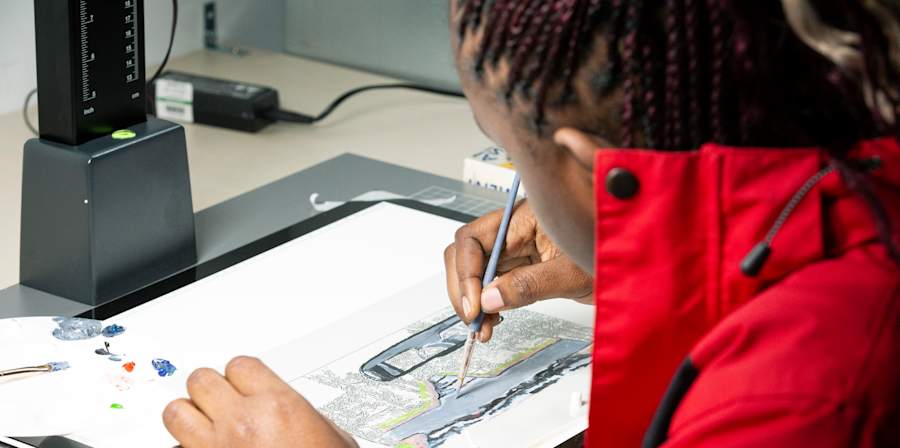
The use of artificial intelligence is increasingly common within animation production for tasks such as inbetweening, rotoscoping, and rough motion tests. Some studios and artists believe that it is a tool that can be used alongside, but not replace, traditional techniques to improve work.
At the 2026 Annecy International Animation Festival, animator Hisko Hulsing's short film Danse Macabre drew public attention after Hulsing publicly disclosed that he incorporated generative AI tools during production of the film.
The role of artificial intelligence in the creative and entertainment industries is a polarising issue, and the field of animation is no exception. As technology develops rapidly, there are new implications regarding the use of artificial intelligence in creative production. The implications, including financial, ethical and environmental, influence the ongoing debate within the industries.
Explore animation courses at UAL
A great starting point for anyone looking to learn a new craft is to start with the fundamentals. UAL offers an Adobe After Effects and Animation Beginners short course that will teach you the basics of Adobe software widely used by creative professionals. If you’re interested in learning more about the art of animation, take a look at our wide range of short courses on the subject. We also offer animation courses for young artists with our Animation for 16 to 18 Year Olds or Animation and Illustration for 16 to 18 Year Olds online short courses.
Find the animation style that fits you
The field of animation is diverse and innovative, shifting alongside new technologies. There are a variety of animation styles to explore and make your own. It is never too late to explore a new craft or a new creative career.
Francesco de Manincor, Animator and UAL short course tutor, has some advice for anyone who is looking to pursue a profession in a creative industry: “If you want to work professionally, you need skills beyond talent and creativity; you need perseverance and stamina (animation takes a long time to produce). Believe in yourself even if you have doubts. Talk to others, show your work and get feedback. Don't be discouraged and develop resilience."
All creative journeys begin with curiosity. There is so much more to explore with the art of animation, and a course at UAL is a great place to start. Where might your curiosity lead you?
