Meet MA Internet Equalities graduate Phoebe Lemon
- Written byStéphanie Malm
- Published date 02 September 2026
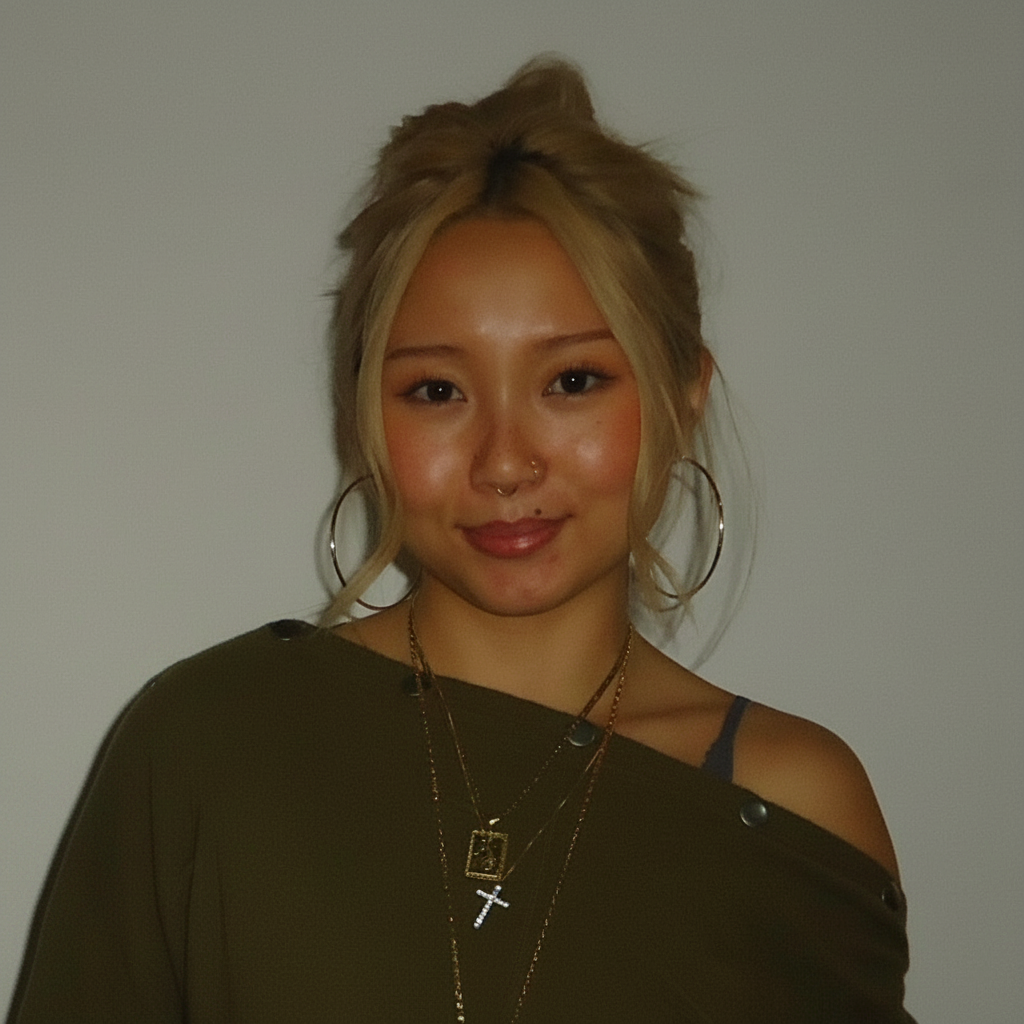
Phoebe Lemon studied the MA Internet Equalities course at UAL Creative Computing Institute (CCI). We caught up with her and spoke about her experience studying a postgraduate degree and her project 'How Will I Be Remembered ' which won the Equality and Access Award at the CCI Winter Festival in 2025.
Can you introduce yourself and tell us a bit about your background?
My name is Phoebe Lemon. I grew up in the west coast of the United States, although I was born in China and was adopted at the age of 1. I’ve been living abroad since I was 18; I moved to Shanghai to study my bachelor's in interactive media arts, lived in Abu Dhabi for a bit, and moved to London to complete my master's.
What made you choose to study MA Internet Equalities at UAL’s Creative Computing Institute?
I think by the end of my bachelor's I was ready to shift my creative practice into something that was closer to social research and humanities. During my undergraduate studies I was taught how to code, how to build robots, all the technology you could imagine, but I was always interested in how technology works alongside systems power, and how inequalities move across physidigital space. Additionally, as a Chinese adoptee living abroad, questions around identity, power and place have always been at the forefront of not just my personal life but woven into my research and creative projects as well. For me, technology and digital media became both sites and methods to question these things. When I decided to pursue a master’s, I felt that MA Internet Equalities' core values and aims fit perfectly with the direction I was seeking and really spoke to who I was as a creative.
How did studying help you develop your creative practice further?
I think increasingly there are more artists, especially those working in creative tech, that are looking for the next step in their practice, ie. What can I do with what I’ve built? How can I make in a way that has intention, purpose, and positive social impact? I think this course, which sits at the crux of the arts, humanities, and computer sciences, is really focused on answering those questions. What’s most special about this course is how it can teach students from any arts background how to develop their specific practice in a critical, socially grounded way. It teaches that creativity requires research, and research requires creativity.
What I've found is that it’s unlike a traditional arts degree, we learn to move beyond simply how to 'make', but where that making comes from, who it benefits and who is excluded. Through learning foundational theory in anthropology, humanities, and design, we develop language and design tools for situating technology and digital media within historical, social, and political contexts, and in turn how to question them. We are exploring how to identify (in)equalities and how to do something about it through the act of critical making.
From a technical standpoint, it’s also unlike a traditional computer science or related degree, where, while you learn programming skills – how to code, how to wire circuits, how to design interfaces, it’s in a way that is sort of very removed from how systems work as layered, structures wholes. You build things zoomed in, focused on the function or aesthetics of one piece alone, and we don't often critically examine how each part (the code, the interface, the data infrastructures) actually work together to create complex systems that can have real impact, and real harm. In MA Internet Equalities, we learn as much about how to code and build things as we do understand how bias, exclusion, and extraction is built through each layer of design, and then how to build something better.
For me personally, I came into this degree with a strong computing background, although I left as a refined researcher who has learned most importantly how to ask a question, for questions are the root of all change. I think that speaks to the heart of this course because, while students learn a range of technical skills, this course is not rooted in one specific discipline or medium nor does it intend to be. Instead, it is about learning how to ask questions and how to bridge the gap between theory and practice such that our art does more than sit in a museum, to do something about a problem rather than simply show it. I strongly believe that these are skills that students can take with them no matter what path they choose upon graduation.
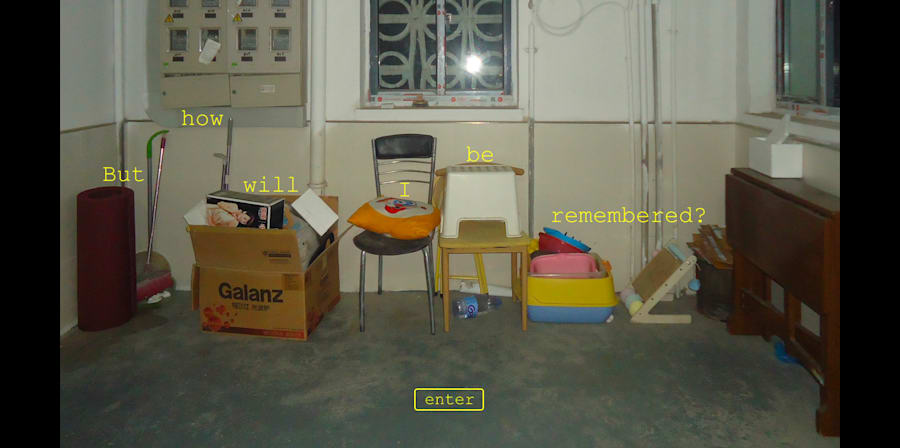
At the CCI Winter Festival in 2025, you won the Equality and Access Award and the Jury’s Award for Exceptional Projects, tell us more about the project and what it means to you?
This project is so special to me because I feel like it encapsulates who I am not just as young researcher but as a person, as an adoptee, as an advocate for my community. But How Will I be Remembered began brewing in the fall of 2024, where news released about the Chinese government suspending all international adoptions. The title of the work is actually pulled from a TikTok comment section where discourse around what this news meant for the adoptee community sparked all sorts of debates and personal testimonies. One adoptee’s words, “but how will I be remembered?” spoke to the heart of everything I was feeling in the moment and what felt most pressing for our community: what will become of our history when there is no one left to tell it?
I reflected on the legacy adoptee history in the context of the archive, where records are routinely missing, inaccurate, or were never written at all. These records exist in parallel to narratives created by institutions in favor of dominant, colonial narratives that create grief, pain, and real emotional gaps within the lived experiences of adoptees, including my own.
Hence, this project brings together both my lived experience and the stories of other adoptees, where we explored what an archive in agency, care, and collective ownership could look like. Together we prototyped a digital archive that aimed to hold space to critically question, critique, amend, and rewrite their stories in their own terms.
This was not my first time doing a project about adoption, although it marks an important moment for me being able to approach it with a new lens, ie. to do research that gives back to the community it aims to serve. At MA Internet Equalities we work extensively with the theory-practice gap, and how real change comes from the continual, iterative process of challenging power dynamics, where our own research practice is no exception. The archive serves as an example of why care, reflexivity and lived experience matter in technology's design, and how community knowledge is itself a form of resistance.

What advice would you give to someone who is thinking about studying MA Internet Equalities at UAL’s CCI?
I would say not to be scared whether your background is ‘enough’ for this course. Students come from an array of backgrounds, including graphic design, engineering, and even fine arts. How to code, how to work with data and other technical skills we will learn. All you need to arrive with is curiosity and eagerness to question.