Postgraduate

MA User Experience Design


College
London College of Communication
Start date
September 2026
Course length
1 year 3 months full-time (45 weeks across a four-term model)

This professionally focused, design-led course will equip you with the specialist skills to conceive, prototype and produce human-centred experiences in an interactive digital context.

Course summary

Term dates

The term dates for this course are different from the standard UAL term dates. This is a temporary change while we move into our new building.

  • From September 2026 to June 2027 you will study in our current building. The final week of the Summer Term (June 2027) will be taught online.
  • During your final term (Autumn 2027) you will study in our new building. Your term starts on 4 October and ends on 17 December.

View Postgraduate term dates

Why choose this course at London College of Communication

Industry Engaged: Work on live briefs with top design studios, research labs, and community organisations tackling real-world UX challenges. Recent partners include R/GA, UCL, and Kinda Studios.

Design led UX: The course puts studio practice at the centre. Supported by a community of practice and grounded in a critical awareness of design methods and processes, you can expect to be designing new digital, sensory and immersive experiences from the start.

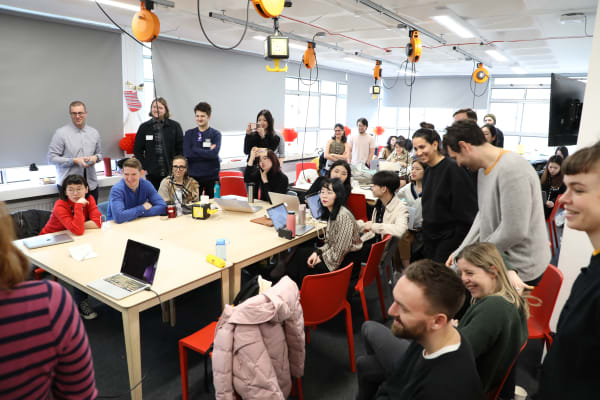
Collaborative and interdisciplinary: Explore UX through theory and practice. Engage with UX’s practical and theoretical origins with inspiring staff and students with diverse backgrounds and disciplines from all over the world.

Skills: Go beyond screens—develop expertise in research, interaction design, prototyping, concept development, and evaluation to design meaningful, embodied experiences, a constellation of skills that will prepare you for your future career.

Criticality: Experiment with alternative approaches and challenge the power structures behind UX practices.

Open Events

The next Open Evening for this course will be announced soon.

A recording of our latest Virtual Open Event for this course is available. Watch online.

Course overview

On this industry focused and design-led course, you'll learn how compelling user experiences are designed, tested, and evaluated.

The course covers the advanced studio skills of user experience design, including the methods and practices of user research through the critical-theoretical background.

What can you expect?

You'll gain knowledge of the relevant tools, materials and practices that make up user experience design in the context of the community of practice represented by London College of Communication.

With a focus on design for complex systems, emerging technologies and integrated experiences, you’ll develop an informed approach which builds on a foundation of graphic, communication and interface design values through open inquiry and creative risk-taking.

Work experience and opportunities

The methods and tools of user research are emphasised throughout and you will be challenged to collaborate on live industry briefs covering varied topics such as UX for wearable technologies, smart cities, data visualisation and social transformation.

The course is intended for people who have completed an undergraduate degree in design, social sciences, digital technologies, media and communications, and associated degrees.

We also anticipate that applicants will be working designers wishing to deepen their practice and develop new opportunities.

Mode of Study

MA User Experience Design is in Full Time mode which runs for 45 weeks over 15 months. You will be expected to commit 40 hours per week to study.

Contact us

Register your interest to receive information and updates about studying at UAL.

Contact us to make an enquiry.

Course units

We are committed to ensuring that your skills are set within an ethical framework, and we have worked to embed UAL’s Principles for Climate, Racial and Social Justice Principles into the curriculum and in everything we do.

As part of this initiative, we’ve shaped our courses around social and environmental sustainability principles that ensure learning outcomes reflect the urgent need to equip you with the understanding, skills, and values to foster a more sustainable planet.  Our aim is to change the way our students think, and to empower you to work towards a sustainable future. 

Autumn, Term 1

UX Studio Practices (40 credits)

This unit aims to provide you with a critical understanding of user experience design in the context of contemporary studio practice.

It will help you position your approach to the subject relative to the current theoretical ideas and working practices of user experience design.

You will also develop a critical awareness of how physical, personal and social contexts shape design processes.

Spring, Term 2

Macro UX (20 credits)
Collaborative Unit (20 credits)

The Macro UX unit involves working with an external partner on live briefs. You can choose to work with industry or third sector organisations around a set of broad themes including; UX for smart city technologies, UX for cultural placemaking, UX for the future of publishing and UX for archives and collections.

The Collaborative Unit is designed to enable you to identify, form and develop collaborative working relationships with a range of potential partners. These could be: postgraduate student colleagues at the college or university level; postgraduate students at other Higher Education Institutions; external parties (e.g. companies, cultural organisations, community-based groups, NGOs, charities etc.)

Summer, Term 3

Micro UX (40 credits)

This unit is intended to allow you to work with a different external organisation, exposing your evolving practice to different views and alternative methods.

Collaborations are organised around broad themes including; UX for health and wellbeing, UX for data visualisation, UX for human-robot relations, and UX for performance and public participation.

You will be expected to initiate and implement a UX design project around two of these themes, drawing on the research journey you devised and the design process you established in Macro UX.

Autumn, Term 4

Final Major Project and Portfolio of Writing (60 credits)

The aims of the Final Major Project and Critical Context Report are to offer you the opportunity to engage in a major research-led project in which the emphasis will be on defining, analysing and developing an individual and focused approach to user experience design.
Learning and teaching methods

  • Lectures
  • Seminars
  • Workshops
  • Guest speakers
  • Group and individual tutorials 

Assessment methods

  • Practical Projects
  • Critical Reports
  • Presentations through a range of media
  • Developmental Blogs for reflective practice
  • Research Proposals Portfolio of Evidence

UAL Showcase

Explore work by our recent students on UAL Showcase

Student Voices

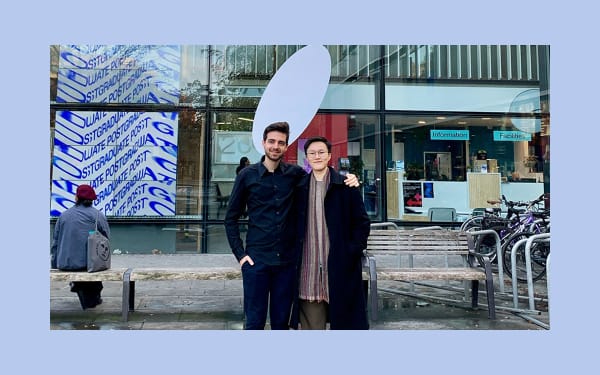
Manfredi Montaretto Marullo

Nayla Fayoumi

Nayla speaks about her final year project, Craft, a platform that enables employees to shape their job accordingly to their skills and interests.

Wan Li tells us about her collaborative and multi-sensory final piece.

Student work

  • Line drawing of street.
    Erick Montenegro, 2020. MA User Experience Design, London College of Communication, UAL. 2020
    MA User Experience Design, London College of Communication, UAL
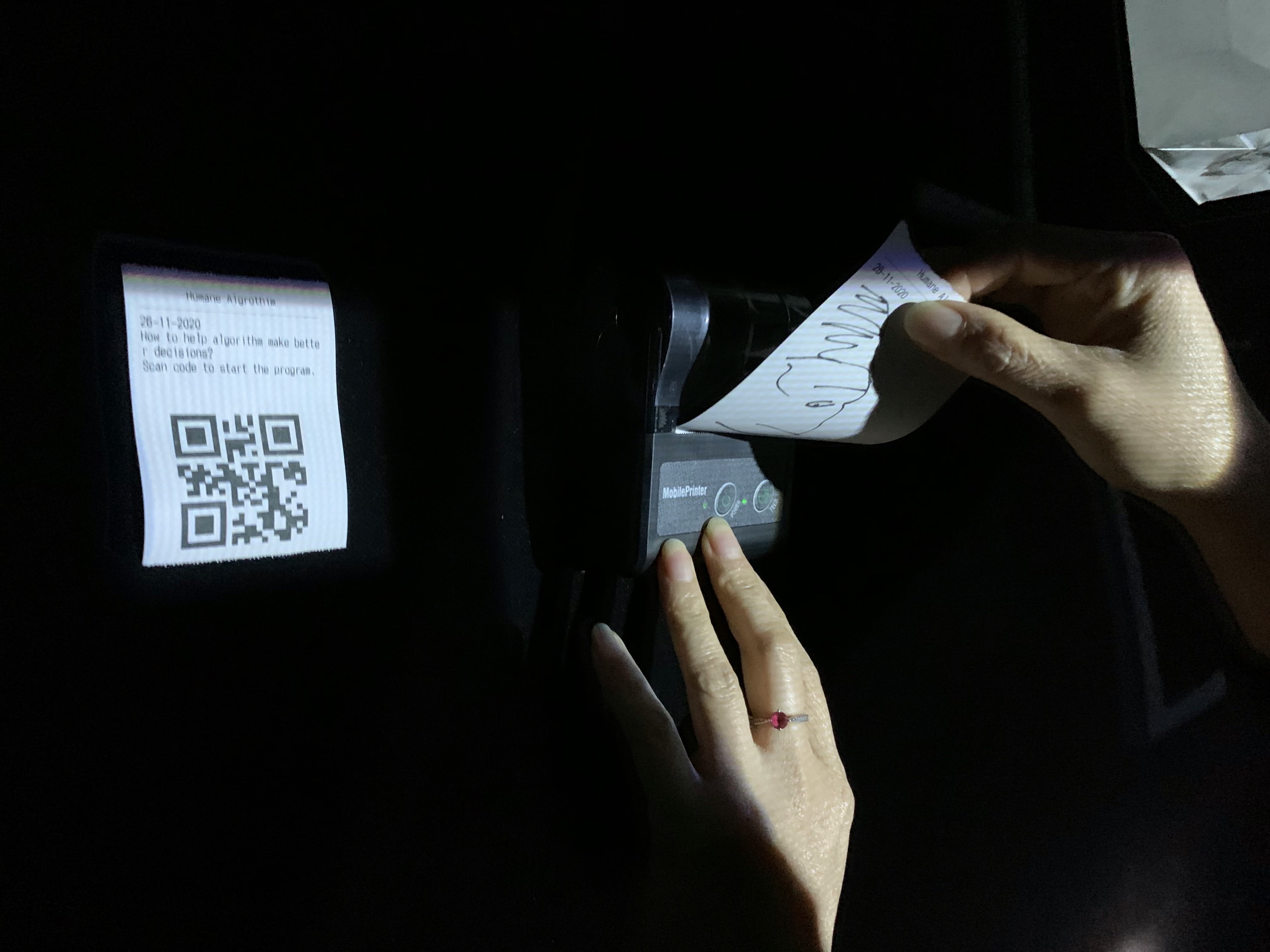
  • Image of hands pulling out paper from printer.
    Fei Liang, 2020. MA User Experience Design, London College of Communication, UAL. 2020
    MA User Experience Design, London College of Communication, UAL
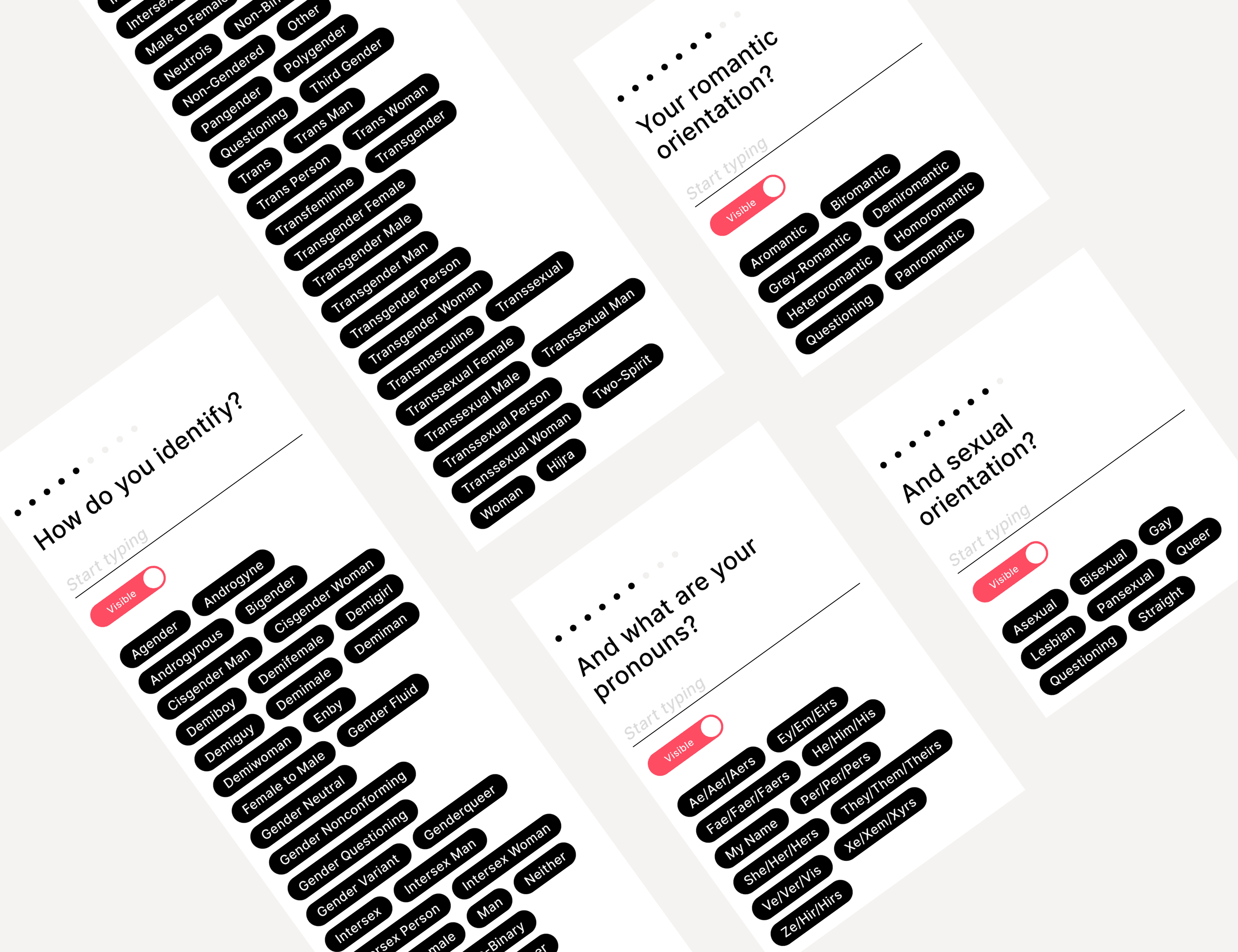
  • Mobile application screen grabs.
    Hugh Allen, 2020. MA User Experience Design, London College of Communication, UAL. 2020
    MA User Experience Design, London College of Communication, UAL
  • Moving image resembling movement in the womb.
    Jialuo Chen, 2020. MA User Experience Design, London College of Communication, UAL. 2020
    MA User Experience Design, London College of Communication, UAL
  • Image of man playing with ball pit through red fabric.
    Mengjiao Huang, 2020. MA User Experience Design, London College of Communication, UAL. 2020
    MA User Experience Design, London College of Communication, UAL
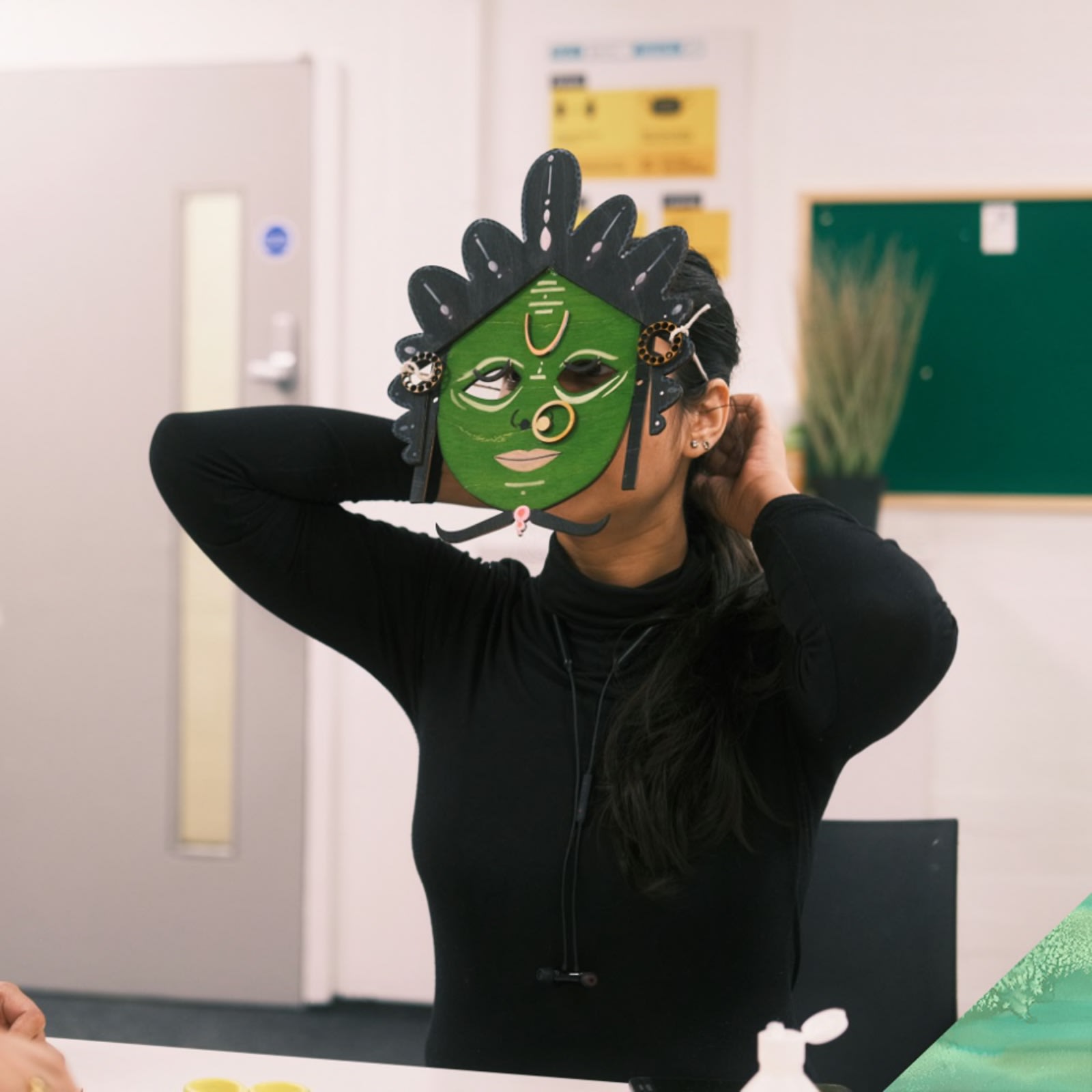
  • Woman wearing green face mask resembling female figure.
    Tanvi Kulkarni, 2020. MA User Experience Design, London College of Communication, UAL. 2020
    MA User Experience Design, London College of Communication, UAL
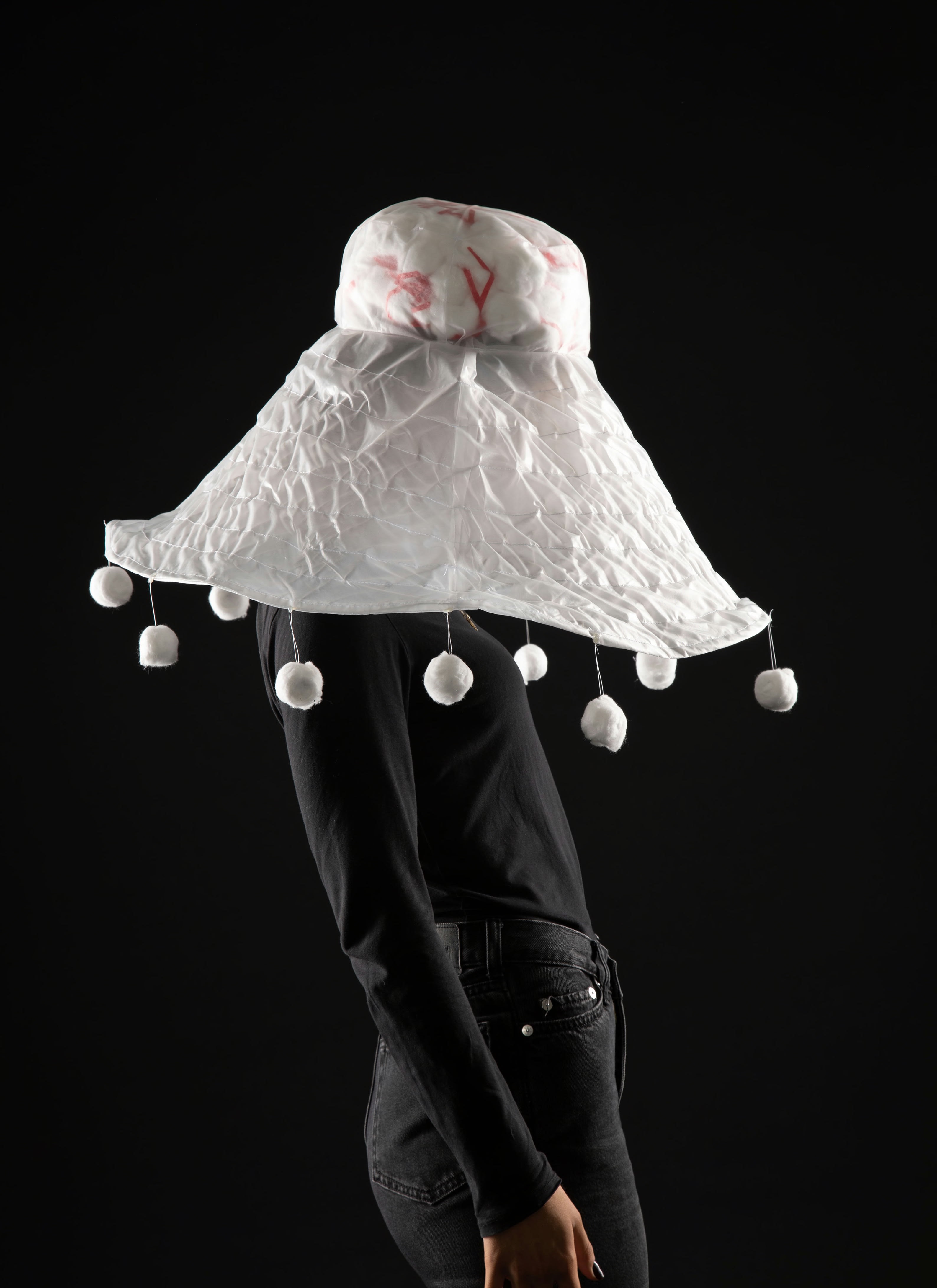
  • Person wearing large white hat.
    Tonicha Child, 2020. MA User Experience Design, London College of Communication, UAL. 2020
    MA User Experience Design, London College of Communication, UAL
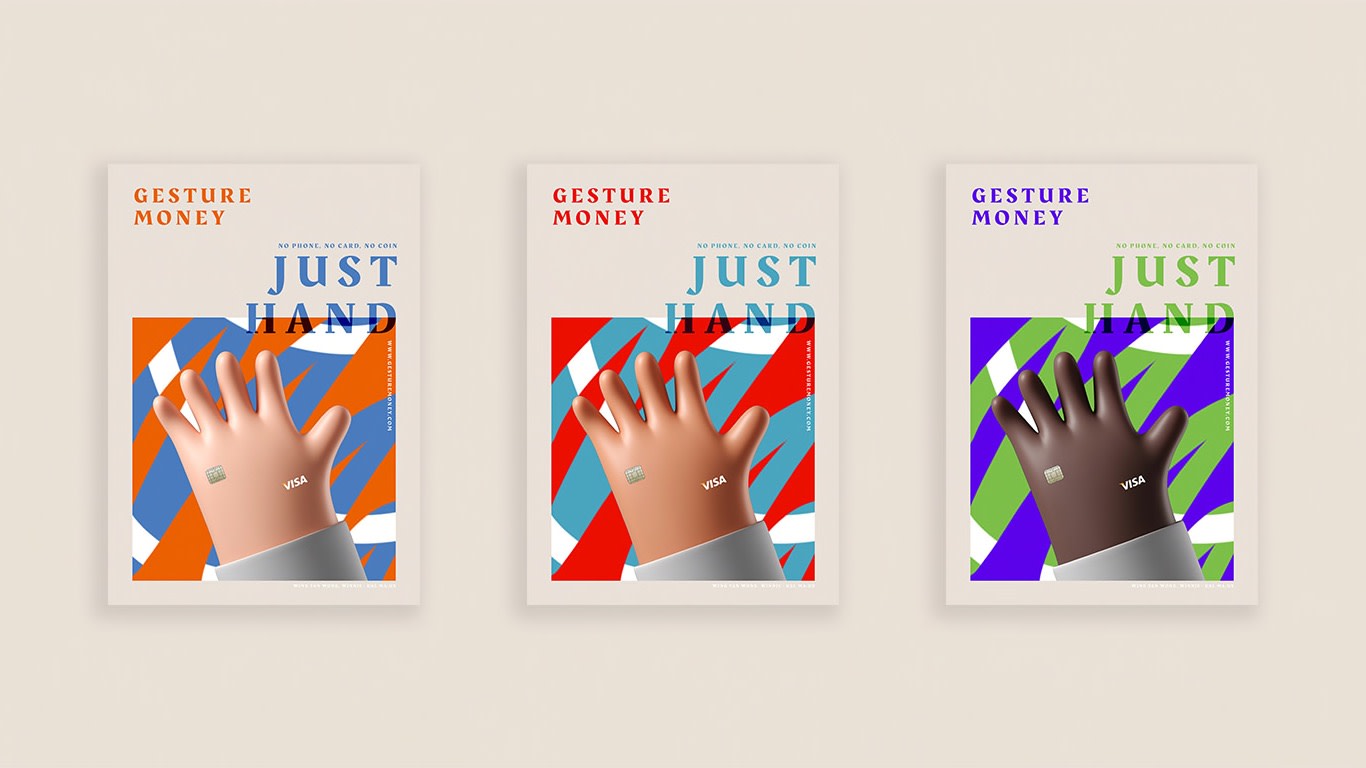
  • Student poster project for Visa.
    Wing Yan Wong, 2020. MA User Experience Design, London College of Communication, UAL. 2020
    MA User Experience Design, London College of Communication, UAL

Course playlist

Symposium: Mushon Zer-Aviv & Dr Maya Indira-Ganesh: Systems, processes and meanings

Staff and students from MA User Experience Design host a series of online conversations with leading designers, academics and thinkers which discuss the radical design imaginary and its place in a dematerialising digital world.

Symposium: Assoc. Prof Laura Forlano and Dr Dan Lockton: Materialising experience

This symposium brings together important global voices in a series of dialogues that explore the outer reaches of the discipline.

Course stories

Facilities

  • A close-up of the moveable type available in the Letterpress area.
    Image © Lewis Bush

    Printing and Finishing

    Discover our printing techniques, from Lithographic Printing to Print Finishing and Bookbinding.

  • Student reading a book in between two bookshelves in the Library
    Students in the Digital Space. London College of Communication, UAL. Photograph: Alys Tomlinson

    The Digital Space

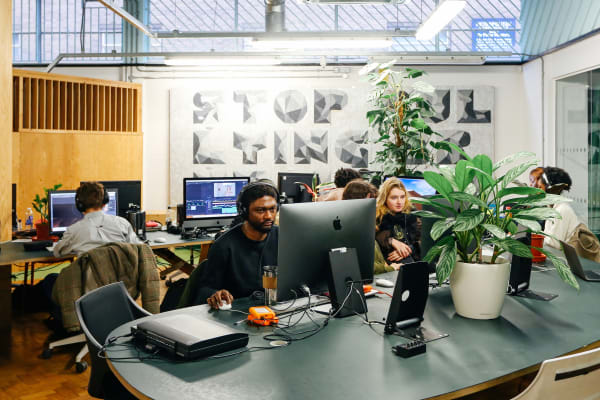
    The Digital Space is an open-plan, creative hub with computers set up with specialist software.

  • Students using the computers in the Digital Space
    Student in Creative Technology Lab, 2020. London College of Communication, UAL. Photograph: Tim Boddy

    Creative Technology Lab

    A multi-purpose space that supports students with: Creative Coding, Physical Computing, Projection Mapping, Games, and Virtual Reality.

Staff

Fees and funding

Home fee

£14,420

This fee is correct for 2026/27 entry and is subject to change for 2027/28 entry.

Tuition fees may increase in future years for new and continuing students on courses lasting more than one year. For this course, you can pay tuition fees in instalments.

Students from countries outside of the UK will generally be charged international fees. The rules are complex so read more about tuition fees and determining your fee status.

International fee

£30,890

This fee is correct for 2026/27 entry and is subject to change for 2027/28 entry.

Tuition fees may increase in future years for new and continuing students on courses lasting more than one year. For this course, you can pay tuition fees in instalments.

Students from countries outside of the UK will generally be charged international fees. The rules are complex so read more about tuition fees and determining your fee status.

Additional costs

You may need to cover additional costs which are not included in your tuition fees, such as materials and equipment specific to your course. For a list of general digital equipment you may need (and how you can borrow equipment), visit our Study costs page.

Accommodation

Find out about accommodation options and how much they will cost, and other living expenses you’ll need to consider.

Scholarships, bursaries and awards

If you’ve completed a qualifying course at UAL, you may be eligible for a tuition fee discount on this course. Find out more about our Progression discount.

You can also find out more about the Postgraduate Masters Loan (Home students only) and scholarships for Home and International students. Discover more about student funding.

If you’re based in the UK and plan to visit UAL for an Open Event, check if you’re eligible for our UAL Travel Bursary. This covers the costs of mainland train or airline travel to visit UAL.

How to pay

Find out how you can pay your tuition fees.

Scholarship search

Entry requirements

The course team welcomes applications from open and inquiring minds of all kinds. Applicants interested in deepening their practice to include user research and in pursuing further study as a way of developing a valuable professional qualification. Students open to learning in a new collaborative and critical way, eager to ground their work in real-world research and be willing to take creative risks and make mistakes along the way.

Applicants will have a portfolio of digital design work that demonstrates awareness of the creative and critical aspects of UX design and may also be returning from adjacent careers in the design industry such as graphic design, information design or interaction design.

The course attracts applicants from a broad range of backgrounds, from all over the world, from an Honours degree course in a subject such as:

  • Graphic Design
  • Interaction Design
  • Interactive Media Design
  • Web Design
  • Communication Design
  • Computer Science
  • Digital Design
  • Product Design
  • Anthropology
  • Sociology
  • Or those with other, equivalent qualifications.

The course team also welcomes students with relevant experience or those who may have previously worked in the industry, or non-traditional backgrounds, as well as those already within employment. The course has been designed to accommodate flexibility in educational engagement. Your experience is assessed as a learning process and tutors will evaluate that experience for currency, validity, quality and sufficiency.

The educational level may be demonstrated by:

  • Honours degree (named above);
  • Possession of equivalent qualifications;
  • Prior experiential learning, the outcome of which can be demonstrated to be equivalent to formal qualifications otherwise required.

APEL (Accreditation of Prior Experiential Learning)

Applicants who do not meet these course entry requirements may still be considered in exceptional cases. The course team will consider each application that demonstrates additional strengths and alternative evidence. This might, for example, be demonstrated by:

  • Related academic or work experience
  • The quality of the personal statement
  • A strong academic or other professional reference
  • OR a combination of these factors

Each application will be considered on its own merit but we cannot guarantee an offer in each case.

Language Requirements (International/EU)

All classes are conducted in English. If English is not your first language, we strongly recommend you let us know your English language test score in your application. If you have booked a test or are awaiting your results, please indicate this in your application. When asked to upload a CV as part of your application, please include any information about your English test score.

  • IELTS 6.5 (or equivalent), with 6.0 in each of the four skills.
  • If your first language is not English, you can check you have achieved the correct IELTS level in English on the Language Requirements page.
  • For further details regarding international admissions and advice please visit the International Applications page.

Selection criteria

Offers will be made based on the following selection criteria, which applicants are expected to demonstrate:

  • Sufficient prior knowledge and experience of and/or potential in a specialist subject area to be able to successfully complete the programme of study and have an academic or professional background in a relevant subject.
  • Critical knowledge of and enthusiasm for the subject area and capacity for research-led design, intellectual inquiry and reflective thought through: contextual awareness (professional, cultural, social, historical); evidence of research, analysis, development and evaluation (from previous academic study and employment) and a grounded understanding of the world of sonic, visual and networked culture and be able to engage in and contribute to critical discussion.
  • In the project proposal a description of the area of interest, field of study and the particular focus of their intended project. This should include an overview of how you intend to go about producing the project and the methodology.
  • The portfolio should be conceptual and research-based, you must show your thinking and making process and a curious nature to explore, test and experiment.
  • A willingness to work in the physical realm with networked digital systems and in areas of design research and practice that challenges preconceptions.
  • A willingness to work with networked digital systems and an awareness of how they shape the varied contexts of human behaviour.
  • Also to show a willingness to work as a team player, good language skills in reading, writing and speaking, the ability to work independently and be self-motivated.

Information for disabled applicants

UAL is committed to achieving inclusion and equality for disabled students. This includes students who have:

     
  • Dyslexia or another Specific Learning Difference
  • A sensory impairment
  • A physical impairment
  • A long-term health or mental health condition
  • Autism
  • Another long-term condition which has an impact on your day-to-day life

Our Disability Service arranges adjustments and support for disabled applicants and students.

Read our Disability and dyslexia: applying for a course and joining UAL information.

Apply now

Application deadline

Deadline

Round 1:

2 December 2025 at 1pm (UK time)

Round 2:

18 March 2026 at 1pm (UK time)

Digital portfolio and video task deadline

Round 1:

16 December 2025 at 1pm (UK time)

Round 2:

31 March 2026 at 1pm (UK time)

Decision outcome

Round 1:

20 March 2026

Round 2:

19 June 2026

Round 1
Round 2
Deadline
2 December 2025 at 1pm (UK time)
18 March 2026 at 1pm (UK time)
Digital portfolio and video task deadline
16 December 2025 at 1pm (UK time)
31 March 2026 at 1pm (UK time)
Decision outcome
20 March 2026
19 June 2026

We have 2 rounds of deadlines for postgraduate courses: one in December and one in March. If there are still places available after 18 March, this course will remain open to applications until all places have been filled.

Read more about deadlines

Apply now

Application deadline

Deadline

Round 1:

2 December 2025 at 1pm (UK time)

Round 2:

18 March 2026 at 1pm (UK time)

Digital portfolio and video task deadline

Round 1:

16 December 2025 at 1pm (UK time)

Round 2:

31 March 2026 at 1pm (UK time)

Decision outcome

Round 1:

20 March 2026

Round 2:

19 June 2026

Round 1
Round 2
Deadline
2 December 2025 at 1pm (UK time)
18 March 2026 at 1pm (UK time)
Digital portfolio and video task deadline
16 December 2025 at 1pm (UK time)
31 March 2026 at 1pm (UK time)
Decision outcome
20 March 2026
19 June 2026

We have 2 rounds of deadlines for postgraduate courses: one in December and one in March. If there are still places available after 18 March, this course will remain open to applications until all places have been filled.

Read more about deadlines

Apply to UAL

Start your application
or

Apply with a UAL Representative

Based across the world, our local UAL representatives can support you with your application from your home country. Check to see if there is a representative available in your country currently.

Find your representative

How to apply

Follow this step-by-step guide to apply for this course

Step 1: Initial application

You will need to submit an initial application including your personal statement, CV and study proposal.

Personal statement advice

Your personal statement should be maximum 500 words and include:

  • your reasons for choosing the course
  • your current creative practice and how this course will help you achieve your future plans
  • any relevant education and experience, especially if you do not have any formal academic qualifications.

CV advice

Please provide a CV detailing your education, qualifications and any relevant work or voluntary experience. If you have any web projects or other media that you would like to share, please include links in your CV. If English is not your first language, please also include your most recent English language test score.

Read our advice on preparing the tasks and documents for your initial application.

Study proposal advice

Please provide a summary of your study proposal (300-500 words).

It should include:

  • a description of the area of interest, field of study and the particular focus of your intended project
  • an overview of how you intend to produce the project and the methodology
  • any references and a bibliography if necessary (not included in the word count).

Please note, your proposal serves to inform your application and we understand that your ideas will develop and change throughout your studies.

Step 2: Video task and digital portfolio

We will review your initial application. If you have met the standard entry requirements, we will ask you to submit a video task and digital portfolio.

You’ll need to submit these via PebblePad, our online portfolio tool. Please submit your video task on the first page followed by your portfolio.

Video task advice

We would like you to submit a 2-3 minute video to help us learn more about you. When recording your task, please face the camera and speak in English.

What to include in your video task

  • Choose 1 project from your portfolio and explain how it challenged you and your understanding of user experience design.
  • Tell us how this experience inspired you to apply to MA User Experience Design at London College of Communication.

Find advice on how to plan and film your video task. Then read our guidance on how to submit your video task, including the file types we accept.

Digital portfolio advice

Your portfolio should consist of recent work that reflects your creative strengths.

It should:

  • be maximum of 20 pages, including your video task
  • feature work from up to 5 projects
  • include short descriptions of each project, explaining the motivation, development, realisation and impact. If any were group projects, please explain your role and contribution.
  • include examples of developmental work, sketches, tests and process-led experimentation
  • include, for those from a non-design background, research based around a relevant topic. Please include an explanation of your research, outcomes and impact.
  • demonstrate your aptitude, skills and engagement in user experience design or a related field.

For more support, see our Portfolio advice and PebblePad advice.

Step 3: Interview

You may be invited to an interview following our review of your application. All interviews are held online and last 15 to 20 minutes.

For top tips, see our Interview advice.

You also need to know

Communicating with you

Once you have submitted your initial application, we will email you with your login details for our Applicant portal.

Requests for supplementary documents like qualifications and English language tests will be made through the applicant portal. You can also use it to ask questions regarding your application. Visit our After you apply page for more information.

Applying to more than 1 course

You can apply for more than 1 postgraduate course at UAL but we recommend that you apply for a maximum of 3 courses.

As every course has its own entry and assessment requirements, we recommend tailoring each application to showcase how your experience, skills and interests match that course. Applying for many different courses may make it more difficult for you to show that you are suitable for each course in a competitive admissions process.

Only apply to the course(s) you are most interested in – applying for too wide a range of different courses may reduce your ability to clearly demonstrate your suitability for each. It’s better to make fewer bespoke applications than many generic ones. This will help you to stand out where we have high demand for places.

If you receive offers for multiple courses, you'll only be able to accept 1 offer. UAL doesn't accept repeat applications to the same course in the same academic year.

Visas and immigration history check

All non-UK nationals must complete an immigration history check. Your application may be considered by our course teams before this check takes place. If your course requires a portfolio and/or video task, we may request these before we identify any issues arising from your immigration history check. Sometimes your history may mean that we are not able to continue considering your application. Visit our Immigration and visas advice page for more information.

External student transfer policy

UAL accepts transfers from other institutions on a case-by-case basis. Read our Student transfer policy for more information.

Alternative offers

If we are unable to consider you for the course you have applied to but your application is really strong, we may make you an alternative offer on a different course or at a different UAL College. This happens when our admissions tutors have found another course that they believe would be a strong match for your skills and interests.

Deferring your place

We do not accept any deferral requests for our postgraduate courses. This means that you must apply in the year that you plan to start your course and you will not be able to defer your place to start at a later date.

Application deadlines

Most of our postgraduate courses have 2 rounds of deadlines: one in December and one in March.

As long as you apply ahead of each deadline we will consider your application alongside all the other applications in that round. We always make sure to hold enough places back for round 2 to make sure we can consider your application fairly, no matter which round you apply in.

If there are still places available after the second deadline, the course will remain open to applications until all places have been filled.

For our MBA courses, there is only 1 deadline. This is 31 July for international applicants and 31 August for UK applicants. This is to make sure you have enough time to apply for your visa if you are an international student.

For our January-start courses, the deadline is in October. If there are still places available after this deadline, the course will remain open to applications until all places have been filled.

Careers

UAL Alumni Association

Our alumni association offers graduates support and a number of benefits.

Student Jobs and Careers

Find out how careers and employability helps our students and graduates start their careers.