Undergraduate

BA (Hons) Fashion Styling and Production

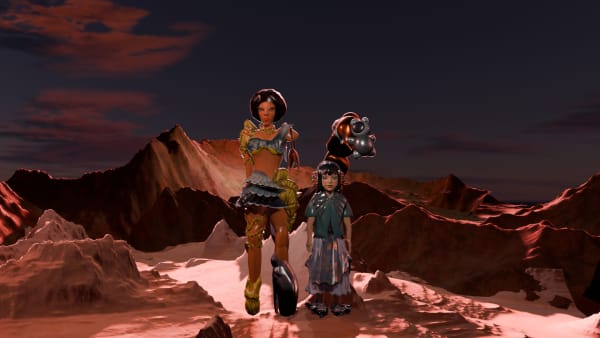
AI generated image of model in clouds surrounded by a large snake.
Zexin Ou | BA (Hons) Fashion Styling and Production | London College of Fashion | UAL
College
London College of Fashion
UCAS code
9L13
Start date
September 2026
Course length
3 years (optional 1 year placement)

Explore physical and digital responses to fashion styling alongside the investigation of a multitude of fashion languages and develop your analytical and critical awareness.

Course summary

Why choose this course at London College of Fashion

  • Multi-platform: Explore physical and material responses to fashion styling whilst developing practical, digital and research skills alongside critical awareness and wider perspectives on the fashion industry.
  • Collaborative practice: With a shared unit with the other courses in our Media programme, you'll be able to collaborate with other students, replicating industry practice and supporting the development of communities of practice.
  • Industry: Through external projects, events, competitions and live briefs, you'll engage with the fashion industry throughout the course, allowing you to apply your learning to real world situations.
  • Utilise technology: Develop your understanding of production and styling, whilst using current technologies in your work, ensuring you graduate able to take on a range of roles in the fashion industry.
  • Work experience: You will have the opportunity to take a work placement during your second year of study, helping you apply your learning to the world of work and build your professional network.

Open Days and Virtual Events

The next Open Day for this course will take place on Saturday 14 March.

The next Discovery Webinar: Studying at LCF will take place on Thursday 5 March.

To visit us in person, join us every Wednesday for a College Tour.

Check your eligibility for UAL’s Travel Bursary.

Global experiences

This course offers the opportunity to study abroad for a semester or short-term (subject to meeting requirements). Going abroad as part of your degree is an exciting experience that helps you to build a global network. At LCF we have a range of partners across the world, including the USA, Australia, Italy and more.

Scholarships, bursaries and awards

Use our scholarship search to discover if you are eligible for any scholarships, bursaries or awards.

Course overview

Introduction  

As a BA (Hons) Fashion Styling and Production student, you will be provided with a supportive environment to engage in the discipline through experimental practice, critical debates around fashion image making, and sophisticated technical and research skills.  

You will be encouraged to participate in co-creation and actions that realise positive change through creative practice and styling as a form of storytelling. This will be situated within a contemporary and historical knowledge of your creative discipline, within the wider perspectives of fashion and socio-political considerations. 

We nurture our students to be critical fashion image makers, supporting them by encouraging the investigation of themes such as diversity, identity, community, and sustainability, all of which will be located within a contemporary fashion landscape. 

What to expect  

  • BA (Hons) Fashion Styling and Production prepares you for a career in Fashion Media, working as a Stylist and Creative Producer in the fashion and imaging industries. The course will facilitate your understanding and knowledge of production as well as styling, which will give you an additional set of skills relevant to your discipline, required in creating practice-based work. The course will also introduce you to current technologies and platforms that the industry requires as flexible learners across multi-faceted roles in fashion practice.   
  • You will develop your skills and understanding of styling and production. You will also be introduced to collaborative practice and the importance of teamwork by engaging in cross-disciplinary units that allow you to choose specialist roles relevant to styling and production practice.  
  • You will explore physical and material responses to fashion styling alongside the investigation of a multitude of fashion languages. You will acquire practical and research skills required for conceptual thinking in styling and production. You will also develop your analytical and critical awareness which will be underpinned by a contemporary and historical knowledge of your creative discipline, situated within the wider perspectives of fashion, society, and the environment.   
  • Experimental approaches to fashion are encouraged throughout the course, whilst concept development for fashion narratives and visual storytelling are key features and drive the focus of each unit. You will also begin to explore and develop a list of contacts with university collaborators and with industry practitioners throughout the course, to support future enterprise. 
  • Digital and physical technical workshops build on and enhance the practical applications of your styling and production skills, for relevant platforms, in preparation for future enterprise. 

Work experience and opportunities 

You will be given the opportunity to undertake a short work experience placement during your second year of study. This provides increased industry awareness as well as crucial experience and valuable contacts within the industry. This will also be supported by the course's collaborative approach, which provides opportunities for networking throughout your studies. You will be offered, and optional Industry or Enterprise diploma can be taken between years 2 and 3.    

Mode of study 

BA (Hons) Fashion Styling and Product runs for 90 weeks in full time mode. It is divided into 3 stages over 3 academic years. Each stage lasts 30 weeks.  

Climate, Social and Racial Justice 

UAL are committed to ensuring that your skills are set within an ethical framework and the UAL’s Principles for Climate, Social and Racial Justice are all embedded into the course. 

Contact us

Register your interest to receive information and updates about studying at UAL.

Contact us to make an enquiry.

Course units

In Stage 1 you are required to complete 120 credits at level 4 to progress to Stage 2. 

  • Introduction to Fashion Media; 20 credits 

In this unit, you will be introduced to your course, its subject specialism and effective learning at undergraduate level. You will learn the practices and knowledge base needed to understand your discipline and develop skills for independent & collaborative learning, reflection, and your own self-development. You will also consider your own background and how it shapes your approach to the course. 

  • Key Concepts in Fashion Styling and Production; 40 credits 

You will be introduced to the roles of the stylist and producer and explore how fashion narratives are constructed through approaches to styling and production. You will gain an understanding of fashion themes and codes of dressing within historical and contemporary contexts. You will also explore sustainable thinking within fashion production via the use of materials, clothing, props, and accessories. 

  • Fashion Moving Image Production; 40 credits 

In this unit, you will take a specific role relevant to your subject discipline and work as part of a collaborative, cross-programme team to create a socially engaged fashion film production. You will learn the tools, processes and roles required for successful moving image practice and how to communicate impactful fashion narratives through visual storytelling. 

  • Fashion Cultures and Histories; 20 credits 

You will take a philosophical and theoretical approach to the study of fashion and its role in representing and communicating identity. Understand key ways of thinking about fashion across its cultural, historical, social, and political contexts. Engage in debate and analysis of fashion as a key marker of social and cultural change and a means of understanding the relationship between individuals and communities. 

In Stage 2 you are required to complete 120 credits of which all of 120 must be at level 5. 

  • Critical Issues in Fashion Research; 20 credits 

Expand your critical understanding of fashion in a global context and examine emerging debates in fashion research. You will engage in collaborative research around current and emerging cultural issues and be guided through approaches to researching and writing about fashion across its social, historical, political and cultural contexts, building on the first-year unit Fashion Cultures and Histories. You will develop your own independent research path and interests. 

  • The Fashion Consultant; 40 credits 

Fashion consultants employ styling, production, and creative direction skills to drive, enhance, and realise visual concepts. In this unit, you will respond to an industry brief and develop your understanding of how fashion consultants operate within this industry context. You will work as a cultural connector and creative translator of ideas in relation to product, production, and visuals. You will use contemporary and emerging technologies where relevant, to drive an industry partner’s presence and expand their audience reach. 

  • Collaborative Practice: Fashion Spreads; 40 credits 

Explore how the editorial format has been articulated in historical and contemporary contexts and create contemporary fashion stories in response to climate, racial and social justice principles. Through teamwork, collective enterprise, and cooperation you will apply your fashion styling and production skills across the editorial space and understand relevant career prospects. You will also explore the relationship between fashion content and audience. 

  • Elective Option 1: Creative Directions: Fashion Styling and Production; 20 credits 

In this elective unit, you will critically reflect upon your developing practice in the course so far and map your creative directions moving forward. You will think about the interplay between your styling and production practice in academic and industry contexts to consider potential audiences and develop your portfolio and network. 

You will also consider the value of assets, content creation, curation, editing, art direction, and networks in relation to your discipline. 

  • Elective Option 2: Fashion Media Placement; 20 credits 

In this elective unit, you will develop your professional skills within an industry environment. On your placement, you will experience the pace, atmosphere, and discipline of working in the industry and gain practical experience of its roles, functions, and operations. There is lots of support to help you find a placement available via our Graduate Futures Placement Team. 

Optional Diploma Year 

CCI Creative Computing 

Between years 2 and 3, you can undertake the year-long Diploma in Creative Computing. This will develop your skills in creative computing alongside your degree. After successfully completing the diploma and your undergraduate degree, you will graduate with an enhanced degree: BA (Hons) Fashion Styling and Production (with Creative Computing). 

Industry DIPS    

This optional diploma can be taken between years 2 and 3. With support from your tutors, you will undertake an industry placement for a minimum of 100 days/20 weeks. As well as developing industry skills, you will gain an additional qualification upon successful completion.    

Enterprise DIPS    

This optional diploma can be taken between years 2 and 3. With support from your tutors, you will undertake an enterprise placement year where you will explore a business idea from proposal to minimal viable product (MVP). As well as developing enterprise skills, you will gain an additional qualification upon successful completion.   

CCI Apple Diploma  

Between years 2 and 3, you can undertake the year-long Diploma in Apple Development. This will give you an opportunity to become an accredited apple developer alongside your degree. After successfully completing the diploma and your undergraduate degree, you will graduate with an enhanced degree: BA (Hons) Fashion Styling and Production (with Apple Development). 

In Stage 3 you are required to complete 120 credits at level 6. 

  • Elective Option 1: Fashion Narratives: A Visual Study; 40 credits  

In this elective unit, you will explore the interplay between research and practice by incorporating a chosen methodology with your existing creative practice. You will be introduced to a range of different research methods. Your chosen methodology will shape your creative practice and build your confidence in future visual work. Building upon previous learning from your Cultural and Historical Studies classes, you will produce a narrative-driven visual study comprising of a series of still images, as part of a visual and written essay. 

  • Elective Option 2: Creative Industries: Theories and Practices; 40 credits 

In this elective unit, you will complete an independent research project and engage with industry professionals to learn about current debates and issues that shape and inform cultural production across media, communication, and performance. You will be encouraged to respond to these debates in the form of an extended essay with supporting research materials. This unit will equip you with critical thinking, literacy, and communication skills for both academic and professional contexts. 

  • Fashion, Employability, and Enterprise; 20 credits 

In this unit, you will consider your future employment aspirations and be supported in researching the current employment landscape in relation to styling and production. You will explore employment opportunities within academic and creative industries, considering the platform, audience, and context of your work. You will create a fashion enterprise toolkit which summarises your research, including the skills and resources required to orientate yourself towards your chosen direction. 

  • Fashion, Communities and Practice; 60 credits 

In this unit, you will explore how fashion has the potential to empower and effect positive change. You will produce an experimental fashion media production that explores how your personal fashion-image making can engage with the principles of climate, racial and/or social justice. You will situate your personal creative practice within a community context that has resonance for you. You will have the opportunity to expand the parameters of your work through collaborations that facilitate experimentation, creative thinking, practical testing, and reflective problem solving. 
Learning and teaching methods

The following teaching and learning methods are employed to support the integrated achievement of the course outcomes:  

  • Lectures. 
  • Individual and group tutorials. 
  • Group work and collaborative practice.  
  • Seminars and presentations.  
  • Masterclasses.  
  • Workshops. 
  • Practical demonstrations. 
  • Students will also need to undertake self-directed independent study to support their learning.

Assessment methods

The following assessment methods are employed to support the integrated achievement of the course outcome:

Fashion styling and production outcomes could include a variety of visual outcomes.     

  • Year 1: Induction log, reflective statement, fashion styling production and research journal, an individual contribution to a collaborative fashion media outcome and essay. 
  • Year 2: Fashion Image moving production, individual contribution to a collaborative moving image production, research journal including a production log and critical reflection, annotated fashion media portfolio, working log, critical reflection, a creative deck of fashion styling and production work for an industry partner, final fashion consultant production and essay. 
  • Year 3: Fashion Enterprise toolkit, reflective statement, visual essay, essay and extended essay and research materials, research journal accompanied by a critical reflection, curated professional portfolio, including a newly realised fashion media production. 

UAL Showcase

Explore work by our recent students on UAL Showcase

  • Natasha Mulwani
    Natasha Mulwani, Natasha Mulwani, 2025 BA (Hons) Fashion Styling and Production, London College of Fashion, UAL
  • Alchemy Of Scales And Stardust
    Alchemy Of Scales And Stardust, Zexin Ou, 2025 BA (Hons) Fashion Styling and Production, London College of Fashion, UAL
  • TOUCH WOOD - Smoking Kills and Heals
    TOUCH WOOD - Smoking Kills and Heals, Kim Chow, 2024 BA (Hons) Fashion Styling and Production, London College of Fashion, UAL
  • House of Lunaria, Sk-iii-N Magazine
    House of Lunaria, Sk-iii-N Magazine, Nandini Bhattacharya, 2025 BA (Hons) Fashion Styling and Production, London College of Fashion, UAL
  • Echoes of Eternity
    Echoes of Eternity, Jheel Busa, 2025 BA (Hons) Fashion Styling and Production, London College of Fashion, UAL
  • CODERS
    CODERS, Lening (Kamryn) Sun, 2025 BA (Hons) Fashion Styling and Production, London College of Fashion, UAL
  • Threads of the Earth
    Threads of the Earth, Lavanya Bettadapur, 2025 BA (Hons) Fashion Styling and Production, London College of Fashion, UAL

Latest news from this course

Staff

Danny Treacy, Course Leader
Danny Treacy's practice utilises the power of clothing to tell stories. His work explores land use, shared experience & social invisibility. He is interested in places where communities exist in a fragile state because of social exclusion. Often these places are overlooked and not perceived to have a positive function, yet through repeated interactions and social rituals, they become a place of belonging for those who are marginalised.

Danny works in a manner that is explorative & responsive, reflecting the various environments he locates, resulting in processes including photography, sculptural assemblages and emerging technologies, that collectively consider the contemporary object as artefact, and centring a recognition of those who exist on the peripheries of society.Danny has exhibited extensively in the UK & the U.S, Mexico, Finland, Spain, Portugal, Ireland & Canada. With a solo show at The Photographer’s Gallery, London. His work is held in The British Council Collection & Portland Art Museum.

Danny has been artist in residence at The Irish Museum of Modern Art and AirSpace Gallery. One of his major bodies of work Them has been published in key surveys of contemporary photography such as ‘Vitamin PH’ (Phaidon) & Autoexposure: The Self Portrait in Contemporary Photography (Thames & Hudson). Danny has worked on public education projects with The South London Gallery, Tate, Marco Museum of Contemporary Art (MX) The University of Coahuila (MX) and The Courtauld Institute. His practice has been the subject of several academic texts.

Karen Savage has an ever-evolving portfolio career centred around fashion, clothes, and style. She has a proven track record of both creative and commercial success in the fashion industry as an entrepreneur, academic employee, and a freelancer.

Karen has a wealth of experience in both industry and academia. In industry, her roles have been a fashion designer, print designer, stylist, trend forecaster, blogger, creative director in print and licencing. Karen is best known for her critically acclaimed fashion label, SAVAGE in the early 1990’s, garnering extensive media coverage for her slogan t-shirts. She used the language of fashion and clothes to question female representation in popular culture through a feminist lens.

Karen has worked with many clients over the years including Absolut Vodka, BBC3, Directory of Social Change, Exposure PR, Hotel Pelirocco, Mobile 3, Nokia, Ogilvy and Mather, Taiwan Textile Federation, The Fawcett Society, The Observer and Traid.

Karen has been an early adopter of sustainability in fashion clothes and style throughout her career and she is currently reviving her t-shirt and print archive from the 90s. She is also a vintage clothes and accessories collector, stylist, and merchandiser of her retail physical shop space in Palace Antiques in London and a 0.6 senior lecturer on BA Fashion Styling and Production UAL.

Karen holds a PG Cert in Teaching and Learning, has been a visiting fellow at The Hong Kong Design Institute, and is a recent recipient of the UAL Teaching Award.

Dr Manrutt (Manny) Wongkaew is a doctor of fashion and dance whose career spans research, creative practice, industry leadership, and pedagogical innovation. His interdisciplinary approach draws from academic backgrounds in fashion, dance performance, and art psychotherapy.

Celebrated for his leadership in the fashion and creative industries, Dr Wongkaew is known for producing politically charged and emotionally resonant conceptual and commercial artworks. His work has been featured in publications such as Vogue.com, British GQ, Elle India, Fucking Young, Kaltblut, The Guardian, and the Photographer’s Gallery’s official Instagram. He has delivered a TEDx talk on resilience and was interviewed by the BBC for the Queer Britain series.

Dr Wongkaew is committed to community engagement, collaborating with organisations such as Tower Hamlet council, Oxfam, East London Dance, and the V&A. He was nominated for and received a Volunteer Recognition Award from SMART Recovery. His therapeutic fashion workshops have reached diverse groups including children in care, individuals with learning disabilities, and male offenders. Notable initiatives include a drag workshop at HMP Dovegate and the Finding Your Inner Diva workshop as part of the V&A’s Friday Late – Diva Disrupted event.

In higher education, Dr. Wongkaew serves as a Senior Lecturer in Fashion Styling and Production at London College of Fashion, University of the Arts London. His research and teaching focus on the transformative power of art, culminating in his framework Healing Pedagogies, which advocates for affective learning and the therapeutic potential of art.

As a practising Buddhist from Bangkok, Dr. Wongkaew brings a compassionate, values-led approach to both education and practice. He holds a Postgraduate Certificate in Therapeutic Arts (with Distinction) from the Institute for Arts in Therapy and Education (IATE) and is a member of the Black, African and Asian Therapy Network (BAATN).

Sarah May is a multi-disciplinary artist and fashion educator. As a Senior lecturer on Fashion Styling and Production her teaching practice takes a critical, activist and values-based approach. Employing an ecological framework, she specialises in utilising fashion as a drive for social change and purpose. Sarah has extensive experience of teaching styling (in the most expansive sense) as a technique to create stories that consider climate, racial and social justice, alongside sustainable production methodologies and research creation.

Her research intersects fashion ecologies, defashion (the role that fashion must play in degrowth) and critical walking pedagogies. She has presented her co created critical walking research at conferences abroad and in the UK. She is an

Associate Member of the Centre for Sustainable Fashion, LCF where she actively works alongside colleagues to develop workshops that explore the future of fashion education and hopeful critical walking practices within a fashion context.

Sarah works as an artist and creative producer to co create fashion and textile workshops with local and marginalised communities that have storytelling at their core and that bring people together through participatory fashion design practices. Sarah has delivered workshops for refugees, migrant children and school children in London and Sheffield, all of which look to bring people together through participatory fashion design activism.

She was the Director of Sarah May Studio for over 10 years creating installations, props, sets and art direction for fashion editorial, advertising and live events. Her set design work focused on the physicality of the body, how the body and fashion encounter space and the intimate relationship between materials. Sarah was represented in New York and London by agencies Magnet and Industry Art between 2007 – 2016. Her work was published extensively including British Vogue, Japanese Vogue, Vice, Dazed and Confused, Nike and Selfridges. Her public speaking, fashion film workshops and charity work clients included The British Council, It’s Nice That and Arts Emergency.

She is a member of Fashion Act Now, an activist group demanding a radical de fashion future.

Nada Dahab is a lecturer in BA (Hons) Fashion Styling and Production. Her industry-led practice informs her teaching, guiding students through visual research, narrative development and experimentation before translating ideas into considered styling and production outcomes across a range of units.

Alongside teaching, she has built an international freelance career spanning editorial, commercial and campaign styling, working with clients including Mercedes, Ferrari, Amazon and Actimel, and serving as Creative Director for Concrete Egypt, where she led styling and visual strategy for social media campaigns.

Nada has led workshops through LCF’s Knowledge Exchange programme with the V&A Upstart initiative, supporting young people to reimagine waste materials into sustainable styling outcomes, an approach she embeds within her teaching through a strong emphasis on sustainable sourcing and production.

She holds an MA in Applied Imagination from Central Saint Martins and draws on a strong professional network to connect students with live industry insight and current creative practice.

Industry guests

Mulberry
Kawa Key
Kazna Asker
Hayley Jane
Max Allen
Olivia Melkonian
Katy Mason
Seana Redmond
Annie Collinge

Fees and funding

Home fee

£9,790 per year

Please note that this tuition fee for entry in September 2026 is subject to the passing of UK government legislation to approve the increase in fees. If this is not passed, your tuition fee for 2026/27 will be £9,535.

Tuition fees may increase in future years for new and continuing students.

Home fees are currently charged to UK nationals and UK residents who meet the rules. However, the rules are complex. Find out more about our tuition fees and determining your fee status.

International fee

£30,890 per year

This fee is correct for entry in September 2026 and is subject to change for entry in September 2027.

Tuition fees for international students may increase by up to 5% in each future year of your course.

Students from countries outside of the UK will generally be charged international fees. The rules are complex so read more about tuition fees and determining your fee status.

Additional costs

You may need to cover additional costs which are not included in your tuition fees, such as materials and equipment specific to your course. Typical approximate costs for this course include:

  • Laptop or desktop computer recommended
  • Styling kit: £50-£100
  • Materials for research and notetaking: £10-£20
  • Adobe Creative Cloud: £42 per year
  • Sketchbooks: £5-£20 each

For a list of general digital equipment you may need (and how you can borrow equipment), visit our Study costs page.​

Accommodation

Find out about accommodation options and how much they will cost, and other living expenses you'll need to consider.

Scholarships, bursaries and awards

Find out more about bursaries, loans and scholarships.

If you’re based in the UK and plan to visit UAL for an Open Event, check if you’re eligible for our UAL Travel Bursary. This covers the costs of mainland train or airline travel to visit UAL.

How to pay

Find out how you can pay your tuition fees.

Scholarship search

Entry requirements

The standard minimum entry requirements for this course are:

One or a combination of the following accepted full level 3 qualifications.

  • 112 UCAS tariff points from two or more A Levels (preferred subjects include Art, Design, Fashion, Media Studies, and Photography);
  • Distinction at Foundation Diploma in Art and Design;
  • Distinction, Merit, Merit at BTEC Extended Diploma (preferred subjects Art & Design, Fashion, Media Studies, and Photography);
  • Merit at UAL Extended Diploma;
  • Access Diploma or 112 tariff new UCAS points from the Access to HE Diploma;
  • 112 new UCAS tariff points from a combination of the above qualifications or an equivalent full Level 3 qualification;
  • or equivalent EU or non-EU qualifications such as International Baccalaureate Diploma at 25 points minimum;
  • and Three GCSE passes at grade A*-C or grade 9-4.

Entry to this course will also be determined by assessment of your portfolio.

APEL (Accreditation of Prior (Experiential) Learning)

Applicants who do not meet these course entry requirements may still be considered in exceptional cases. The course team will consider each application that demonstrates additional strengths and alternative evidence. This might, for example, be demonstrated by:

  • Related academic or work experience
  • The quality of the personal statement
  • A strong academic or other professional reference
  • OR a combination of these factors

Each application will be considered on its own merit but we cannot guarantee an offer in each case.

English Language Requirements

IELTS level 6.0 with a minimum of 5.5 in reading, writing, listening and speaking. Please check our main English Language Requirements

Selection criteria

The course team seeks to recruit students who can demonstrate:

  • A current interest in and awareness of fashion and fashion styling
  • An enthusiasm for visual communication
  • The potential to develop styling and production skills

Information for disabled applicants

UAL is committed to achieving inclusion and equality for disabled students. This includes students who have:

     
  • Dyslexia or another Specific Learning Difference
  • A sensory impairment
  • A physical impairment
  • A long-term health or mental health condition
  • Autism
  • Another long-term condition which has an impact on your day-to-day life

Our Disability Service arranges adjustments and support for disabled applicants and students.

Read our Disability and dyslexia: applying for a course and joining UAL information.

Apply now

Application deadline

14 January 2026 at 6pm (UK time)

If there are places available after this date, the course will remain open to applications until places have been filled.

Apply now

Application deadline

14 January 2026 at 6pm (UK time)

If there are places available after this date, the course will remain open to applications until places have been filled.

Apply to UAL

International students can apply to this course through UCAS with the following codes:

University code:

U65

UCAS code:

9L13

Start your application
or

Apply with a UAL Representative

Based across the world, our local UAL representatives can support you with your application from your home country. Check to see if there is a representative available in your country currently.

Find your representative

How to apply

Follow this step-by-step guide to apply for this course

Step 1: Initial application

You will need to submit an initial application including your personal statement.

Personal statement advice

The total character limit is 4,000 characters or less.

When creating your personal statement on the UCAS website, you will need to answer these 3 questions:

  • Why do you want to study this course or subject?
  • How have your qualifications and studies helped you to prepare for this course or subject?
  • What else have you done to prepare outside of education and why are these experiences useful?

To find out more about what to put in your personal statement, visit the UCAS advice page. For more information and support with applying to our courses, read our undergraduate application advice.

Step 2: Digital portfolio

We will review your initial application. If you have met the standard entry requirements, we will ask you to submit a digital portfolio.

You’ll need to submit this via PebblePad, our online portfolio tool.

Digital portfolio advice

Your portfolio should consist of recent work that reflects your creative strengths.

It should:

  • be maximum 30 pages
  • showcase your technical ability and your understanding of balance, proportion and composition
  • include work in progress to illustrate how you experiment, explore and develop ideas from initial concepts to final outcomes
  • include research to highlight your knowledge and awareness of the cultural contexts behind the contemporary fashion industry
  • demonstrate your understanding of visual communication principles.

For more support, see our Portfolio advice and PebblePad advice.

Step 3: Interview

You may be invited to an interview following our review of your application. All interviews are held online and last 15 to 20 minutes.

For top tips, see our Interview advice.

You also need to know

Communicating with you

Once you have submitted your initial application, we will email you with your login details for our Applicant portal.

Requests for supplementary documents like qualifications and English language tests will be made through the applicant portal. You can also use it to ask questions regarding your application. Visit our After you apply page for more information.

Visas and immigration history check

All non-UK nationals must complete an immigration history check. Your application may be considered by our course teams before this check takes place. If your course requires a portfolio and/or video task, we may request these before we identify any issues arising from your immigration history check. Sometimes your history may mean that we are not able to continue considering your application. Visit our Immigration and visas advice page for more information.

External student transfer policy

UAL considers transfers from other institutions on a case-by-case basis. Read about how to apply to transfer into year 2 or 3 on our Undergraduate Apply page, and read our Student transfer policy for more information.

Alternative offers

If we are unable to consider you for the course you have applied to but your application is really strong, we may make you an alternative offer on a different course or at a different UAL College. This happens when our admissions tutors have found another course that they believe would be a strong match for your skills and interests.

Deferring your place

We can consider deferral requests if the course can accommodate this. You must apply in the year that you intend to start your course. If you are made an offer and your circumstances change, you can submit a deferral request to defer your place by 1 academic year. You must have met your conditions by 31 August 2026. If you need an English language test in order to meet the entry requirements, the test must be valid on the deferred start date of your course. If not, you will need to reapply. Requests are considered on a case-by case basis.

Contextual Admissions

This course is part of the Contextual Admissions scheme.

This scheme helps us better understand your personal circumstances so that we can assess your application fairly and in context. This ensures that your individual merit and creative potential can shine through, no matter what opportunities and experiences you have received.

Careers

Your future employability is central to all our courses and as a student with us you’ll have access to a wealth of resources to prepare you for your future career in the fashion industry. Graduate Futures is our dedicated employability team who will work with you throughout your time with us to get you ready for employment. There are also a variety of opportunities on the course to enhance your employability.

Industry engagement

Throughout our course you can expect to engage with the fashion industry in several ways. Our course is experimental and collaborative, and this extends to the employability support we offer. You’ll be taught by people who are working in the field currently and will benefit from our exceptional links. We regularly welcome guest speakers, and this has recently included talks from Graham Hudson and representatives from Frieze, as well as workshops with artists like James Davison. You’ll also undertake regular external trips to museums and galleries across London and beyond which in the past has included the V&A, Saatchi Gallery and Serpentine Galleries.

In the second year, our students undertake a unit called The Fashion Consultant. Here, you’ll respond to an industry brief, using your ideas and learning to provide a solution for an industry partner. This allows you to put your learning into action, collaborate and sample a real working environment. Past industry partners for this unit have included Mulberry, KAWAkEY and Known Source, who worked with our students through the unit to provide feedback.

Potential careers

As a graduate of our course you will have developed the skills and knowledge to go on to a career in fashion styling and creative producing. Many graduates go on to work on a freelance basis or create their own business, whereas others will take up positions in established companies. The possibilities are vast and the experience you will gain on the course can be transferred into several other areas and roles such as Interior Stylist, Creative Events Manager and Creative Consultant.

LCF alumni

Former students have found success in a range of roles or worked as freelancers, or have established their own brands such as:

  • Anna Trevelyan
  • Anders Sølvesten Thompson
  • Daniel Gray
  • Ella Dror
  • Lina Synch
  • America Korban
  • Kyle Ho